Home
Shop
Wishlist0
SENIOR’S MEMBER  DISCOUNT DAYS! SAVE 25% EACH TUESDAY

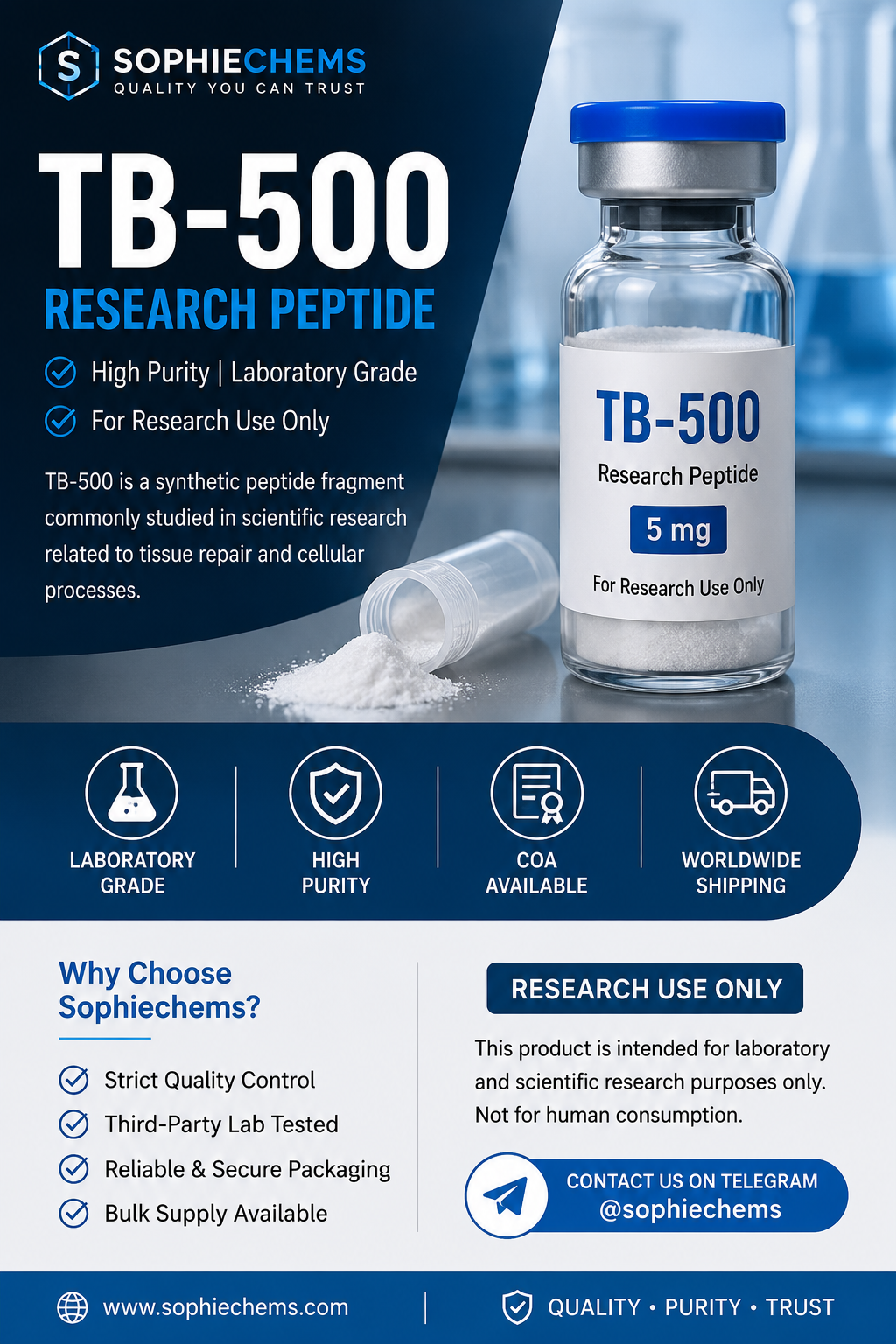
🔬 TB-500 Research Peptide Information

Explore TB-500 peptide science, molecular research, and laboratory analysis information.

✅ Research Documentation
✅ COA Available
✅ Bulk Research Supply

Sophiechems
Research Peptides | Laboratory Chemicals

#TB500 #ResearchPeptides #PeptideScience #LaboratoryResearch


Synthetic Cannabinoids: Chemical Research & Industry Overview


Synthetic cannabinoids are a class of laboratory-created compounds studied in the field of chemical research and molecular science. This knowledge hub provides educational information about synthetic cannabinoid chemistry, compound development, research history, and regulatory considerations.
Explore chemical concepts, industry information, and related research topics through the Sophie Chems

Chemical Knowledge Center

Chemical Knowledge Center

Research Chemicals Overview
Pharmaceutical Chemistry Guides
Regulatory & Safety Information

Order Protonitazene

Explore our Chemical Knowledge Center for analytical chemistry guides, chemical profiles, solvent resources, laboratory information, and scientific research articles.

Explore Chemical Knowledge Center

Chemical Knowledge Center

Cannabinoids Medicinal Use History

Cannabinoids for sale ,Synthetic Cannabinoids online USA ,The use of cannabis for medicinal purposes dates back to 2900 BC. The Chinese use of cannabis predates written books. At this time, it was considered to have healing powers and would be used to treat various ailments.Cannabis: History & Types of Cannabinoids

Cannabinoids for sale ,Around 1000 BC, the Egyptians used cannabis to treat issues with the eyes and to treat inflammation. Interestingly, it was also used as an anesthetic when mixed with other liquids. It was highly regarded in respected written works of the time, including the Bible.

In the 1600s, the settlers brought the cannabis plant to North America. At the time, it was being used to treat depression and other mental health issues in England. It was considered widespread, mainstream medicine in the West to use cannabis to treat inflammation, headaches, insomnia, and menstrual cramps.

In the early 1900s, the era of Prohibition, or the period of time when alcoholic beverage sale was illegal in the United States, began. This era brought about changes in the mentality about the regulation of alcohol as well as drugs. Ten states created marijuana prohibition laws in this time period .JWH-018  Precusors high quality

Over the next few decades, cannabis was still cultivated for medicinal use in other regions of the United States. It was included in pharmaceutical publications and manuals as a treatment option.

It wasn’t until the mid-1950s that cannabis medicinal use began to be generally considered illegal. Finally, in 1970, the Controlled Substances Act criminalized marijuana use and classified it as having no accepted medical purpose.

Toward the end of the 1970s, several medical organizations began experimental use of cannabis to treat patients who were experiencing nausea as a side effect of chemotherapy.  This experimental treatment was generally regarded as successful and by the early 1990s, the first states began approving cannabis for medical uses. The first state to legalize medical marijuana was California in 1996.

Cannabinoids for sale

Synthetic cannabinoids in Europe ,USA, UK

Cannabinoids for sale

History of Recreational Use of Cannabinoids

Cannabis, when used recreationally, has psychoactive effects, or large effects on mental processes of the brain. The effects on the brain after recreational use include a sense of relaxation and a high. It also creates a physical reaction of the eyes becoming reddened, impaired motor skills, and lowered blood pressure. Buy Protonitazene online

The physical and mental effects of the drug begin within thirty minutes if ingested by smoking or eating and will last up to 6 hours. Buy 5CLABA Synthetic Cannabinoids Precursors from Premium Chemical Intermediates precusors Suppliers.


Chemical Supplier | Pharmaceutical Intermediates & Industrial Chemicals | Sophie Chems


Choosing the right chemical supplier is an important decision for companies involved in pharmaceutical development, research, manufacturing, and industrial applications.

A reliable chemical supplier provides more than chemical materials. Professional chemical sourcing requires product knowledge, technical information, consistent supply, and an understanding of industry requirements.

Sophie Chems provides chemical information and sourcing solutions across areas including pharmaceutical intermediates, industrial chemicals, specialty chemicals, and chemical building blocks.

Through a combination of commercial product resources and educational content, Sophie Chems helps customers understand chemical applications and the role of different compounds in modern industries.

What Is a Chemical Supplier?

A chemical supplier is a company that provides chemical materials used by industries such as:

Pharmaceutical manufacturing

Chemical research

Specialty chemical production

Industrial processing

Laboratory applications

Chemical suppliers connect manufacturers, researchers, and organizations with the materials needed for their processes.

A professional chemical supplier focuses on:

Product information

Chemical documentation

Supply reliability

Industry knowledge

Pharmaceutical Intermediates Supplier

Pharmaceutical intermediates are important materials used during the development and production of active pharmaceutical ingredients (APIs).

They act as chemical building blocks that support complex synthesis pathways.

Pharmaceutical intermediate suppliers support industries by providing access to:

Organic intermediates

Heterocyclic compounds

Specialty chemical materials

Research chemicals

Pharmaceutical Intermediates Supplier

Industrial Chemicals and Solvents

Industrial chemicals play an essential role across many manufacturing sectors.

Solvents are among the most widely used chemical categories because they support processes such as:

Dissolution

Processing

Cleaning

Chemical reactions

Common industrial solvent categories include:

Acetonitrile

DMSO

DMF

Methanol

THF

Isopropyl Alcohol

Ethyl Acetate


Industrial Solvents Supplier

Industrial Solvents Supplier

Specialty Chemicals and Chemical Building Blocks

Specialty chemicals are developed for specific applications where performance and chemical properties are important.

Chemical building blocks help researchers and manufacturers create more complex molecules.

Examples of important chemical categories include:

Heterocyclic Intermediates

Heterocyclic compounds are widely studied in pharmaceutical chemistry because of their unique molecular structures.

Heterocyclic Intermediates Supplier

Heterocyclic Intermediates Supplier

Pyridine Derivatives

Pyridine-based compounds are important nitrogen-containing intermediates used in chemical research and synthesis.

Pyridine Derivatives Supplier

Pyridine Derivatives Supplier

Piperidine Derivatives

Piperidine compounds are another important group of nitrogen-containing chemical intermediates.

Piperidine Derivatives Supplier

Piperidine Derivatives Supplier

Why Chemical Knowledge Matters

Modern chemical industries require more than access to products.

Understanding chemical properties, applications, and industry concepts helps companies make better sourcing decisions.

A strong chemical knowledge resource explains:

Chemical applications

Industry terminology

Manufacturing concepts

Differences between chemical materials

The Sophie Chems Chemical Knowledge Center provides educational guides that connect chemical information with relevant supplier resources.

Chemical Knowledge Center

Chemical Knowledge Center

How to Choose a Chemical Supplier

When selecting a chemical supplier, companies often consider:

Product Information

Clear chemical information helps customers understand materials and applications.

Supply Reliability

Consistent availability supports research and production planning.

Technical Understanding

A knowledgeable supplier understands chemical industry requirements.

Professional Communication

Good communication helps ensure smoother chemical sourcing.

Chemical Supplier Supporting Research and Manufacturing

Chemical suppliers support a wide range of industries by providing materials used in:

Research and development

Manufacturing processes

Chemical synthesis

Industrial applications

The relationship between supplier and customer is built on information, reliability, and professional service.

Sophie Chems Chemical Categories

Sophie Chems focuses on chemical categories including:

Pharmaceutical intermediates

Industrial solvents

Specialty chemicals

Chemical building blocks

Research-related chemical information

The goal is to provide a structured chemical resource where customers can explore products and learn about chemical applications.

Conclusion

A reliable chemical supplier helps industries access important materials while providing the knowledge needed to understand chemical applications.

Sophie Chems combines commercial chemical resources with educational content to support customers looking for pharmaceutical intermediates, industrial chemicals, and specialty chemical information.

Through organized categories, supplier pages, and Chemical Knowledge Center articles, Sophie Chems continues building a structured chemical resource for modern industries.

Submit your review
1
2
3
4
5
Submit
     
Cancel

Create your own review

SophieChems
Average rating:  
 0 reviews

What are Cannabinoids- Their Benefits, Side Effects, & Risk

Cannabinoids Benefits side effects, We know of many cannabinoids in the marijuana plant. Tetrahydrocannabinol (THC) and cannabidiol (CBD) are the best known. Even when you focus on these two only, you see the significant differences between them. The primary reason we know more about them than the others is because they are the most abundant cannabinoids in weed.

What are the 10 Cannabinoids: What Are They and What Do They Do

For Many years, we assumed that THC and CBD were the leading players in cannabis’ potential medicinal benefits. The lack of research into the plant, due to its prohibition, hasn’t helped matters. As more scientists gain access to weed for research purposes, they have discovered that other, less prevalent cannabinoids are at least partially responsible for marijuana’s medicinal properties.

Synthetic Cannabinoids Suppliers

While we won’t discuss all cannabinoids, we will focus on 10 of the most important, including the big two. Read to learn more about these compounds and their possible effects on your health.

What Is a Cannabinoid?
It is one of a class of chemical compounds that act on the CB (cannabinoid) receptors in our endocannabinoid system (ECS). Around 50 years ago, scientists speculated that cannabinoids produced behavioral and physiological effects through an interaction with cell membranes. Cannabinoids Benefits side effects

Peptide Chemistry Basics: Structure, Types, and Research Applications

Peptide Chemistry Basics: Structure, Types, and Research Applications.

Peptide Chemistry Basics.Peptide chemistry is an important field within biochemistry, molecular biology, and pharmaceutical research. Peptides are molecules made from amino acids connected through peptide bonds, creating unique structures with different chemical and biological properties.

Understanding peptide chemistry helps researchers study peptide structures, molecular characteristics, analytical methods, and the role of peptides in biotechnology research.

Modern peptide science combines organic chemistry, analytical chemistry, and molecular biology to investigate how peptide structures are formed, characterized, and evaluated.


→ Research Peptides Category

Research Peptides Category

Chemical Knowledge Center

Chemical Knowledge Center


What Are Peptides?

Peptides are short chains of amino acids linked together by chemical bonds called peptide bonds. Amino acids are the basic building blocks of peptides and proteins.

The number and arrangement of amino acids determine the unique characteristics of each peptide.Peptide Chemistry Basics

Peptides can vary in:

– Amino acid sequence

– Molecular size

– Chemical properties

– Three-dimensional structure

– Functional characteristics

Because of their diversity, peptides are widely studied in scientific research areas including biochemistry, biotechnology, and pharmaceutical science.


Peptide Research Overview

Peptide Research Overview


Amino Acids: The Building Blocks of Peptides

Amino acids are organic molecules that contain functional groups allowing them to connect and form peptide chains.


A peptide structure depends on:

Amino Acid Sequence

The order of amino acids determines the primary structure of a peptide. Even small differences in sequence can create different molecular characteristics.


Chemical Properties

Each amino acid contributes different chemical properties, including:


– Size

– Charge

– Polarity

– Hydrophobicity


Peptide Diversity

The combination of different amino acids creates a wide variety of peptide structures studied in modern research.


→ Chemical Structure Basics

Chemical Structure Basics


Understanding Peptide Bonds

A peptide bond is a chemical connection between amino acids that forms the backbone of peptide molecules.

Peptide bond formation is an important concept in peptide chemistry because it determines how amino acids join together to create larger molecular structures.


Key concepts include:

– Amino acid connection

– Peptide chain formation

– Molecular structure

– Chemical stability

Understanding peptide bonds provides the foundation for studying more complex peptide molecules.


Types of Peptides

Peptides can be classified according to their size, structure, and research area.Peptide Chemistry Basics

Short Peptides

Short peptides contain a smaller number of amino acids and are commonly studied in molecular research.


Oligopeptides

Oligopeptides consist of several amino acids and are investigated for their chemical and biological properties.


Polypeptides

Polypeptides are longer chains of amino acids that can contain complex structures.


Modified Peptides

Researchers also study modified peptides with changes designed to explore different molecular properties.


Research Peptides Category

Research Peptides Category


Peptide Structure and Characterization

Understanding peptide structure is a key part of peptide research.

Scientists study peptide characteristics using analytical approaches that provide information about molecular identity and composition.Peptide Chemistry Basics

Important characterization areas include:

– Molecular weight analysis

– Structural evaluation

– Purity assessment concepts

– Chemical identification


Peptide Analytical Methods

Peptide Analytical Methods

Chemical Testing Methods

Chemical Testing Methods


Peptide Chemistry Basics: Structure, Types, and Research Applications


Major Categories of Research Peptides

Research peptides are studied across many scientific fields, including molecular biology, biotechnology, and analytical chemistry. Different peptide categories are classified according to their molecular structures, research focus, and scientific applications.


GLP-1 Related Research Peptides

GLP-1 related peptides are an important area of modern peptide research. Scientists study these peptides to understand molecular structures, peptide characteristics, and analytical profiles.

Examples commonly discussed in scientific research include:


– Semaglutide

– Tirzepatide

– Retatrutide

– Cagrilintide

– Mazdutide

– Survodutide


→ GLP-1 Research Peptides

Research Peptides


Growth Hormone Related Research Peptides

Growth hormone related peptides are studied within endocrinology and peptide science research.

Examples include:

– CJC-1295

– Ipamorelin

– Sermorelin

– Tesamorelin

– GHRP-related peptides

Research focuses on peptide structure, molecular characteristics, and analytical evaluation.


Growth Hormone Research Peptides

Growth Hormone Research Peptides


Tissue Repair Research Peptides

Tissue repair peptides are studied in areas related to cellular signaling, molecular biology, and biotechnology research.


Examples include:

– BPC-157

– TB-500 related research peptides

– GHK-Cu

– Thymosin-related peptides


Scientific studies often focus on peptide characterization and understanding molecular properties.


Tissue Repair Research Peptides

Tissue Repair Research Peptides


Melanocortin Research Peptides

Melanocortin peptides are studied for their interactions with peptide receptor systems and molecular signaling research.


Examples include:

– Melanotan-related peptides

– Alpha-MSH related peptides

– ACTH fragments


→ Melanocortin Research Peptides???


Peptide Analytical Methods

Analytical chemistry plays an essential role in peptide research by helping scientists evaluate peptide characteristics and generate reliable scientific data.

Common analytical methods include:

High-Performance Liquid Chromatography (HPLC)

HPLC is an analytical separation technique widely used in chemistry laboratories.

In peptide research, HPLC is commonly discussed for:

– Separation analysis

– Peptide profile evaluation

– Analytical comparison


HPLC Analysis Guide

HPLC Analysis Guide


Liquid Chromatography–Mass Spectrometry (LC-MS)

LC-MS combines chromatography separation with mass spectrometry analysis.

This technique is important in peptide research because it provides information related to:


– Molecular mass

– Chemical identification

– Structural information


LC-MS Analysis Guide

LC-MS Analysis Guide

Nuclear Magnetic Resonance (NMR) Spectroscopy

NMR spectroscopy is an analytical technique used to study molecular structure and chemical environments.

It provides valuable information about molecular characteristics and supports advanced peptide research.


NMR Spectroscopy Guide

NMR Spectroscopy Guide


Peptide Quality Documentation and COA Understanding

Scientific documentation is an important part of laboratory research. A Certificate of Analysis (COA) provides analytical information related to a tested sample.


COA-related information may include:

– Sample identification

– Testing information

– Analytical results

– Documentation details


Understanding COA information helps researchers interpret laboratory documentation.


Understanding COA for Peptides

Understanding COA for Peptides

→ Chemical Testing Methods

Chemical Testing Methods


Peptide Chemistry Basics: Structure, Types, and Research Applications


Research Applications of Peptide Chemistry

Peptide chemistry is a broad scientific field that connects organic chemistry, biochemistry, molecular biology, and biotechnology. Researchers study peptides to understand their structures, properties, interactions, and analytical characteristics.


Common areas of peptide research include:

Molecular Biology Research

Peptides are studied to understand molecular interactions, biological signaling pathways, and the relationship between peptide structures and their properties.


Analytical Chemistry Research

Analytical methods help researchers evaluate peptide characteristics, identify molecular information, and study chemical profiles.


Important techniques include:

– HPLC analysis

– LC-MS analysis

– NMR spectroscopy


→ Peptide Analytical Methods

Peptide Analytical Methods

→ Chemical Testing Methods

Chemical Testing Methods


Peptide Stability and Storage Concepts

Peptide stability is an important topic in peptide research. Scientists study how different factors can influence peptide characteristics over time.


Factors commonly considered in peptide research include:

– Molecular structure

– Environmental conditions

– Chemical properties

– Analytical evaluation methods


Understanding stability concepts helps researchers interpret scientific information about peptide molecules.

Laboratory Safety Guide

Laboratory Safety Guide


Importance of Peptide Characterization

Peptide characterization is the process of studying peptide properties using scientific methods.

Characterization can involve evaluating:

– Molecular identity

– Structural information

– Analytical profiles

– Chemical characteristics

Modern analytical technologies allow researchers to better understand complex peptide molecules and support advances in peptide science.


→ HPLC Analysis Guide

HPLC Analysis Guide

→ LC-MS Analysis Guide

LC-MS Analysis Guide

→ NMR Spectroscopy Guide

NMR Spectroscopy Guide


Future Trends in Peptide Research

Peptide science continues to expand as researchers explore new approaches in biotechnology, chemistry, and molecular science.


Key trends include:

Advanced Analytical Technologies

Improvements in analytical instruments continue to provide more detailed information about peptide structures and molecular properties.


Growth of Biotechnology Research

Peptides remain an important research area due to their diverse molecular structures and applications in scientific studies.


Increased Interest in Peptide Characterization

Researchers continue to develop improved methods for understanding peptide composition, structure, and chemical behavior.


Chemical Knowledge Center

Chemical Knowledge Center


Frequently Asked Questions (FAQ)

What are peptides?

Peptides are molecules made of amino acids connected by peptide bonds. They are studied in chemistry, biology, and biotechnology research.


How are peptides different from proteins?

Peptides are generally shorter chains of amino acids, while proteins are larger molecules with more complex structures.


Why is peptide chemistry important?

Peptide chemistry helps researchers understand molecular structures, chemical properties, and analytical characteristics.


What analytical methods are used for peptides?

Common analytical techniques include HPLC, LC-MS, and NMR spectroscopy.


HPLC Analysis Guide

HPLC Analysis Guide

→ LC-MS Analysis Guide

LC-MS Analysis Guide

NMR Spectroscopy Guide

NMR Spectroscopy Guide


What is peptide characterization?

Peptide characterization involves studying peptide identity, structure, and analytical properties using scientific methods.


Why is COA information important?

COA documentation provides analytical information that helps researchers understand testing data and laboratory records.

Understanding COA for Peptides

Understanding COA for Peptides


What are research peptides?

Research peptides are peptide compounds studied in scientific fields such as molecular biology, chemistry, and biotechnology.


Research Peptides Category

Research Peptides Category


Conclusion

Peptide chemistry provides the foundation for understanding peptide structures, molecular properties, and analytical research methods.

From amino acid sequences and peptide bonds to advanced characterization techniques, peptide science combines multiple areas of chemistry and biology.

Educational resources covering peptide chemistry, analytical methods, and laboratory documentation help researchers develop a stronger understanding of modern peptide research.


Explore related resources:

→ Research Peptides Category

Research Peptides Category

→ GLP-1 Research Peptides

GLP-1 Research Peptides

→ Growth Hormone Research Peptides

Growth Hormone Research Peptides

Peptide Analytical Methods

Peptide Analytical Methods

Chemical Knowledge Center

Chemical Knowledge Center

DMF Solvent Applications: Properties, Uses, and Industrial Importance

DMF Solvent Applications: Properties, Uses, and Industrial Importance

DMF Solvent Applications.Dimethylformamide, commonly known as DMF, is one of the most widely used industrial solvents in chemical manufacturing, pharmaceutical production, polymer processing, coatings, and laboratory applications. Its excellent solvency, chemical stability, and ability to dissolve many organic compounds make it an important material for industries requiring reliable solvent performance.

Industrial solvents play a critical role in modern manufacturing by supporting processes such as dissolution, extraction, purification, formulation, and chemical synthesis. Among these solvents, DMF has gained significant importance because of its versatility and compatibility with many different chemical materials.

Businesses searching for high-quality chemical raw materials often evaluate DMF based on its technical specifications, application requirements, documentation availability, and supply reliability.

Chemical Raw Materials Supplier

Chemical Raw Materials Supplier


This guide explains DMF solvent properties, industrial applications, advantages, and important factors to consider when selecting DMF for different processes.


What Is DMF Solvent?

DMF stands for Dimethylformamide. It is an organic compound classified as a polar aprotic solvent. Due to its strong polarity and excellent dissolving ability, DMF can interact effectively with a wide range of organic materials.

DMF is commonly used as a processing solvent rather than a final product ingredient. It helps manufacturers dissolve, mix, or process different chemical substances during production.


The unique characteristics of DMF make it valuable in industries including:

– Pharmaceutical manufacturing

– Chemical synthesis

– Polymer production

– Coatings and adhesives

– Electronics manufacturing

– Laboratory research

– Specialty chemical production

For companies sourcing industrial chemicals, understanding the role of DMF helps determine whether it is suitable for specific manufacturing requirements.


Industrial Solvents Supplier

Industrial Solvents Supplier


Chemical Properties of DMF Solvent

The performance of DMF comes from its chemical structure and physical characteristics.

High Solvency Capability


One of the most important properties of DMF is its strong solvency power.

DMF can dissolve many organic compounds, polymers, and chemical materials that may have limited solubility in other solvents.


This makes DMF useful in applications where manufacturers require effective material dissolution and processing control.


Polar Aprotic Solvent Characteristics

DMF is classified as a polar aprotic solvent.

This means it can provide strong interactions with many chemical compounds without donating hydrogen bonds in the same way that protic solvents do.

These characteristics contribute to its usefulness in chemical reactions, formulations, and industrial processing.


Chemical Stability

DMF provides stable performance under many industrial conditions.

Important characteristics include:

– Consistent solvent performance

– Compatibility with various materials

– Ability to support complex chemical processes

– Reliable processing properties

These features contribute to its widespread industrial use.


Why DMF Is Used as an Industrial Solvent

The demand for DMF comes from its ability to solve several challenges faced by manufacturers.


Efficient Material Dissolution

Many industrial processes require solvents capable of dissolving difficult materials.


DMF provides effective dissolution performance for various organic compounds, making it valuable in chemical and manufacturing processes.


Support for Chemical Processing

DMF is commonly used as a medium that allows chemical reactions and processing steps to occur more efficiently.

Its solvent properties help improve mixing, reaction conditions, and material handling.


Versatility Across Industries

Unlike specialized solvents designed for only one application, DMF has applications across multiple industries.

Its versatility allows businesses to use it in different production environments.


DMF Solvent Applications in Pharmaceutical Manufacturing

The pharmaceutical industry uses various solvents during research, development, and manufacturing processes.

DMF is recognized as an important solvent in pharmaceutical-related chemical processing because of its ability to dissolve many organic compounds.


Applications may include:

– Chemical synthesis processes

– Intermediate preparation

– Research and development activities

– Specialty pharmaceutical manufacturing processes

Pharmaceutical companies often consider factors such as solvent quality, documentation, and consistency when selecting DMF suppliers.

Pharmaceutical Intermediates Supplier

Pharmaceutical Intermediates Supplier


DMF Applications in Chemical Synthesis

Chemical manufacturers use DMF because it provides excellent solvent performance for many synthetic processes.


In chemical synthesis, solvents can influence:

– Reaction efficiency

– Material compatibility

– Processing conditions

– Product quality

DMF may be selected when manufacturers require a solvent that can support complex chemical reactions and dissolve various organic substances.


Its role in chemical manufacturing demonstrates why DMF remains an important industrial solvent worldwide.


DMF in Polymer and Resin Processing

Polymer industries often require solvents that can interact effectively with advanced materials.


DMF is used in certain polymer and resin applications because of its strong dissolving ability.

Applications may involve:

– Polymer processing

– Resin preparation

– Material formulation

– Specialty polymer production

The ability of DMF to dissolve certain polymers makes it useful in processes where material compatibility is essential.


DMF Solvent Applications in Coatings, Electronics, and Laboratory Industries

DMF Applications in Coatings and Adhesives

The coatings and adhesives industries require solvents that provide excellent dissolving performance, formulation control, and compatibility with different materials.


DMF is used in certain coating and adhesive applications because it can help dissolve resins, polymers, and other chemical components involved in formulation processes.


The role of DMF in coatings may include:

– Improving material dissolution

– Supporting formulation consistency

– Helping control viscosity

– Assisting manufacturing processes

Manufacturers select solvents based on the specific requirements of their coating systems. Factors such as drying behavior, material compatibility, and processing conditions influence solvent selection.


Industrial Solvents Supplier

Industrial Solvents Supplier

DMF Applications in Electronics and Advanced Manufacturing

Modern electronics manufacturing requires high-performance chemical materials with reliable technical characteristics.

DMF may be used in certain specialty manufacturing processes because of its solvent capabilities and compatibility with advanced materials.

Applications may involve:

– Material preparation

– Specialty formulations

– Manufacturing processes requiring strong solvent performance


As industries continue developing advanced materials, solvent selection becomes increasingly important. Manufacturers evaluate properties such as purity, stability, and compatibility when choosing suitable solvents.


DMF Solvent Applications in Laboratory Research

Laboratories use solvents for many research and analytical activities.

DMF is commonly recognized as a useful laboratory solvent because of its ability to dissolve many chemical compounds.


Laboratory applications may include:

– Chemical preparation

– Research processes

– Sample preparation

– Organic chemistry applications

Researchers often consider solvent quality, purity, and documentation when selecting laboratory chemicals.


Chemical Analysis Guides

Chemical Analysis Guides

Chemical Knowledge center

Chemical Knowledge center


DMF in Specialty Chemical Manufacturing

Specialty chemical manufacturers often require solvents that provide consistent performance across different production processes.

DMF may support specialty chemical applications where strong solvency and chemical compatibility are needed.

These applications demonstrate why DMF continues to be an important solvent in global chemical manufacturing.

Industries using specialty chemicals often evaluate:

– Product specifications

– Supply consistency

– Technical documentation

– Packaging options


DMF Solvent Compared With Other Industrial Solvents

Industrial solvent selection depends on the application requirements. Although many solvents share similar characteristics, each one provides different advantages.

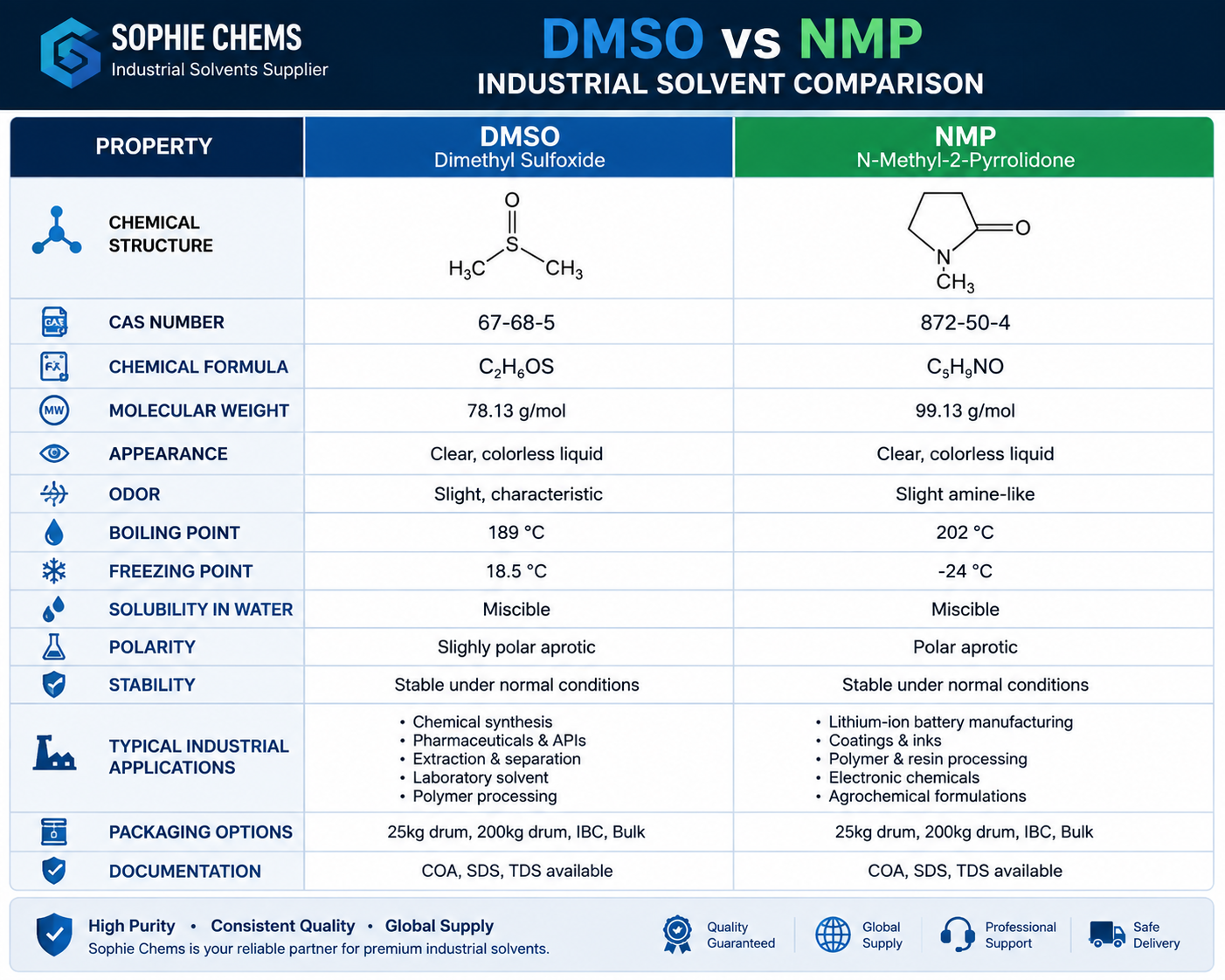
DMF is often compared with solvents such as DMSO and NMP because all are polar solvents with strong dissolving capabilities.

Understanding these differences helps companies choose the most suitable material for their processes.


DMF vs DMSO: Understanding the Differences

DMF and DMSO are both widely used polar aprotic solvents.

Both solvents provide strong solvency and are used in chemical and laboratory applications. However, their chemical properties and industrial uses can differ.


DMF Characteristics

DMF is commonly selected because of:

– Strong solvency

– Broad organic compound compatibility

– Industrial processing applications

– Versatile chemical performance


DMSO Characteristics

DMSO is recognized for:

– High polarity

– Excellent dissolving ability

– Wide application range

– Laboratory and specialty chemical uses


The choice between DMF and DMSO depends on the specific application, required performance, and material compatibility.


DMF vs DMSO Comparison Guide

DMF vs DMSO Comparison Guide


DMF vs NMP: Comparing Industrial Solvent Performance

DMF and NMP are both important industrial solvents used in chemical processing and manufacturing.

DMF is valued for its strong solvency and versatility, while NMP is often selected for applications requiring high thermal stability and compatibility with advanced materials.


DMF Advantages

DMF may be preferred when applications require:

– Effective dissolution

– Chemical processing support

– Organic compound compatibility


NMP Advantages

NMP is often selected for:

– Polymer processing

– Electronics applications

– High-temperature industrial processes


The correct choice depends on the technical requirements of the application.


Industrial Solvents Comparison Guide

Industrial Solvents Comparison Guide”


Factors to Consider When Purchasing DMF Solvent

Selecting a reliable DMF solvent supplier requires evaluation of several important factors.


Product Quality

Quality consistency is essential for industrial applications.

Buyers should consider:

– Product specifications

– Purity information

– Batch consistency

– Technical documentation


Certificate of Analysis (COA)

A Certificate of Analysis provides important information about product quality and testing results.


A COA may include:

– Product identification

– Batch information

– Quality parameters

– Testing data

Companies purchasing DMF for industrial use often request COA documentation to verify product specifications.


Certificate of Analysis

Certificate of Analysis


Safety Data Sheet (SDS)


A Safety Data Sheet provides important information related to:

– Handling procedures

– Storage recommendations

– Safety considerations

– Transportation requirements

SDS documentation helps users understand proper chemical management practices.


Internal Link Suggestion:

Safety Data Sheet (SDS)” to the Sophiechems SDS documentation page.


Choosing a Reliable DMF Solvent Supplier

Selecting a reliable DMF solvent supplier is an important step for companies that depend on consistent chemical materials for manufacturing and research applications.

A professional supplier should provide more than just chemical products. Businesses often evaluate suppliers based on technical information, documentation, communication, supply capability, and product consistency.


Important factors when selecting a DMF supplier include:

Technical Documentation Availability

Reliable chemical suppliers provide technical documents that help buyers understand product specifications and quality information.


Common documents include:

– Certificate of Analysis (COA)

– Safety Data Sheet (SDS)

– Product specifications

– Technical information sheets

These documents support quality evaluation and help businesses confirm that materials meet their requirements.

COA and SDS Documentation” to the Sophiechems Chemical Documentation pages.

Supply Capability and Packaging Options

Industrial buyers often require suppliers that can support different purchasing requirements.

Important considerations include:

– Packaging availability

– Bulk supply capability

– Consistent product availability

– International shipping support

A reliable supply chain helps manufacturers maintain stable production schedules.


Application Knowledge

A supplier with chemical knowledge can help customers better understand product characteristics and possible applications.


Educational resources about solvents, chemical raw materials, and industrial applications help buyers make informed decisions.


Chemical Raw Materials Supplier

Chemical Raw Materials Supplier

Storage and Handling Considerations for DMF Solvent

Proper storage and handling are important for maintaining solvent quality.


General considerations include:

– Keeping containers properly sealed

– Following recommended storage conditions

– Protecting materials from contamination

– Using appropriate handling procedures


Businesses should always refer to official technical documentation and safety information when managing chemical materials.


The Importance of DMF in Modern Chemical Industries

DMF continues to play an important role in many industries because of its combination of solvency, versatility, and chemical performance.


Its applications across pharmaceutical manufacturing, chemical processing, polymers, coatings, and laboratory research demonstrate its importance as an industrial solvent.


As industries continue developing advanced materials and chemical processes, demand for reliable solvent solutions remains strong.


Understanding DMF properties and applications allows companies to select appropriate materials for their specific manufacturing requirements.


Frequently Asked Questions About DMF Solvent


What is DMF solvent used for?

DMF solvent is used in various industrial and laboratory applications, including chemical processing, pharmaceutical-related manufacturing, polymer processing, coatings, and specialty chemical applications.


Why is DMF considered an important industrial solvent

DMF is considered important because of its strong solvency, compatibility with many organic compounds, and versatility across different industries.

What industries use DMF solvent?


DMF is used in industries such as:

– Pharmaceutical manufacturing

– Chemical production

– Polymer processing

– Coatings

– Specialty chemicals

– Laboratory research


What is the difference between DMF and DMSO?

DMF and DMSO are both polar aprotic solvents with strong dissolving abilities. However, they have different chemical characteristics and may be selected based on specific application requirements.


Is DMF used in laboratory applications?

Yes, DMF is commonly recognized as a laboratory solvent used in chemical preparation, research, and analytical applications.


What documents should buyers request when purchasing DMF?

Buyers commonly request:

– Certificate of Analysis (COA)

– Safety Data Sheet (SDS)

– Product specifications

– Technical documentation

These documents help evaluate product quality and suitability.


Conclusion: Understanding DMF Solvent Applications

DMF solvent remains one of the most important industrial solvents because of its excellent solvency, chemical versatility, and wide range of applications.

From pharmaceutical manufacturing and chemical synthesis to polymer processing, coatings, and laboratory research, DMF provides valuable performance characteristics for many industries.


For companies evaluating chemical raw materials, understanding solvent properties, applications, documentation requirements, and supplier capabilities is essential.


Sophiechems continues developing educational resources about industrial solvents, chemical raw materials, and laboratory chemicals to help businesses understand chemical applications and make informed sourcing decisions.


Industrial Solvents Supplier

Industrial Solvents Supplier

Sophiechems continues to develop its industrial solvent portfolio, including:

→ DMF Solvent Supplier

DMSO Supplier

NMP Supplier

→ Acetonitrile Supplier

→ THF Supplier

→ Methanol Supplier

→ IPA Supplier

→ Acetone Supplier

→ Ethyl Acetate Supplier

→ Methylene choloride Supplier


#DMFSolvent, #IndustrialSolvents, #ChemicalRawMaterials, #ChemicalSupplier, #SpecialtyChemicals, #ChemicalManufacturing, #PharmaceuticalChemicals, #LaboratoryChemicals, #IndustrialChemicals, #ChemicalIndustry, #ChemicalProcessing, #OrganicChemistry, #SolventApplications, #ChemicalResearch, #B2BChemicals


Industrial Solvents Comparison Guide: Properties, Applications, and Selection Factors

Industrial Solvents Comparison Guide: Properties, Applications, and Selection Factors

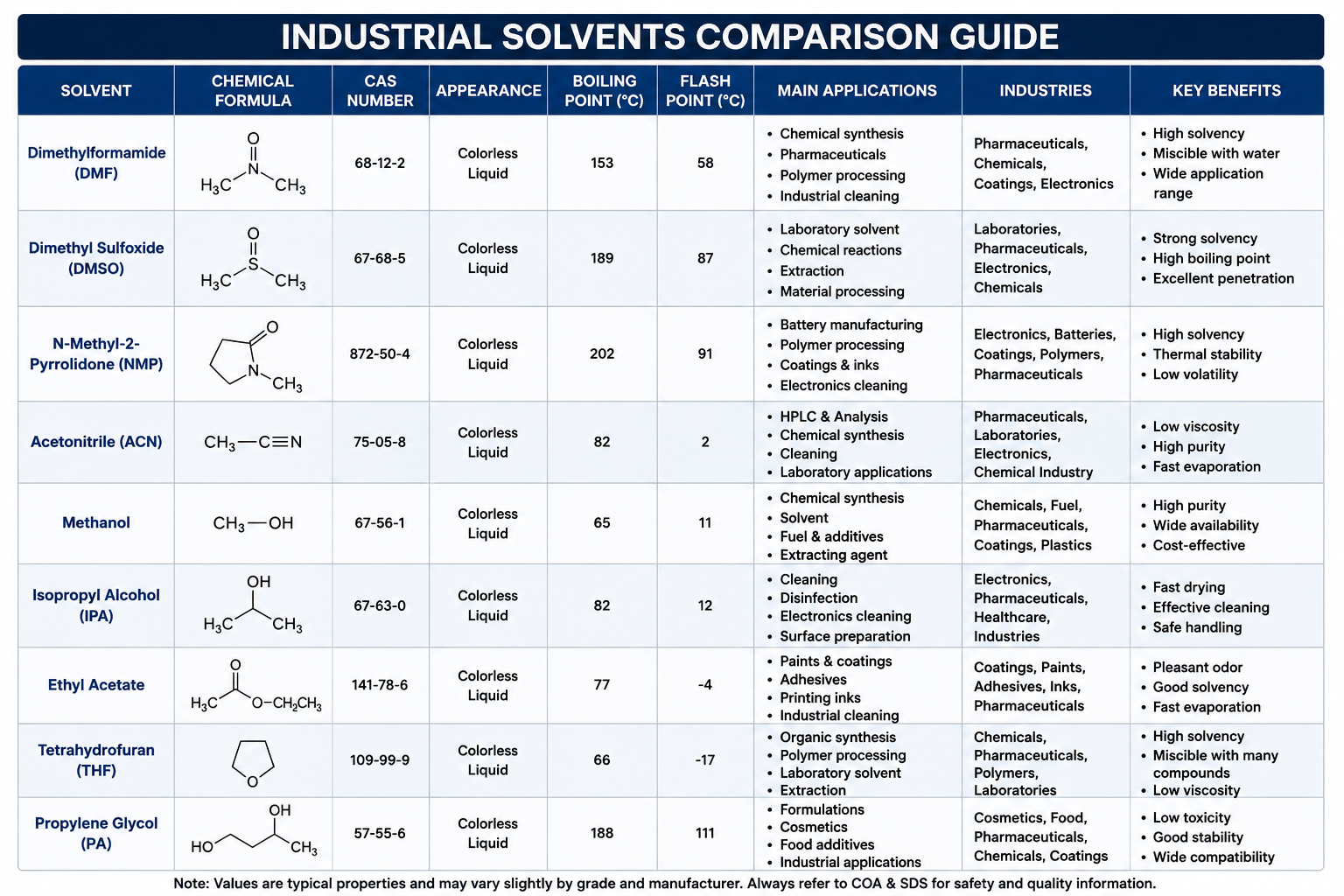
Industrial Solvents Comparison Guide. Industrial solvents are essential chemical materials used in many industries, including pharmaceutical manufacturing, chemical production, electronics, coatings, polymers, adhesives, and laboratory research. These solvents play an important role in dissolving materials, supporting chemical processes, improving formulations, and enabling efficient manufacturing operations.


Selecting the correct solvent is an important decision because every solvent has different chemical characteristics. Properties such as polarity, solvency power, boiling point, chemical stability, viscosity, and compatibility with other materials determine how effectively a solvent performs in a specific application.


Among the most commonly used industrial solvents are Dimethylformamide (DMF), Dimethyl Sulfoxide (DMSO), N-Methyl-2-Pyrrolidone (NMP), and Acetonitrile. Each solvent has unique characteristics that make it suitable for different industrial and laboratory applications.


This industrial solvents comparison guide explains the properties, applications, and differences between these important solvents while helping businesses understand how to evaluate solvent options for their specific requirements.Industrial Solvents Comparison Guide

Industrial Solvents

Industrial Solvents Supplier category page.


What Are Industrial Solvents?

Industrial solvents are chemical substances used to dissolve, dilute, extract, clean, or process other materials during manufacturing and research activities.


In many industrial processes, solvents act as processing aids rather than final ingredients. They help manufacturers control production conditions, improve material handling, and achieve consistent results.


Industrial solvents are widely used in:

– Pharmaceutical manufacturing

– Chemical synthesis

– Electronics production

– Paint and coating industries

– Polymer manufacturing

– Adhesive production

– Laboratory analysis

– Specialty chemical manufacturing


Different industries select solvents based on their required performance characteristics. A solvent used for chemical processing may have different requirements compared with one used for analytical testing or electronic manufacturing.


Why Solvent Selection Is Important

Choosing the right solvent can influence:

– Manufacturing efficiency

– Product quality

– Processing stability

– Material compatibility

– Production costs

– Overall process performance


A suitable solvent should match the technical requirements of the application. Important factors include chemical properties, operating conditions, storage requirements, and documentation standards.


Understanding solvent differences allows companies and researchers to make better decisions when selecting chemical raw materials.Industrial Solvents Comparison Guide

Key Factors for Comparing Industrial Solvents


Solvency Power

Solvency refers to the ability of a solvent to dissolve another substance. Solvents with strong solvency properties are often used in processes where effective dissolution is required.


Different solvents interact differently with organic compounds, polymers, resins, and other materials. This is why manufacturers evaluate solvent performance before selecting a specific material.


Polarity

Polarity is one of the most important factors when comparing industrial solvents.

Polar solvents can interact effectively with many polar compounds, making them valuable in chemical processing and laboratory applications.


Examples of commonly used polar solvents include:

– DMF

– DMSO

– NMP

– Acetonitrile

Understanding solvent polarity helps determine compatibility between the solvent and the material being processed.


Boiling Point and Thermal Performance

The boiling point of a solvent affects how it behaves during industrial processing.

High boiling point solvents may provide stability during high-temperature operations, while lower boiling point solvents may be easier to remove after processing.

Manufacturers consider boiling point when designing production methods and selecting appropriate processing conditions.Industrial Solvents Comparison Guide


Chemical Stability

Chemical stability is another important factor in solvent selection.

A stable solvent should maintain consistent performance during:

– Storage

– Transportation

– Manufacturing processes

– Laboratory applications

Compatibility with equipment and other chemical materials is also an important consideration.


DMF Solvent: Properties, Applications, and Industrial Uses

Dimethylformamide (DMF) is a widely used polar aprotic solvent recognized for its strong solvency and ability to dissolve many organic compounds.

Because of its versatile chemical properties, DMF has become an important solvent in various industrial and chemical applications.


Characteristics of DMF Solvent

DMF is known for:

– High solvency capability

– Strong compatibility with organic materials

– Versatile processing applications

– Effective performance in chemical formulations

These properties make DMF useful in industries that require reliable solvent performance.


Industrial Applications of DMF

DMF is commonly associated with applications such as:


Chemical Manufacturing

DMF is used in chemical processing where effective dissolution and material compatibility are important.


Polymer and Resin Processing

The solvent properties of DMF make it useful in applications involving polymers and specialized materials.


Coatings and Industrial Formulations

DMF may be used in certain coating and formulation processes where strong solvent performance is required.


Laboratory and Research Applications

DMF is also used in laboratory environments where solvent characteristics support chemical preparation and analysis.

DMF solvent

Sophiechems DMF product page.


DMSO Solvent: Characteristics and Applications

Dimethyl Sulfoxide (DMSO) is a highly polar solvent known for its strong dissolving ability and broad compatibility with different materials.

DMSO is widely recognized as a versatile solvent used in laboratory, industrial, and specialty chemical applications.


Characteristics of DMSO

Important properties of DMSO include:

– High polarity

– Strong dissolving capability

– Wide application range

– Good compatibility with many materials

These characteristics make DMSO suitable for applications requiring effective solvent performance.

Industrial and Laboratory Applications of DMSO

DMSO is used in areas including:

Chemical Processing

DMSO can support various chemical processes where strong solvent capability is needed.


Laboratory Applications

Its solvent properties make it useful in research and analytical environments.


Specialty Chemical Applications

DMSO may be used in specialized formulations requiring a high-performance solvent.

DMSO solvent

the Sophiechems DMSO product page.


DMF and DMSO: Understanding the Difference

DMF and DMSO are both polar aprotic solvents with strong dissolving abilities, but their chemical characteristics make them suitable for different applications.


DMF is often selected for its strong solvency and industrial versatility, while DMSO is recognized for its high polarity and broad compatibility.


When comparing DMF and DMSO, companies should consider:


– Required solvent performance

– Material compatibility

– Processing temperature

– Application requirements

– Technical specifications


There is no single solvent suitable for every process. The best choice depends on the specific requirements of the application.


NMP Solvent: Uses in Electronics, Polymers, and Manufacturing

N-Methyl-2-Pyrrolidone (NMP) is a high-performance specialty solvent known for its excellent solvency, thermal stability, and compatibility with various industrial materials.


Due to its unique chemical characteristics, NMP is widely used in industries that require reliable solvent performance under demanding processing conditions.


Characteristics of NMP Solvent

NMP is recognized for:

– Strong dissolving capability

– High boiling point

– Excellent chemical stability

– Compatibility with polymers and advanced materials


These characteristics make NMP an important solvent for industrial applications where performance and stability are required. Industrial Solvents Comparison Guide

Industrial Applications of NMP

Electronics Manufacturing

NMP is commonly associated with advanced manufacturing processes where solvent performance and material compatibility are important.


Its properties make it suitable for applications involving specialized materials and production processes.


Polymer Processing

NMP is used in polymer-related applications because of its ability to dissolve and process certain polymer materials.

It can support manufacturing processes that require effective material handling and formulation control.


Coatings and Surface Applications

NMP may be used in coating-related processes where strong solvency and controlled processing characteristics are required.


Industrial Cleaning Applications

Due to its solvency properties, NMP is also used in some industrial cleaning and processing applications.

NMP solvent

Sophiechems NMP product page.


Acetonitrile Solvent: Role in Laboratory and Chemical Applications

Acetonitrile is a widely used polar solvent recognized for its performance in analytical chemistry, laboratory applications, and chemical processing.

Its physical and chemical properties make it a valuable solvent in environments where purity and consistency are important.


Characteristics of Acetonitrile

Acetonitrile is known for:

– Good solvent performance

– Low viscosity

– Chemical stability

– Compatibility with analytical methods

These characteristics contribute to its importance in laboratory and industrial applications.

Applications of Acetonitrile

Analytical Chemistry

Acetonitrile is widely recognized for its role in analytical laboratory processes, particularly where consistent solvent performance is required.

Chromatography Applications

Acetonitrile is commonly used in chromatography-related applications because of its solvent properties and compatibility with analytical techniques.

Chemical Research

Researchers use Acetonitrile in various chemical processes where a reliable solvent is needed.

Acetonitrile solvent

Sophiechems Acetonitrile product page.


NMP vs DMSO: Comparing Industrial Solvent Characteristics

NMP and DMSO are both important polar solvents, but they offer different characteristics depending on the application.

NMP is often selected for applications requiring high thermal stability and compatibility with polymers and advanced materials.

DMSO is widely recognized for its strong polarity and broad dissolving capability.


When comparing NMP and DMSO, important factors include:

– Application requirements

– Processing temperature

– Material compatibility

– Solvent performance

– Industry standards

The correct choice depends on the specific manufacturing or research process.


Selecting Industrial Solvents by Industry

Pharmaceutical Industry

The pharmaceutical industry uses solvents in many stages of manufacturing and research.


Important considerations include:

– Consistent quality

– Documentation availability

– Chemical compatibility

– Reliable supply


Pharmaceutical Intermediates Supplier

Chemical Raw Materials Supplier


Electronics Industry

Electronics manufacturing requires solvents with specific performance characteristics.

Key factors include:

– Material compatibility

– Processing conditions

– Purity requirements

– Stability


NMP Solvent Guide

NMP Solvent Guide


Coatings and Adhesives Industry

Solvents play an important role in coatings and adhesive formulations by helping control:

– Viscosity

– Mixing properties

– Application performance

– Drying characteristics

Different solvent choices can influence the final performance of industrial formulations.


Laboratory and Research Applications

Laboratories depend on solvents for many activities, including:

– Sample preparation

– Chemical analysis

– Research processes

– Testing procedures


Laboratory Chemicals Guide

Laboratory Chemicals Guide

Chemical Analysis Guides

Chemical Analysis Guides

HPLC Analysis Guide

HPLC Analysis Guide


Importance of Chemical Documentation

When purchasing industrial solvents, technical documentation helps businesses evaluate quality and suitability.


Common documents include:

Certificate of Analysis (COA)

A Certificate of Analysis provides information about a specific product batch and helps confirm that quality requirements have been evaluated.


A COA may include:

– Product identification

– Batch information

– Testing results

– Quality specifications

Certificate of Analysis (COA

Certificate of Analysis (COA)


Safety Data Sheet (SDS)

A Safety Data Sheet provides information related to:

– Safe handling

– Storage requirements

– Transportation considerations

– Emergency procedures


SDS documentation helps users understand important safety and handling information.


Internal Link Suggestion:

Link “Safety Data Sheet (SDS)” to the Sophiechems SDS documentation page.


How to Select the Right Industrial Solvent

Selecting the right industrial solvent requires careful evaluation of technical requirements, application conditions, and performance expectations. Different solvents provide different advantages, so the best choice depends on the specific needs of each process.


Before selecting a solvent, companies should consider several important factors.


Application Requirements

The first step in solvent selection is understanding the purpose of the solvent.

Common questions include:

– What material needs to be dissolved?

– What type of process will use the solvent?

– Is the solvent required for manufacturing, cleaning, extraction, or analysis?

– What performance characteristics are needed?


A clear understanding of the application helps identify the most suitable solvent option.


Chemical Compatibility

Chemical compatibility is an important consideration when selecting industrial solvents.


A suitable solvent should work effectively with:

– Raw materials

– Equipment surfaces

– Manufacturing conditions

– Other chemicals involved in the process

Compatibility helps maintain process efficiency and reduces potential issues during production.


Purity and Quality Requirements

Different industries may require different levels of product specifications.

Important quality considerations include:

– Product consistency

– Technical specifications

– Documentation availability

– Batch information

– Storage recommendations

Reliable documentation allows businesses to evaluate whether a solvent meets their operational requirements.

chemical quality documentation” to the COA and SDS information pages.


Storage and Handling Considerations

Proper storage and handling are important parts of chemical management.

Factors to consider include:

– Recommended storage conditions

– Packaging requirements

– Temperature considerations

– Transportation requirements


Following appropriate storage practices helps maintain product quality throughout its lifecycle.


Building a Complete Industrial Solvent Knowledge System

Understanding industrial solvents requires more than knowing individual product names. A complete knowledge system should include information about:

– Chemical properties

– Industrial applications

– Comparison between solvents

– Quality documentation

– Safety information

– Industry requirements


For businesses researching chemical materials, educational resources can help improve understanding and support better decision-making.


Frequently Asked Questions About Industrial Solvents

What are industrial solvents used for?

Industrial solvents are used in many industries for dissolving, processing, cleaning, extraction, formulation, and chemical manufacturing applications.

Common industries include pharmaceuticals, electronics, coatings, polymers, laboratories, and specialty chemical production.

What is the difference between DMF and DMSO?

DMF and DMSO are both polar solvents with strong dissolving capabilities. However, their chemical characteristics and application suitability can differ depending on processing requirements.


DMF is widely recognized for its industrial solvency, while DMSO is valued for its polarity and versatility.

DMF vs DMSO

DMF vs DMSO


Why is NMP used as an industrial solvent?

NMP is valued for its strong solvency, high boiling point, and compatibility with various industrial materials.

It is commonly associated with applications involving polymers, electronics, coatings, and advanced manufacturing processes.

What industries use Acetonitrile?

Acetonitrile is widely used in analytical chemistry, laboratory applications, chemical research, and processes requiring a consistent and reliable solvent.

Why are solvent comparison guides useful?

Solvent comparison guides help businesses and researchers understand differences between chemical materials and evaluate which characteristics are most suitable for their applications.


Conclusion

Industrial solvents are important chemical materials that support a wide range of industries, including pharmaceutical manufacturing, chemical processing, electronics, coatings, polymers, and laboratory research.


DMF, DMSO, NMP, and Acetonitrile each provide unique characteristics that make them valuable for different applications. Understanding their properties, differences, and selection factors allows organizations to make more informed decisions when evaluating solvent options.


A strong understanding of industrial solvents also requires attention to quality documentation, technical specifications, storage requirements, and application compatibility.


Sophiechems provides educational resources covering chemical raw materials, industrial solvents, pharmaceutical intermediates, and laboratory-related information to help businesses better understand chemical categories and applications.


Chemical Raw Materials Supplier

Chemical Raw Materials Supplier


Industrial Solvents Supplier

Industrial Solvents Supplier

Sophiechems continues to develop its industrial solvent portfolio, including:

→ DMF Solvent Supplier

DMSO Supplier

NMP Supplier

→ Acetonitrile Supplier

→ THF Supplier

→ Methanol Supplier

→ IPA Supplier

→ Acetone Supplier

→ Ethyl Acetate Supplier

→ Methylene choloride Supplier


IndustrialSolvents, #ChemicalRawMaterials, #ChemicalSupplier, #SpecialtyChemicals, #SolventGuide, #SolventComparison, #DMFSolvent, #DMSO, #NMPSolvent, #Acetonitrile, #LaboratoryChemicals, #PharmaceuticalChemicals, #ChemicalManufacturing, #IndustrialChemicals, #ChemistryKnowledge, #ChemicalTechnology, #B2BChemicals, #RawMaterialsSupplier, #ChemicalResearch

Solvents for Pharmaceutical Manufacturing: A Complete Guide to Pharmaceutical Process Solvents

Solvents for Pharmaceutical Manufacturing

Solvents play an essential role in pharmaceutical manufacturing by supporting many stages of research, development, and production. They are used in processes such as material preparation, extraction, purification, formulation, cleaning, and chemical processing.


The selection of an appropriate solvent is a critical decision because pharmaceutical manufacturing requires careful consideration of quality, compatibility, safety, and process performance. Different solvents have different characteristics, and manufacturers evaluate factors such as solubility, stability, purity requirements, and regulatory considerations when selecting materials for their processes.


This guide explains the importance of solvents in pharmaceutical manufacturing, common solvent categories, selection considerations, and the role of solvents in modern pharmaceutical production.


For a broader overview of industrial solvent categories, explore our guide: [Industrial Solvents Supplier].

What Are Pharmaceutical Manufacturing Solvents?

Pharmaceutical manufacturing solvents are chemical liquids used during various stages of pharmaceutical and chemical production. Their primary purpose is to help dissolve, separate, process, or prepare materials during manufacturing operations.


Solvents may be used in:

– Chemical synthesis processes

– Extraction and purification steps

– Cleaning operations

– Research and development activities

– Formulation processes


Because pharmaceutical manufacturing requires high-quality processes, solvents are selected according to technical requirements, documentation standards, and applicable industry guidelines.


Why Are Solvents Important in Pharmaceutical Manufacturing?


Solvents are important because many chemical processes require a medium that allows materials to interact effectively.


Key roles of solvents include:

Supporting Chemical Processing

Many pharmaceutical processes involve chemical transformations where solvents provide a suitable environment for reactions and processing.


Improving Material Handling

Some substances require solvents to achieve proper mixing, dissolution, or processing characteristics.


Supporting Purification

Solvents can assist in separation and purification procedures used during chemical manufacturing.


Maintaining Process Consistency

Reliable solvent selection helps manufacturers maintain consistent production conditions.

Types of Solvents Used in Pharmaceutical Manufacturing

Pharmaceutical manufacturing uses different categories of solvents depending on the application.


Alcohol-Based Solvents

Alcohol solvents are commonly used in many industries because of their versatility and compatibility with various processes.


Examples include:

– Ethanol

– Methanol

– Isopropyl alcohol


Learn more about solvent applications in our

Industrial Solvents Guide

Industrial Solvents Guide].


Polar Aprotic Solvents

Polar aprotic solvents are known for their unique chemical characteristics and ability to dissolve a wide range of materials.


Examples include:

– Dimethyl Sulfoxide (DMSO)

– N-Methyl-2-Pyrrolidone (NMP)

– Acetonitrile

– Tetrahydrofuran (THF)


The selection of a polar solvent depends on the specific technical requirements of the process.

Common Solvents Used in Pharmaceutical Applications


Acetonitrile

Acetonitrile is a polar solvent recognized for its use in analytical and laboratory applications. Its chemical properties make it valuable in processes where specific solvent performance is required.


Related resource:

Acetonitrile Supplier

Acetonitrile Supplier]


Methanol

Methanol is a commonly used industrial and laboratory solvent. It is evaluated based on purity, application requirements, and handling considerations.


Related resource:

[Methanol Supplier

Methanol Supplier]


Ethanol

Ethanol is widely recognized for its versatility and is used across multiple industries, including pharmaceutical-related applications where appropriate.


Related resource:

[Ethanol Supplier]


Isopropyl Alcohol (IPA)

Isopropyl alcohol is commonly associated with cleaning and processing applications due to its solvent properties.

Related resource:

[Isopropyl Alcohol Supplier

Isopropyl Alcohol Supplier]


How to Select the Right Solvent for Pharmaceutical Manufacturing


Selecting the appropriate solvent is an important part of pharmaceutical process development. Different manufacturing processes require different solvent characteristics, and the right choice depends on technical requirements, quality standards, and operational considerations.


Key factors considered during solvent selection include:


1. Solubility and Compatibility

A solvent must be compatible with the materials involved in the process. Solubility affects how effectively a substance can be dissolved, processed, or separated.


Manufacturers evaluate:

– Compatibility with raw materials

– Interaction with other components

– Process requirements

– Desired product quality


Understanding solvent properties is essential when comparing different options. See our [Solvent Selection Guide] for more information.


2. Purity and Quality Requirements

Pharmaceutical-related processes often require careful control of material quality. Solvent selection may involve evaluating:


– Purity specifications

– Quality documentation

– Consistency between batches

– Storage conditions


Reliable documentation helps companies maintain proper chemical management practices.

3. Physical and Chemical Properties

Important solvent properties include:

– Polarity

– Boiling point

– Evaporation rate

– Chemical stability

– Compatibility with equipment and materials


These characteristics influence how a solvent performs during different manufacturing stages.


Pharmaceutical Solvents and API Manufacturing


Active Pharmaceutical Ingredient (API) manufacturing often involves multiple processing steps where solvents may be used as part of the overall production workflow.


Solvents can support processes such as:

– Chemical processing

– Material preparation

– Extraction steps

– Purification procedures


For information about pharmaceutical chemical building blocks, explore our [Pharmaceutical Intermediates Supplier] resource.


Solvents Used in Research and Development

Research and development laboratories evaluate solvents during early-stage chemical studies and process optimization.


Laboratories consider:


– Chemical compatibility

– Reproducibility

– Analytical requirements

– Process efficiency


Specialized solvents may be selected depending on the objectives of the research.


Comparing Pharmaceutical Manufacturing Solvents

Different solvents have different characteristics, making comparison an important part of process planning.


Acetonitrile vs Methanol

Both are commonly discussed solvents, but they have different physical and chemical properties.


Factors considered include:

– Polarity

– Compatibility

– Application requirements

– Process conditions


Related guides:

– [Acetonitrile Solvent Guide

Acetonitrile Solvent Guide


Methanol Solvent  Guide🦮

Methanol Solvent Guide


Ethanol vs Isopropyl Alcohol

Ethanol vs Isopropyl Alcohol


Ethanol and isopropyl alcohol are both alcohol-based solvents with different characteristics.


Selection depends on:

– Intended application

– Material compatibility

– Process requirements

– Quality considerations


Related guides:

– [Ethanol Supplier]

– [Isopropyl Alcohol Supplier

Isopropyl Alcohol Supplier]


NMP vs DMSO

NMP and DMSO are examples of polar solvents with different chemical properties.

When comparing these solvents, manufacturers may evaluate:


– Solvent performance

– Material compatibility

– Processing conditions

– Safety considerations


Related guides:

– [NMP Solvent Guide

NMP Solvent Guide

– [DMSO Solvent Guide]

DMSO Solvent Guide


Safety Considerations for Pharmaceutical Solvents


Proper solvent management is an important part of responsible chemical handling.


General safety practices include:

– Reviewing Safety Data Sheets (SDS)

– Providing appropriate worker training

– Using suitable protective equipment

– Maintaining proper ventilation

– Following workplace procedures


For additional information, see our [Chemical Safety Guide

Chemical Safety Guide].

Storage and Handling Considerations


Proper storage helps maintain solvent quality and supports workplace safety.


Important considerations include:

– Appropriate storage areas

– Correct labeling

– Compatible containers

– Inventory management

– Spill response procedures


Organizations should always follow manufacturer guidance and applicable regulations.


Pharmaceutical Solvent Applications by Industry

Solvents are used across different areas of pharmaceutical and chemical manufacturing. Their role depends on the requirements of each process, including material compatibility, quality standards, and production goals.


Different industries evaluate solvents based on technical performance, documentation, and safe chemical management practices.


Solvents in Pharmaceutical Research and Development

Research and development laboratories use solvents during various stages of scientific investigation and process development.


Common considerations when selecting solvents include:

– Chemical compatibility

– Consistent performance

– Appropriate quality standards

– Laboratory requirements

– Proper documentation


Solvents help researchers prepare materials, perform analytical work, and evaluate chemical processes.


For more information about laboratory chemical applications, see our [Laboratory Chemicals Supplier Guide Laboratory Chemicals Supplier


Solvents in Chemical Synthesis

Chemical synthesis processes often require solvents that provide suitable conditions for processing and material interaction.


The selection of a solvent may depend on:

– Reaction requirements

– Temperature conditions

– Material solubility

– Process efficiency

– Quality specifications


Specialty solvents are often evaluated based on their physical and chemical characteristics.

Solvents in Pharmaceutical Cleaning Applications

Cleaning processes are an important part of pharmaceutical manufacturing operations. Solvents may be considered for cleaning and maintenance procedures where appropriate.


Important factors include:

– Compatibility with equipment surfaces

– Cleaning performance

– Safety requirements

– Waste management considerations


Proper procedures and approved methods should always be followed.


Pharmaceutical Solvent Quality Documentation

Professional chemical supply chains often rely on detailed documentation to support quality management.


Common documents may include:

Safety Data Sheet (SDS)


An SDS provides important information about chemical properties, hazards, handling, storage, and emergency procedures.


Certificate of Analysis (COA)

A COA provides analytical information about a specific batch and helps customers evaluate material specifications.


Technical Specifications

Technical documents describe important characteristics and quality parameters.


For more information, explore our [Chemical Documentation Guide

Chemical Documentation Guide].


Building a Reliable Pharmaceutical Solvent Supply Chain

A reliable solvent supply chain requires attention to several factors:


Consistent Quality

Customers need confidence that materials meet expected specifications.


Reliable Availability


Manufacturing operations often depend on consistent supply planning.


Technical Support

Clear documentation and product information help customers make informed decisions.


Responsible Chemical Management

Professional suppliers should support safe handling and appropriate chemical practices.


Future Trends in Pharmaceutical Solvents

The pharmaceutical industry continues to focus on improving efficiency, sustainability, and responsible manufacturing.


Future considerations include:

– Solvent recovery and recycling

– Process optimization

– Improved manufacturing efficiency

– Evaluation of alternative solvent technologies

– Greater focus on environmental responsibility


The role of solvents continues to evolve as industries balance technical performance with safety and sustainability goals.


Frequently Asked Questions About Pharmaceutical Manufacturing Solvents


What are solvents used for in pharmaceutical manufacturing?

Solvents are used in various manufacturing and research processes, including material preparation, processing, purification, and laboratory applications.


Why is solvent selection important?

The right solvent can influence process performance, material compatibility, quality requirements, and operational efficiency.


What factors should be considered when selecting pharmaceutical solvents?

Important factors include chemical properties, compatibility, quality requirements, safety considerations, and applicable regulations.


Are all industrial solvents suitable for pharmaceutical applications?

No. Solvent selection depends on the specific application, required quality standards, and manufacturing requirements.

Why are solvent guides useful?


Educational solvent guides help professionals understand chemical properties, applications, and selection considerations.


Related Resources

Continue learning with these resources:

– [Industrial Solvents Supplier] – Overview of industrial solvent categories and applications

Overview of industrial solvent categories and applications.

– [What Are Industrial Solvents

What Are Industrial Solvents?] – Learn the fundamentals of industrial solvents.

– [Solvent Selection Guide] – Understand how industries compare and select solvents.

Chemical Safety Guide

Chemical Safety Guide] – General principles for safe chemical management.

– [Pharmaceutical Intermediates Supplier] – Learn about materials used in pharmaceutical production.

Laboratory Chemicals Supplier

Laboratory Chemicals Supplier] – Explore laboratory chemical resources.


Conclusion

Solvents are an important part of pharmaceutical manufacturing, supporting many technical processes from research and development to industrial production. Selecting the appropriate solvent requires careful evaluation of chemical properties, quality requirements, compatibility, safety practices, and regulatory considerations.


A well-managed solvent supply chain helps organizations maintain consistent processes while supporting responsible chemical use.


By understanding solvent characteristics and applications, pharmaceutical and chemical professionals can make better-informed decisions when evaluating materials for their specific needs.


Trusted Chemical & Pharmaceutical Resources

Explore reliable scientific and regulatory resources for chemical information, pharmaceutical guidance, and safety standards.


FDA – Pharmaceutical regulations, safety information, and industry guidance.

EMA – European pharmaceutical standards and regulatory resources.

PubChem – Chemical properties, identifiers, and scientific data.

PubMed – Scientific research publications and pharmaceutical studies.


Dimethylformamide (DMF) Supplier

Dimethylformamide (DMF) Supplier]

– [Dimethyl Sulfoxide (DMSO) Supplier

Dimethyl Sulfoxide (DMSO) Supplier]

– [N-Methyl-2-Pyrrolidone (NMP) Supplier

N-Methyl-2-Pyrrolidone (NMP) Supplier]

– [Methyl Ethyl Ketone (MEK) Supplier

Methyl Ethyl Ketone (MEK) Supplier]

– [Methyl Isobutyl Ketone (MIBK) Supplier]

– [Acetonitrile Supplier

Acetonitrile Supplier]

– Acetone solvents supplier 

Acetone Solvent Supplier]


What Is N-Methyl-2-Pyrrolidone (NMP): A Complete Guide to Properties and Applications

What Is N-Methyl-2-Pyrrolidone (NMP)? A Complete Guide to Properties and Applications

N-Methyl-2-Pyrrolidone, commonly known as NMP, is a polar organic solvent widely recognized for its strong solvency, chemical stability, and ability to dissolve a broad range of materials. It is used in various legitimate industrial and laboratory applications where solvent performance, compatibility, and reliability are important considerations.


As a specialty solvent, NMP plays a role in several manufacturing sectors, including polymer processing, coatings, electronics, and chemical research. Understanding its chemical characteristics and applications helps industries select appropriate materials for their specific processes.


For a broader overview of solvent categories and their industrial roles, see our guide on [Industrial Solvents Supplier].


N-Methyl-2-Pyrrolidone (NMP) Solvent Supplier

Sophiechems supplies N-Methyl-2-Pyrrolidone (NMP) solvent for industrial and research applications. Our NMP supply options include:

Bulk NMP supply for industrial requirements
Industrial-grade NMP for manufacturing applications
High-purity NMP options for specialized uses
COA and SDS availability for quality documentation
Flexible packaging options for different order requirements
Global shipping support for international customers
For detailed product information, specifications, and availability, visit our

NMP Solvent Product Page.

NMP Solvent Product Page


What Is N-Methyl-2-Pyrrolidone (NMP)?

N-Methyl-2-Pyrrolidone is an organic compound belonging to the class of polar aprotic solvents. It is a clear liquid that has excellent solvency properties and is capable of interacting with many organic compounds.


The chemical name is 1-Methyl-2-pyrrolidone, although it is commonly referred to as NMP. The “N-methyl” designation refers to the methyl group attached to the nitrogen atom within the molecular structure.


NMP is valued because it combines several useful characteristics:

– Strong dissolving ability

– High thermal stability

– Good chemical compatibility

– Low volatility compared with many common solvents

– Ability to mix with water and many organic liquids


These characteristics make it useful in specialized industrial processes where solvent performance is critical.


N-Methyl-2-Pyrrolidone Chemical Information and Structure

Basic chemical information about NMP includes:

Property Information
Chemical Name :N-Methyl-2-Pyrrolidone
CAS Number :872-50-4
Formula :C₅H₉NO
Molecular Weight 99.13 g/mol
Appearance :Clear colorless liquid
Solubility:Miscible with water

The molecular structure of NMP contributes to its high polarity and solvent strength. The presence of the lactam ring gives the molecule unique chemical properties that distinguish it from many other industrial solvents.


To learn more about solvent classifications, explore our article on [What Are Industrial Solvents

What Are Industrial Solvents?


Physical Properties of NMP

NMP has several physical properties that make it suitable for industrial applications.


Important characteristics include:

Appearance

NMP is typically a clear, colorless to slightly yellow liquid.


Solubility

One of its important characteristics is its ability to mix with water and many organic compounds. This makes it useful in processes requiring effective material dissolution.


Thermal Stability

NMP has a relatively high boiling point, allowing it to perform in applications where elevated temperatures may be involved.


Solvent Power

NMP has strong solvency and can dissolve many substances that may be difficult to process with less powerful solvents.

Why Is NMP Considered a Specialty Solvent?

Industrial solvents are selected based on their performance within a specific process. NMP is considered a specialty solvent because it provides a combination of properties that are not always available in simpler solvents.


Important selection factors include:

– Solubility performance

– Compatibility with materials

– Process temperature requirements

– Recovery and recycling considerations

– Workplace safety requirements


Companies evaluating solvent options should consider technical requirements rather than choosing a solvent based only on cost.


Read our [Solvent Selection Guide] to understand the factors used when comparing industrial solvents.


Industrial Applications of NMP


NMP has been used in several industrial sectors because of its chemical characteristics.


Polymer and Resin Processing

One of the recognized applications of NMP is in polymer-related processes. Its ability to dissolve certain polymers and resins makes it useful in material preparation and formulation processes.


Manufacturers working with advanced materials often evaluate solvents based on:


– Polymer compatibility

– Processing requirements

– Product quality needs

– Manufacturing efficiency


Electronics Manufacturing

Specialty solvents are used throughout electronics manufacturing where precise material compatibility is required.


NMP has been associated with certain electronics-related processes because of properties such as:

– Strong solvency

– Material compatibility

– Thermal performance


The choice of solvent depends on the specific manufacturing process and applicable industry requirements.

Coatings and Industrial Formulations


Solvents play an important role in coatings, paints, and specialty formulations. They help control properties such as viscosity, application performance, and material processing.


NMP may be considered in certain formulations where its solvent characteristics are appropriate.


Pharmaceutical and Chemical Manufacturing

In chemical manufacturing, solvent selection is an important part of process development. Specialty solvents may be evaluated based on their ability to support chemical processing requirements.


For more information about solvents used in manufacturing industries, visit [Industrial Solvents Used in Pharmaceutical Manufacturing].

NMP Compared With Other Solvents


Industrial users often compare solvents before selecting the most appropriate option.


NMP vs DMSO

Both NMP and DMSO are polar solvents with strong solvency properties. However, they have different chemical structures and physical characteristics.


Learn more in our comparison guide:

DMSO Solvent Guide

DMSO Solvent Guide


NMP vs THF

THF and NMP are both commonly discussed industrial solvents, but they differ in polarity, boiling point, and application suitability.


Read more about [THF Solvent Guide

THF Solvent Guide


NMP vs Acetonitrile

Acetonitrile is another important polar solvent used in specialized applications. Its properties make it suitable for different processes compared with NMP.


Explore Acetonitrile Applications

Acetonitrile Applications for more information.


Safe Handling and Storage of NMP

Like many industrial chemicals, N-Methyl-2-Pyrrolidone should be handled responsibly using appropriate workplace safety procedures. Organizations that use specialty solvents should establish proper handling, storage, and emergency response practices based on applicable regulations and safety documentation.


General safety practices include:

– Reviewing the Safety Data Sheet (SDS) before use

– Providing appropriate worker training

– Using suitable personal protective equipment (PPE)

– Ensuring adequate ventilation in working areas

– Avoiding unnecessary exposure

– Following recommended storage conditions

For more information about general chemical safety practices, see our [Chemical Safety Guide

Chemical Safety Guide


NMP Storage Considerations

Proper storage helps maintain chemical quality and supports workplace safety.


General storage considerations include:

– Keeping containers properly sealed

– Storing in suitable chemical storage areas

– Protecting containers from excessive heat and direct sunlight

– Using compatible storage materials

– Following manufacturer recommendations


Industrial facilities should maintain clear labeling, inventory management, and spill response procedures when storing chemical materials.


Environmental Considerations

Modern chemical industries increasingly focus on responsible chemical management, sustainability, and environmental protection.


When using specialty solvents, companies may consider:

– Solvent recovery systems

– Waste management procedures

– Emission controls

– Regulatory compliance requirements

– Environmentally responsible manufacturing practices


The environmental impact of any chemical depends on how it is produced, used, managed, and disposed of within industrial operations.


Selecting the Appropriate Industrial Solvent

Choosing a solvent requires evaluating multiple technical factors. The best solvent depends on the requirements of the specific process.


Important considerations include:

Solubility Requirements

Different materials require different solvent characteristics. A solvent must be compatible with the substances involved in the process.


Process Conditions

Manufacturers consider factors such as temperature, pressure, equipment compatibility, and processing requirements.


Quality Requirements

Industrial applications may require solvents that meet specific quality standards depending on the industry and application.


Safety and Compliance

Companies should evaluate safety information, workplace requirements, and applicable regulations before selecting chemical materials.


For a detailed overview of solvent selection factors, read our [How to Choose the Right Industrial Solvent] guide.


The Role of NMP in Modern Manufacturing

Specialty solvents continue to play an important role in modern manufacturing by helping industries process, formulate, and develop advanced materials.


NMP represents one example of how chemical properties influence industrial applications. Its combination of solvency, stability, and compatibility has made it a subject of interest across several technical fields.


However, solvent selection is always application-specific. Manufacturers must consider performance requirements, safety practices, and regulatory responsibilities when evaluating materials.


NMP vs DMF Solvent

NMP vs DMF Solvent

NMP vs DMSO Solvent

NMP vs DMSO Solvent

NMP vs Acetonitrile


Frequently Asked Questions About NMP

What does NMP stand for?

NMP stands for N-Methyl-2-Pyrrolidone, an organic compound commonly classified as a polar aprotic solvent.


What type of solvent is NMP?

NMP is a polar aprotic solvent known for its strong solvency and chemical stability.


Why is NMP used in industry?

NMP is valued for its ability to dissolve various materials and its suitability for certain industrial processes requiring specialized solvent performance.


Is NMP soluble in water?

Yes, NMP has high water compatibility and can mix with water.


What industries use specialty solvents like NMP?

Specialty solvents are used across various industries, including materials processing, manufacturing, electronics, coatings, and laboratory applications.


How should NMP be handled?

NMP should be handled according to its Safety Data Sheet (SDS), workplace safety procedures, and applicable regulations


Related Industrial Solvent Resources

For additional information about industrial solvents and their applications, explore:


– [Industrial Solvents Supplier

Industrial Solvents Supplier] – Overview of industrial solvent categories and applications.

– [What Are Industrial Solvents

What Are Industrial Solvents?] – Introduction to solvent types and industrial uses.

– [Solvent Selection Guide] – Factors to consider when choosing a solvent.

– [DMSO Solvent Guide

DMSO Solvent Guide] – Learn about another widely discussed polar solvent.

THF Solvent Guide

THF Solvent Guide] – Explore properties and applications of tetrahydrofuran.

– [Acetonitrile Applications

Acetonitrile Applications] – Learn about acetonitrile characteristics and uses.


Understanding the Importance of Solvent Performance

In industrial chemistry solvent selection is an important part of developing efficient and reliable processes. Different solvents have different physical and chemical characteristics, and these properties determine how suitable they are for a particular application.
Key solvent performance factors include:
Solubility capability
Chemical stability
Compatibility with other materials
Temperature resistance
Ease of handling
Storage requirements

Environmental and regulatory considerations

N-Methyl-2-Pyrrolidone (NMP) is one example of a specialty solvent where performance characteristics influence its suitability for certain industrial applications.
The Role of Solvents in Manufacturing Processes
Solvents are essential components in many areas of modern manufacturing. They can help with processes such as:

Dissolving materials
Supporting chemical reactions
Creating uniform formulations
Cleaning industrial equipment
Processing polymers and coatings
Preparing laboratory samples
Each industry selects solvents based on technical requirements, quality standards, and safety considerations.

To understand more about different solvent categories,

explore our

Industrial Solvents Guide

Industrial Solvents Guide

NMP and Material Compatibility
Material compatibility is one of the most important factors when evaluating any industrial solvent.
Manufacturers consider questions such as:
Will the solvent interact with the material being processed?

Does it provide the required level of dissolution?
Is it compatible with production equipment?
Does it support consistent manufacturing quality?
Testing and technical evaluation are normally required before selecting a solvent for a specific process.
Quality Considerations for Industrial Solvents

Industrial users often evaluate solvents based on quality characteristics, including:

Purity
Purity requirements depend on the intended application. Different industries may require different quality specifications.
Consistency
Reliable manufacturing processes require consistent chemical properties from batch to batch.

Documentation
Professional chemical management often involves reviewing technical documents such as:
Safety Data Sheets (SDS)
Technical specificationsQuality documentation

Proper documentation helps organizations manage chemical materials responsibly.
Solvent Alternatives and Selection Factors
Industrial users may compare multiple solvents before choosing an appropriate option. The decision depends on technical requirements rather than a single factor.
Common comparison points include:
Solvent strength
Boiling point
Compatibility
Process efficiency
Safety profile
Regulatory requirements

Related educational resources such as [NMP vs DMSO],

[NMP vs THF], and Industrial Solvent Comparison Guide

Industrial Solvent Comparison Guide can help explain differences between solvent types.
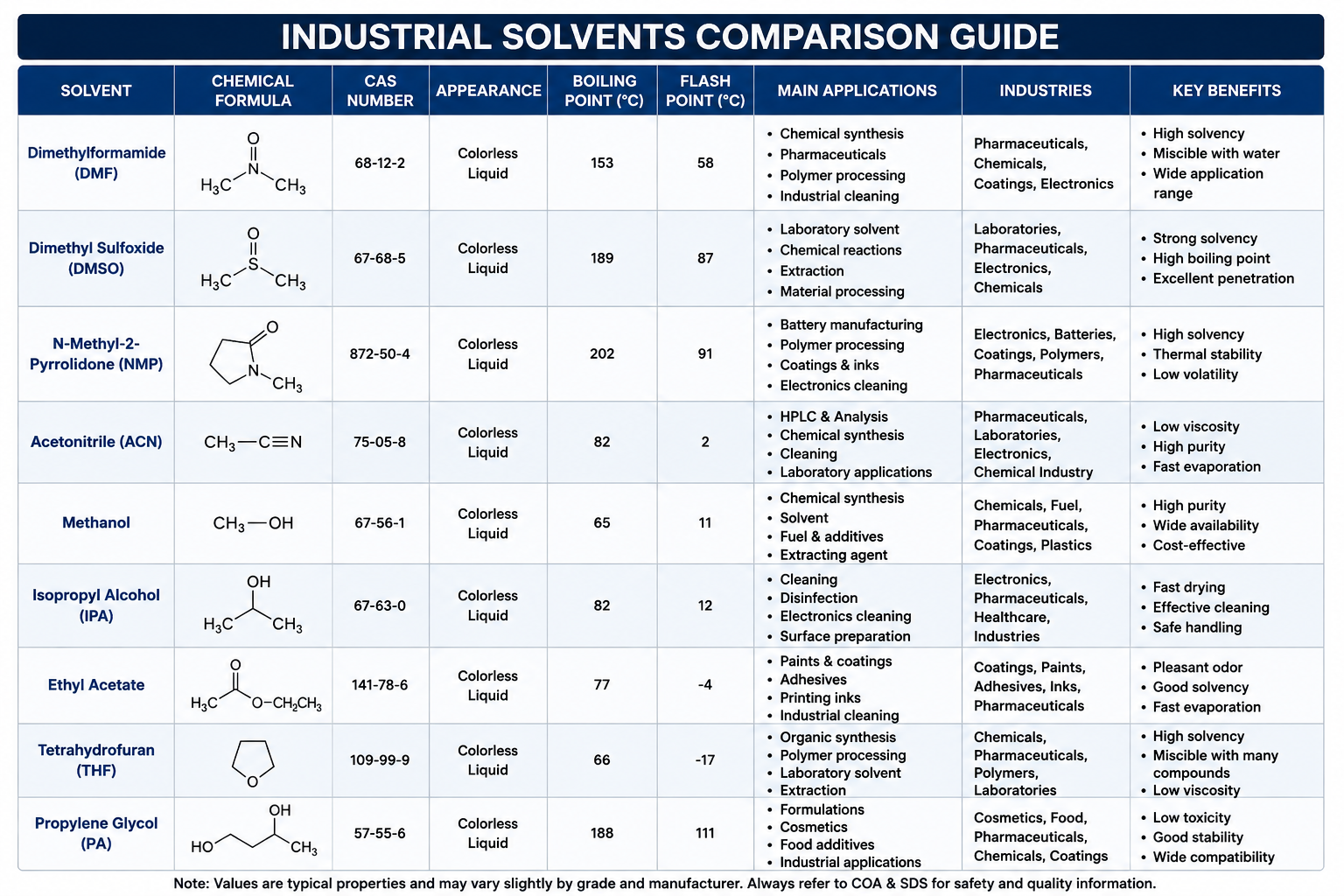
The Future of Specialty Solvents
The chemical industry continues to evolve as manufacturers focus on improved efficiency, sustainability, and responsible chemical management.
Future solvent development may focus on:

Improved process efficiency
Reduced environmental impact
Better recovery and recycling methods
Safer workplace practices
Compliance with changing regulations

Specialty solvents remain an important area of chemical engineering because many industrial processes require specific performance characteristics.

N-Methyl-2-Pyrrolidone (NMP) is a specialty organic solvent recognized for its strong solvency, chemical stability, and broad compatibility with many materials. Its characteristics have made it relevant in several legitimate industrial and technical applications.
A complete understanding of NMP includes its chemical properties, industrial roles, safety considerations, storage requirements, and the factors involved in responsible solvent selection.

As with all industrial chemicals, proper evaluation, documentation, and safe management practices are essential for responsible use.

Conclusion

N-Methyl-2-Pyrrolidone (NMP) is a specialty solvent recognized for its strong solvency, stability, and versatility in legitimate industrial and laboratory applications. Its chemical properties have made it relevant in areas such as polymer processing, electronics manufacturing, coatings, and other technical industries.


Understanding the characteristics, applications, and safety considerations of NMP helps organizations make informed decisions when evaluating solvent options.


As with all industrial chemicals, responsible handling, proper storage, and compliance with relevant safety requirements are essential parts of professional chemical management.

Industrial Applications of GBL (Gamma-Butyrolactone): Chemical Uses, Properties & Industry Overview

Industrial Applications of GBL (Gamma-Butyrolactone): Chemical Uses, Properties & Industry Overview.

Gamma-Butyrolactone (GBL) is an organic chemical compound recognized in industrial chemistry for its unique chemical properties and role in specialized applications.

As a cyclic ester compound, GBL has characteristics that make it relevant in areas where chemical performance, solvent properties, and compatibility are important considerations.
Industrial chemicals are selected based on their molecular structure, physical properties, and suitability for specific manufacturing processes. GBL is one example of a specialty chemical that has attracted attention because of its role within broader chemical industries.
Understanding the industrial applications of GBL requires looking at its chemical characteristics, relationship with related compounds, and position within modern chemical manufacturing.:
What Is GBL (Gamma-Butyrolactone

What Is GBL (Gamma-Butyrolactone))?

Chemical Properties, Industrial Applications & Regulatory Overview

What Is GBL? -Gamma-Butyrolactone

GBL, also known as Gamma-Butyrolactone, is a five-membered cyclic ester belonging to the lactone family.
Its molecular structure gives it several useful chemical characteristics, including:
Organic solvent properties

Chemical stability
Ability to interact with different chemical materials
Role as a chemical intermediate
Because of these properties, GBL is studied within industrial chemistry and specialty chemical applications.
Chemical Properties That Influence Industrial Use
The industrial relevance of GBL comes from its chemical structure and physical behavior.

Solvent Characteristics
One important feature of GBL is its ability to function as a high-performance organic solvent in suitable industrial contexts.

Solvents are important because they help:
Dissolve chemical substances
Support processing operations
Improve material compatibility
Assist chemical manufacturing procedures

Different industries select solvents depending on technical requirements.

Industrial Solvents Supplier

Industrial Solvents Supplier

Role of GBL in Chemical Manufacturing
Chemical manufacturing uses many different categories of materials, including:
Solvents
Intermediates
Building blocks
Specialty chemicals

GBL belongs to the group of organic chemicals considered in specialized industrial processes.
Manufacturers evaluate chemical materials based on:
Performance
Compatibility
Processing requirements

Safety considerations
The choice of a chemical depends on the specific industrial application.
Industrial Application Areas of GBL

1. Specialty Chemical Processing
GBL is discussed within specialty chemical industries where specific chemical properties are required.
Specialty chemicals are different from general commodity chemicals because they are selected for particular functions and performance characteristics.
Applications may depend on:
Chemical formulation needs
Production requirements
Material compatibility

2. Chemical Research and Development
Research laboratories and chemical organizations study many organic compounds, including GBL, to understand:
Chemical behavior
Reaction pathways
Material interactions
Industrial possibilities
Chemical research helps improve understanding of how compounds can be used in different industrial environments.

3. Manufacturing Support Applications
Industrial manufacturing often requires carefully selected chemical materials to support production processes.
The suitability of a chemical depends on:
Process conditions
Equipment compatibility
Industry standards
Required performance

GBL is one example of a chemical compound considered in specialized manufacturing discussions.
GBL and Related Chemical Materials
GBL is chemically related to other industrial compounds, including 1,4-Butanediol.

Understanding related chemicals helps explain how different compounds can have different industrial roles.

GBL vs 1,4-Butanediol

GBL vs 1,4-Butanediol:

Chemical Properties, Industrial Applications & Key Differences

Related chemical topics:
Industrial solvents
Chemical intermediates
Specialty chemicals
Organic compounds

GBL in Industrial Chemistry and Manufacturing Processes

Industrial chemistry relies on a wide range of chemical materials selected for their specific properties and performance.

GBL is studied as part of organic chemistry because its molecular structure provides characteristics that may be useful in specialized chemical environments.

The selection of a chemical material depends on factors such as:

Required chemical properties

Manufacturing process

Compatibility with other materials

Industry standards

A chemical supplier’s role is to provide accurate information and reliable sourcing support for industrial applications.

GBL Compared With Other Industrial Solvents

Different industrial solvents have different chemical characteristics. Companies select solvents based on the needs of each process.

GBL vs DMSO

DMSO is a polar organic solvent widely discussed in chemical and industrial applications.

GBL and DMSO differ in:

Molecular structure

Physical properties

Industrial applications

The appropriate solvent depends on the specific manufacturing requirement.

DMSO Supplier

DMSO Supplier

GBL vs DMF

DMF is another industrial solvent used in chemical processing.

Like other solvents, DMF selection depends on:

Chemical compatibility

Process requirements

Technical specifications

DMF Supplier

DMF Supplier

GBL vs THF

THF is an organic solvent commonly associated with chemical synthesis and industrial chemistry.

GBL and THF have different structures and characteristics, making them suitable for different applications.

THF Supplier 

THF Supplier 

Importance of Industrial Solvent Selection

Choosing the right solvent is an important part of chemical manufacturing.

Industries consider:

Solubility

The ability of a solvent to dissolve specific materials.

Chemical Compatibility

How the solvent interacts with other substances involved in a process.

Process Efficiency

The role of the solvent in supporting manufacturing operations.

Quality Requirements

Industrial applications often require consistent chemical information and documentation.

GBL and the Specialty Chemical Industry

Specialty chemicals support many advanced industrial processes.

Unlike basic commodity chemicals, specialty chemicals are often selected because of specific performance characteristics.

GBL is part of a wider chemical industry that includes:

Organic solvents

Chemical intermediates

Fine chemicals

Research materials

The specialty chemical sector depends on understanding chemical properties and selecting appropriate materials for each application.

GBL and Pharmaceutical Chemical Research

The pharmaceutical industry uses many types of chemical materials during research and manufacturing.

These materials may include:

Solvents

Intermediates

Starting materials

Building blocks

Chemical selection depends on the requirements of each process.:

Pharmaceutical Intermediates Supplier

Pharmaceutical Intermediates Supplier

GBL and Chemical Supply Chains

Modern chemical supply chains connect manufacturers, researchers, and industrial users with chemical materials needed for production.

A reliable chemical supply structure depends on:

Product information

Quality standards

Technical support

Responsible chemical management

Educational content about chemicals helps customers better understand the role of different materials within industrial chemistry.

Understanding GBL as Part of a Chemical Knowledge Network.

Chemical Knowledge Center

Chemical Knowledge center


Regulatory Considerations for GBL

Like many industrial chemicals, GBL is subject to different regulatory requirements depending on the country, industry, and intended application.

Companies working with chemical materials should consider:

Applicable chemical regulations

Documentation requirements

Safety procedures

Responsible handling practices

Regulatory frameworks may vary internationally, so chemical users and suppliers must follow the requirements relevant to their location and industry.

A professional chemical approach includes proper documentation, transparency, and compliance awareness.

Importance of Responsible Chemical Management

Industrial chemical management involves more than selecting a chemical based on performance.

Companies also consider:

Storage Requirements

Chemical storage practices help maintain product quality and workplace safety.

Technical Documentation

Accurate chemical information supports informed decision-making.

Workplace Procedures

Industrial users follow appropriate safety and operational standards.

Responsible chemical management supports reliable industrial operations.


Frequently Asked Questions About Industrial Applications of GBL

What are the industrial applications of GBL?

GBL is discussed in industrial chemistry because of its solvent properties and chemical characteristics. Its applications depend on industry requirements, process needs, and applicable regulations.

Why is GBL considered a specialty chemical?

GBL is considered a specialty chemical because it has specific chemical properties that make it relevant for specialized industrial applications.

Is GBL an industrial solvent?

GBL is recognized for solvent-related characteristics and is studied within the broader category of organic solvents used in chemical industries.

How does GBL compare with other solvents?

GBL differs from solvents such as DMSO, DMF, THF, and acetonitrile because each chemical has different molecular structures and performance characteristics.

What factors determine solvent selection?

Industries evaluate solvents based on:

Chemical compatibility

Required performance

Manufacturing conditions

Technical requirements

Why are chemical knowledge articles important for suppliers?

Educational chemical content helps customers understand products, applications, and industry concepts while building trust and expertise.

Related Sophie Chems Resources

Explore related chemical information:

What Is GBL (Gamma-Butyrolactone)? Chemical Properties, Industrial Applications & Regulatory Overview

Learn about GBL chemical properties and industrial relevance.

GBL vs 1,4-Butanediol: Chemical Properties, Industrial Applications & Key Differences

Compare related chemical compounds and their industrial roles.

1,4-Butanediol Supplier

Explore information about an important industrial chemical material.

Industrial Solvents Supplier

Discover solvent categories used in chemical processing and manufacturing.

Pharmaceutical Intermediates Supplier

Learn about chemical intermediates used in pharmaceutical development.

Chemical Knowledge Center

Chemical Knowledge Center

Explore chemical guides and industry information.


Conclusion

GBL (Gamma-Butyrolactone) is an important organic chemical compound studied within industrial chemistry because of its chemical properties and solvent characteristics.

Understanding the industrial applications of GBL requires looking at its structure, chemical behavior, relationship with other compounds, and its role within broader chemical industries.

For chemical professionals and industrial users, knowledge of chemical properties and applications helps support better decision-making and understanding of modern chemical manufacturing.

A strong chemical knowledge base connects educational information with commercial supplier resources, creating a clearer path between industry research and chemical sourcing.


GBL Chemical Applications, Gamma-Butyrolactone Uses, Industrial Solvents, Chemical Intermediates, Specialty Chemicals, Organic Solvents


GBL, Gamma-Butyrolactone, Industrial Solvents Supplier, Chemical Supplier, Specialty Chemical Supplier, Chemical Intermediates Supplier, Organic Solvents, Industrial Chemicals, Fine Chemicals


Industrial Solvents Supplier

Industrial Solvents Supplier

Sophiechems continues to develop its industrial solvent portfolio, including:

→ DMF Solvent Supplier

DMSO Supplier

NMP Supplier

→ Acetonitrile Supplier

→ THF Supplier

→ Methanol Supplier

→ IPA Supplier

→ Acetone Supplier

→ Ethyl Acetate Supplier

→ Methylene choloride Supplier

What Is GBL (Gamma-Butyrolactone)? Chemical Properties, Industrial Applications & Regulatory Overview

What Is GBL (Gamma-Butyrolactone)? Chemical Properties, Industrial Applications & Regulatory Overview.


Gamma-Butyrolactone (GBL) is an organic chemical compound widely recognized for its unique solvent properties and applications in industrial chemistry, manufacturing, and chemical research.

As a cyclic ester compound, GBL has characteristics that make it useful in various chemical processes where a high-performance solvent or chemical intermediate is required.

Understanding GBL requires looking at its chemical structure, physical properties, industrial relevance, and the regulatory considerations that apply in different regions.

Like many industrial chemicals, the importance of GBL comes from its technical properties and its role in specialized chemical applications.

What Is GBL (Gamma-Butyrolactone)?

GBL, also known as Gamma-Butyrolactone, is a five-membered cyclic ester belonging to the lactone family of organic compounds.

Its chemical structure gives it useful characteristics, including:

Good solvent ability

Chemical stability

Compatibility with many organic materials

Ability to participate in chemical reactions

GBL is studied and used within industrial chemistry because of its performance as a solvent and chemical building block.

It belongs to a broader category of oxygen-containing organic compounds used in chemical manufacturing.

Chemical Structure and Properties of GBL

GBL has the molecular formula C₄H₆O₂ and contains a cyclic ester functional group.

Important chemical characteristics include:

Polar Solvent Properties

GBL has polarity that allows it to dissolve many organic compounds, making it useful in certain industrial processes.

Chemical Stability

Its structure provides stability under appropriate industrial conditions.

Compatibility

GBL can interact with different chemical systems, which contributes to its usefulness in specialized applications.

Industrial Applications of GBL

GBL has been used in different industrial and chemical fields because of its solvent characteristics.

General application areas include:

Chemical Manufacturing

GBL may be involved in chemical processes where specific solvent properties are required.

Industrial chemistry often depends on solvents that provide:

Effective dissolution

Reaction support

Process flexibility

Research and Development

Chemical laboratories may study compounds like GBL as part of broader research into:

Organic chemistry

Chemical reactions

Material science

Industrial processes

Manufacturing Processes

Certain manufacturing environments use specialized solvents to support controlled production processes.

The choice of solvent depends on factors such as:

Chemical compatibility

Process requirements

Safety considerations

GBL as an Industrial Solvent

Solvents are essential materials in many industries because they help dissolve, separate, or process other substances.

Industrial solvents are selected based on:

Chemical properties

Application requirements

Compatibility with materials

Safety considerations

GBL is one example of a specialized solvent used in chemical applications.

Other common industrial solvents include:

Methanol

Acetonitrile

DMSO

DMF

THF

Ethyl Acetate

Isopropyl Alcohol

Industrial Solvents Supplier

Industrial Solvents Supplier

Explore common industrial solvents used in chemical processing and manufacturing applications.

GBL in Chemical Industry and Manufacturing

GBL is recognized in chemical industries because of its physical and chemical properties that make it suitable for specialized applications.

Industrial chemicals are selected based on performance, compatibility, and processing requirements. GBL’s characteristics allow it to be considered in areas where a polar organic solvent or chemical intermediate is needed.

The use of any industrial chemical depends on:

Industry requirements

Local regulations

Safety procedures

Approved applications


GBL as a Chemical Intermediate

In addition to solvent applications, GBL is also known as a chemical intermediate.

Chemical intermediates are substances used during the production pathway of other chemical compounds.

A chemical intermediate may help manufacturers create:

Advanced chemical materials

Specialty compounds

Industrial products

The importance of intermediates comes from their ability to support efficient chemical synthesis.


Chemical Knowledge Center

Chemical Knowledge Center

Explore educational guides about chemical compounds, intermediates, and industrial applications.

Comparing GBL With Other Industrial Solvents

Different solvents have different properties, and industries select them based on specific requirements.

GBL vs DMSO

Both are polar organic solvents used in chemical applications, but their chemical structures and performance characteristics differ.

DMSO is commonly recognized for its strong solvent capability and broad industrial use.


DMSO Supplier

DMSO Supplier

Description: Learn about an important industrial solvent used in chemical and pharmaceutical applications.

GBL vs DMF

DMF is another polar solvent widely used in industrial chemistry.

Solvent selection depends on factors such as:

Reaction conditions

Material compatibility

Manufacturing requirements

DMF Supplier

DMF Supplier

Explore information about DMF applications in chemical processing.

GBL vs THF

THF is a commonly used ether solvent in organic chemistry and industrial applications.

Different solvents provide different advantages depending on the chemical process.

THF Supplier

THF Supplier

Discover a commonly used solvent for chemical synthesis and industrial applications.


GBL is part of a group of related chemical compounds used in industrial chemistry. Related chemical materials such as 1,4-Butanediol Supplier are also important in chemical manufacturing and synthesis applications.”

1,4-Butanediol Supplier page Guide

1,4-Butanediol Supplier page Guide 🦮


Importance of Solvent Selection in Chemical Manufacturing

Choosing the correct solvent is an important part of chemical process development.

Factors considered include:

Solubility

The solvent should effectively dissolve the required materials.

Chemical Compatibility

The solvent should work safely with the chemicals involved in the process.

Process Requirements

Manufacturers consider temperature, reaction conditions, and production goals.

Safety and Compliance

Industrial solvent use requires appropriate handling and regulatory awareness.

Regulatory Considerations for GBL

GBL is subject to different regulations depending on the country and intended use.

Regulatory requirements may involve:

Chemical classification

Documentation

Import and export controls

Industrial compliance requirements

Companies working with regulated chemicals should understand applicable laws and maintain proper compliance procedures.

The regulatory status of chemicals can change depending on:

Location

Quantity

Purpose of use

Industry sector

Safe Handling and Chemical Responsibility

Like many industrial chemicals, GBL requires responsible handling practices.

Professional chemical operations generally consider:

Proper storage

Appropriate safety procedures

Workplace regulations

Chemical documentation

Chemical suppliers and users should follow applicable safety guidelines and legal requirements.

Role of Industrial Solvents in Pharmaceutical Manufacturing

Solvents play an important role in pharmaceutical and chemical industries.

They may be used during processes such as:

Chemical reactions

Extraction processes

Purification steps

Manufacturing operations

Common pharmaceutical and industrial solvents include:

Acetonitrile

Methanol

Isopropyl Alcohol

DMSO

DMF

THF

Pharmaceutical Intermediates Supplier

Pharmaceutical Intermediates Supplier

Explore chemical intermediates used in pharmaceutical synthesis and manufacturing.


Frequently Asked Questions About GBL (Gamma-Butyrolactone)

What is GBL (Gamma-Butyrolactone)?

GBL (Gamma-Butyrolactone) is an organic chemical compound belonging to the lactone family. It is recognized for its solvent properties and its role in certain industrial chemical applications.

What are the industrial uses of GBL?

GBL has been associated with specialized industrial and chemical applications where solvent performance and chemical properties are important.

Industrial chemical use depends on:

Application requirements

Local regulations

Safety procedures

Industry standards

Is GBL an industrial solvent?

GBL is considered a solvent used in certain chemical contexts because of its ability to dissolve various organic materials. Solvent selection depends on the specific manufacturing process and technical requirements.

How does GBL compare with other solvents?

Different solvents have different chemical properties. GBL, DMSO, DMF, THF, methanol, and acetonitrile each have different characteristics that make them suitable for different industrial applications.

Why are solvents important in chemical manufacturing?

Solvents help support many chemical processes by enabling dissolution, reaction control, processing, and separation steps.

The choice of solvent depends on:

Chemical compatibility

Process conditions

Performance requirements

What industries use industrial solvents?

Industrial solvents are used across industries such as:

Chemical manufacturing

Pharmaceutical production

Research and development

Specialty chemical industries

Where can I learn more about industrial solvents?

Explore the Sophie Chems Chemical Knowledge Center Chemical Knowledge Center

for educational information about solvents, intermediates, and chemical applications.


Industrial Solvents Supplier

Industrial Solvents Supplier

Description: Discover common solvents used in industrial and chemical manufacturing applications.

Related Chemical Knowledge Center Topics

Explore related guides:

Industrial Solvents Supplier

Learn about important solvents used in chemical processing.

What Are Pharmaceutical Intermediates?

Understand the role of chemical intermediates in pharmaceutical manufacturing.

KSM Supplier | Key Starting Materials for Pharmaceutical Manufacturing

Learn how starting materials support API development.

What Are Heterocyclic Compounds?

Discover important chemical structures used in pharmaceutical chemistry.

Conclusion

GBL (Gamma-Butyrolactone) is an important chemical compound studied within industrial chemistry because of its solvent characteristics and role in specialized chemical applications.

Understanding GBL requires knowledge of its chemical properties, industrial relevance, and regulatory considerations.

Like other industrial chemicals, responsible use depends on proper handling, compliance with applicable regulations, and understanding the requirements of each application.

For companies interested in industrial chemistry, solvent applications, and chemical manufacturing information, learning about compounds such as GBL provides valuable insight into the broader chemical industry.

GBL, Gamma Butyrolactone, Industrial Solvents, Chemical Knowledge Center, Chemical Intermediates, Pharmaceutical Chemicals, Organic Solvents


What Is N-Methylpiperidine? Applications & Uses

What Is N-Methylpiperidine? Applications & Uses in Pharmaceutical and Chemical Synthesis.

N-Methylpiperidine is an important nitrogen-containing heterocyclic compound widely recognized as a valuable chemical intermediate in pharmaceutical research, organic synthesis, and specialty chemical applications.

As a member of the piperidine family, N-Methylpiperidine contains a six-membered saturated ring with one nitrogen atom and a methyl group attached to the nitrogen. This unique structure gives it useful chemical properties that make it an important building block in modern chemical synthesis.

Piperidine derivatives are widely studied and used in pharmaceutical chemistry because they can be modified to create complex molecular structures. N-Methylpiperidine is one example of a versatile intermediate used by researchers and chemical manufacturers.

This article explains what N-Methylpiperidine is, its properties, applications, industrial importance, and its role within the broader category of piperidine derivatives.

What Is N-Methylpiperidine?

N-Methylpiperidine is a methyl-substituted piperidine compound belonging to the class of heterocyclic amines.

The compound consists of:

A six-membered saturated nitrogen-containing ring

A methyl group attached to the nitrogen atom

This modification changes the chemical behavior of the parent piperidine structure and provides additional flexibility for chemical reactions.

N-Methylpiperidine is mainly used as:

A pharmaceutical intermediate

A chemical building block

A synthesis reagent

A research compound

A specialty chemical intermediate

Piperidine Derivatives Supplier

Piperidine Derivatives Supplier

Explore piperidine-based chemical intermediates used in pharmaceutical and chemical synthesis.

Chemical Structure and Properties of N-Methylpiperidine

N-Methylpiperidine belongs to the group of aliphatic heterocyclic compounds.

Important characteristics include:

Nitrogen-Containing Ring Structure

The nitrogen atom within the ring influences:

Chemical reactivity

Molecular interactions

Synthetic possibilities

Nitrogen-containing heterocycles are commonly found in pharmaceutical molecules because they can provide valuable structural features.

Chemical Versatility

The N-methyl group attached to the nitrogen atom provides different properties compared with unsubstituted piperidine.

This allows N-Methylpiperidine to participate in various chemical transformations during synthesis.

N-Methylpiperidine as a Heterocyclic Intermediate

Heterocyclic compounds are among the most important structures in pharmaceutical chemistry.

They contain rings with atoms such as:

Nitrogen

Oxygen

Sulfur

Piperidine derivatives are a major category of nitrogen-containing heterocycles.

N-Methylpiperidine contributes to this field because it can serve as a useful starting point for creating more complex molecules.

Heterocyclic Intermediates Supplier

Heterocyclic Intermediates Supplier

Description: Learn about important heterocyclic building blocks used in pharmaceutical chemistry.

Relationship Between Piperidine and N-Methylpiperidine

Piperidine is a basic six-membered nitrogen heterocycle. By modifying the nitrogen position with a methyl group, N-Methylpiperidine is created.

This type of modification is common in chemical synthesis because small structural changes can influence:

Molecular properties

Reactivity

Compatibility in synthesis pathways

Piperidine derivatives are frequently explored in medicinal chemistry due to their structural flexibility.


Pharmaceutical Applications of N-Methylpiperidine

N-Methylpiperidine is an important compound in pharmaceutical chemistry because piperidine structures are commonly found in many areas of medicinal chemistry and drug development research.

The piperidine ring is valued by chemists because it can provide useful structural characteristics when designing complex molecules.

N-Methylpiperidine may be used as a chemical building block during the development of advanced pharmaceutical intermediates.

Common application areas include:

Pharmaceutical research

Organic synthesis

Medicinal chemistry

Intermediate development

Specialty chemical manufacturing

Pharmaceutical Intermediates Supplier

Pharmaceutical Intermediates Supplier

Description: Explore chemical intermediates used in pharmaceutical synthesis and API development.

Role of N-Methylpiperidine in Chemical Synthesis

Chemical synthesis involves transforming simple molecules into more complex compounds through controlled reactions.

N-Methylpiperidine is useful because its nitrogen-containing structure provides opportunities for chemical modification.

It can be incorporated into synthetic pathways involving:

Organic transformations

Molecular structure development

Intermediate preparation

Research chemistry

The flexibility of piperidine-based compounds makes them valuable tools for chemists working on advanced chemical structures.

N-Methylpiperidine in Medicinal Chemistry

Medicinal chemistry focuses on designing and studying molecules with potential pharmaceutical applications.

Nitrogen-containing heterocycles such as piperidine derivatives are frequently studied because they can influence molecular characteristics.

Piperidine structures appear in many pharmaceutical research programs due to their:

Structural flexibility

Chemical stability

Ability to interact with biological molecules

N-Methylpiperidine represents one example of how chemists modify heterocyclic structures to create useful intermediates.

Industrial Uses of N-Methylpiperidine

Beyond pharmaceutical research, N-Methylpiperidine has importance in specialty chemical applications.

Industrial uses may include:

Chemical Manufacturing

Used as an intermediate for producing more complex chemical compounds.

Research and Development

Used in laboratory and industrial research environments focused on chemical synthesis.

Specialty Chemicals

Supports the development of advanced chemical materials and intermediate products.

N-Methylpiperidine and API Development

Active Pharmaceutical Ingredient (API) development requires multiple stages of chemical synthesis.

During this process, manufacturers use various intermediates and building blocks to construct complex molecular structures.

N-Methylpiperidine can support this process by acting as a useful chemical component within synthetic routes.

The relationship can be summarized:

Chemical Building Blocks

Piperidine Intermediates

Advanced Pharmaceutical Intermediates

API Development


API vs Pharmaceutical Intermediates

API vs Pharmaceutical Intermediates

Description: Understand the difference between APIs and chemical intermediates used in pharmaceutical manufacturing.

Advantages of Piperidine-Based Intermediates

Piperidine derivatives are widely used because they offer several advantages in chemical synthesis.

Structural Flexibility

Piperidine compounds can be modified in different ways to create diverse chemical structures.

Wide Research Applications

They are used across:

Pharmaceutical chemistry

Organic synthesis

Chemical research

Valuable Building Blocks

They help researchers develop complex molecules from simpler chemical materials.

Importance of Nitrogen-Containing Heterocycles

Nitrogen-containing heterocycles represent one of the largest groups of structures used in pharmaceutical chemistry.

Examples include:

Piperidine derivatives

Pyridine derivatives

Other nitrogen heterocyclic compounds

These structures are important because nitrogen atoms can influence:

Molecular properties

Chemical interactions

Synthetic pathways


What Are Pyridine Derivatives

What Are Pyridine Derivatives?

Description: Learn about another important nitrogen-containing heterocyclic compound family used in pharmaceutical chemistry.

N-Methylpiperidine Compared With Other Piperidine Derivatives

The piperidine family includes many related compounds with different substitutions and applications.

Examples include:

Piperidine

N-Methylpiperidine

Substituted piperidine derivatives

Each derivative may have different chemical is characteristics depending on the attached functional groups.

This diversity makes piperidine derivatives valuable for pharmaceutical and chemical research.

Growing Importance of Piperidine Derivatives

Demand for piperidine-based intermediates continues to grow due to their importance in:

Pharmaceutical innovation

Advanced chemical synthesis

Research and development

As pharmaceutical companies continue exploring new molecular structures, versatile heterocyclic intermediates remain important components of modern chemistry Flexibility


Market Importance of N-Methylpiperidine

The demand for nitrogen-containing heterocyclic intermediates continues to grow because of their importance in pharmaceutical research, chemical development, and specialty chemical manufacturing.

N-Methylpiperidine represents one of many piperidine-based building blocks used in modern chemical synthesis.

Factors supporting interest in piperidine derivatives include:

Growth of pharmaceutical research

Development of advanced chemical intermediates

Expansion of fine chemical manufacturing

Increased demand for specialized building blocks

As chemical industries continue to develop new molecules, versatile intermediates such as N-Methylpiperidine remain important components of chemical supply chains.

Future Role of Piperidine-Based Intermediates

Piperidine derivatives continue to attract attention in pharmaceutical and chemical research because of their structural flexibility.

Future applications are supported by:

Continued innovation in medicinal chemistry

Increasing demand for complex molecules

Expansion of chemical research activities

Development of new synthesis methods

Understanding the role of compounds like N-Methylpiperidine helps researchers and manufacturers select suitable building blocks for different chemical pathways.


Frequently Asked Questions

What is N-Methylpiperidine?

N-Methylpiperidine is a nitrogen-containing heterocyclic compound derived from the piperidine structure. It is used as a chemical intermediate and building block in organic synthesis and pharmaceutical research.

What is N-Methylpiperidine used for?

N-Methylpiperidine is used in chemical synthesis, pharmaceutical intermediate development, medicinal chemistry research, and specialty chemical applications.

Is N-Methylpiperidine a piperidine derivative?

Yes. N-Methylpiperidine is a member of the piperidine derivative family because it contains a modified piperidine ring structure.

Why are piperidine derivatives important?

Piperidine derivatives are important because they provide versatile nitrogen-containing structures used in pharmaceutical chemistry and advanced chemical synthesis.

What industries use N-Methylpiperidine?

Industries involved in pharmaceutical research, chemical manufacturing, fine chemicals, and specialty chemical development may use piperidine-based intermediates.

What is the role of N-Methylpiperidine in chemical synthesis?

N-Methylpiperidine can serve as a building block that helps chemists create more complex molecules through controlled synthetic processes.

How do companies select an N-Methylpiperidine supplier?

Companies usually consider product quality, supply capability, technical information, and reliable sourcing when selecting a chemical supplier.

Where can I learn more about piperidine and chemical intermediates?

Visit the Sophie Chems

Chemical Knowledge Center

Chemical Knowledge Center

for educational resources covering pharmaceutical intermediates, heterocyclic compounds, and chemical applications.

Related Sophie Chems Resources

Piperidine Derivatives Supplier

Piperidine Derivatives Supplier

Explore piperidine-based chemical intermediates and building blocks.

Heterocyclic Intermediates Supplier

Heterocyclic Intermediates Supplier

Learn about nitrogen-containing compounds used in pharmaceutical chemistry.

Pharmaceutical Intermediates Supplier

Pharmaceutical Intermediates Supplier

Discover chemical intermediates used in API development and synthesis.

KSM Supplier | Key Starting Materials

Understand the role of starting materials in pharmaceutical manufacturing.


Chemical Knowledge Center

Chemical Knowledge Center

Explore chemical guides, industry information, and educational resources.

Conclusion

N-Methylpiperidine is an important piperidine derivative and heterocyclic chemical intermediate with applications in pharmaceutical research, organic synthesis, and specialty chemical development.

Its nitrogen-containing ring structure provides useful chemical properties that make it a valuable building block for creating advanced compounds.

As demand for pharmaceutical intermediates and chemical building blocks continues to grow, N-Methylpiperidine remains part of the broader chemical landscape supporting modern synthesis and research.


N-Methylpiperidine Supplier, Piperidine Derivatives Supplier, Pharmaceutical Intermediate Supplier, Heterocyclic Intermediates, Chemical Building Blocks, API Intermediates, Fine Chemical Supplier


N-Methylpiperidine, Piperidine Derivatives, Heterocyclic Compounds, Pharmaceutical Intermediates, Chemical Synthesis, API Intermediates, Fine Chemicals


What Is Acetone Used for in Industry? Applications, Benefits & Industrial Uses

What Is Acetone Used for in Industry? Applications, Benefits & Industrial Uses.


What Is Acetone Used for in Industry

Acetone is one of the most widely used industrial solvents in the world. Known for its excellent solvency, rapid evaporation rate, and versatility, acetone plays a critical role in numerous industries, including pharmaceuticals, chemical manufacturing, coatings, plastics, electronics, laboratories, and industrial cleaning.


As a colorless, highly volatile organic compound, acetone is valued for its ability to dissolve a wide range of substances while leaving minimal residue after evaporation. These properties make it an essential material in manufacturing processes, research laboratories, and industrial production facilities worldwide.


Industrial acetone is commonly used as a solvent, cleaning agent, extraction medium, and chemical intermediate. Its broad range of applications continues to make it one of the most important chemicals in modern industrial operations.

Learn about

industrial grade acetone specifications,

Industrial Grade Acetone Supplier

supply options, and bulk sourcing solutions.


This guide explores what acetone is used for in industry, its key benefits, major applications, handling considerations, and importance in chemical manufacturing and research.


What Is Acetone?

Acetone, also known as propanone, is a simple organic solvent with the molecular formula C3H6O. It belongs to the ketone family of compounds and is characterized by its strong solvency and rapid evaporation.

Acetone occurs naturally in small amounts in the environment and can also be produced through industrial manufacturing processes. Due to its effectiveness as a solvent, it is widely used in industrial applications that require cleaning, extraction, formulation, or chemical synthesis.


Key characteristics include:

– Colorless liquid

– High volatility

– Excellent solvent properties

– Rapid evaporation rate

– Miscibility with water and many organic solvents

– Broad industrial applicability

These characteristics contribute to its popularity across multiple sectors.

View detailed acetone specifications, applications, packaging options, and product information.

Acetone Product Specifications

Acetone Product Specifications


Why Acetone Is Important in Industry

Acetone remains one of the most important industrial chemicals because it offers a combination of performance, availability, and versatility.


Excellent Solvent Properties

Acetone can dissolve many organic compounds, making it useful in manufacturing, cleaning, and formulation processes.

Fast Evaporation

Its rapid evaporation rate helps reduce drying times in coatings, cleaning operations, and industrial production.

High Compatibility

Acetone is compatible with numerous chemicals, polymers, and manufacturing systems.

Cost Efficiency

Large-scale production and widespread availability make acetone a cost-effective solvent for many industrial operations.

Multi-Industry Applications

Its use spans pharmaceuticals, laboratories, electronics, coatings, plastics, and chemical processing.


Acetone in Pharmaceutical Manufacturing

One of the most important industrial applications of acetone is within the pharmaceutical industry.

Acetone is frequently used during:

– Pharmaceutical synthesis

– Intermediate production

– API manufacturing

– Purification processes

– Crystallization procedures

– Equipment cleaning

Its ability to dissolve a wide range of organic compounds makes it valuable in pharmaceutical research and production.

For additional information, explore our Industrial Acetone pillar page and related pharmaceutical manufacturing resources.

Acetone Industrial Grade  Supplier page

Acetone Industrial Supplier page 


Discover chemical intermediates used in pharmaceutical synthesis and manufacturing processes.

Pharmaceutical Intermediates

Pharmaceutical Intermediates


Acetone in Chemical Manufacturing

Chemical manufacturers rely heavily on acetone as both a solvent and a raw material.

Applications include:

Chemical Synthesis

Acetone supports numerous synthesis reactions used in industrial chemistry.


Intermediate Production

Many specialty chemicals and intermediates are manufactured using acetone during processing stages.

Extraction Processes

Acetone helps separate desired compounds from complex mixtures.

Product Formulation

Manufacturers use acetone to formulate coatings, adhesives, and specialty chemical products.

Its versatility makes it an important component of modern chemical production


Acetone as a Laboratory Solvent

Research laboratories use acetone extensively for analytical, educational, and industrial research applications.


Common laboratory uses include:

– Sample preparation

– Equipment cleaning

– Solvent extraction

– Chromatography procedures

– Research synthesis

Laboratory personnel value acetone because it evaporates quickly and leaves minimal residue.


Learn more in our guide on Acetone as a Laboratory Solvent.

Acetone in Industrial Cleaning

Industrial cleaning represents one of the most common uses of acetone.

Equipment Cleaning

Manufacturing equipment often accumulates oils, greases, residues, and contaminants during production.

Acetone effectively removes many of these substances.

Surface Preparation

Before coating, painting, or bonding, surfaces frequently require cleaning.

Acetone helps eliminate contaminants that could interfere with adhesion.

Precision Cleaning

Industries requiring high levels of cleanliness often use acetone for precision cleaning applications.

Examples include electronics manufacturing and laboratory operations.


Acetone in Paints and Coatings

The coatings industry uses acetone extensively because of its excellent solvency and fast drying properties.

Applications include:

– Paint formulations

– Protective coatings

– Industrial finishes

– Surface treatments

– Coating adjustments

Acetone contributes to efficient application and rapid drying performance.


Acetone in Adhesive Manufacturing

Adhesive manufacturers use acetone to support product formulation and processing.

Benefits include:

– Improved viscosity control

– Enhanced application properties

– Efficient drying characteristics

– Better manufacturing consistency

These advantages make acetone an important component in many adhesive systems.


Acetone in Plastic Manufacturing

Plastic production relies on acetone for various applications.

Polymer Processing

Acetone assists in polymer manufacturing and processing operations.

Resin Production

Numerous resins and specialty materials involve acetone during production.

Product Development

Manufacturers use acetone during research and development activities focused on plastics and advanced materials.

Acetone in Electronics Manufacturing

The electronics industry demands high-purity cleaning solutions capable of removing contaminants without damaging sensitive components.

Explore industrial solvents used in chemical processing, cleaning, coatings, and production operations.

Industrial Solvents 

Industrial Solvents 


Acetone supports:

– Component cleaning

– Surface preparation

– Manufacturing maintenance

– Precision processing

Its rapid evaporation characteristics help minimize residue formation.


Acetone in Printing Applications

Printing operations use acetone in several areas, including:

– Ink formulation

– Equipment cleaning

– Solvent blending

– Production maintenance

The ability to dissolve many printing materials contributes to its usefulness in this sector.


Acetone in Textile Manufacturing

Textile manufacturers use acetone during certain processing and finishing operations.

Applications may include:

– Cleaning

– Chemical treatment

– Manufacturing support processes

– Quality control procedures

Its effectiveness as a solvent supports efficient textile production.


Acetone in Research and Development

Research facilities rely on acetone because of its versatility and compatibility with many experimental systems.


Acetone supports:

– Synthetic chemistry

– Pharmaceutical development

– Material science research

– Analytical testing

– Process development

Its widespread use in laboratories reflects its importance to scientific innovation.

Access technical articles, chemical guides, and educational industry resources in our

Chemical knowledge center

Chemical knowledge center


Benefits of Using Acetone in Industry

Rapid Drying

Fast evaporation helps improve production efficiency.

Strong Solvency

Acetone dissolves many organic substances effectively.

Versatility

One chemical can support numerous industrial applications.

Easy Availability

Global production helps maintain consistent supply.

Process Efficiency

Acetone contributes to streamlined manufacturing operations.

Research Support

Its compatibility with many laboratory techniques makes it valuable in scientific research.


Acetone Purity Grades

Industrial acetone is available in multiple purity grades depending on the intended application.

Industrial Grade

Suitable for general manufacturing and cleaning operations.

Laboratory Grade

Used in research and testing applications.

High-Purity Grade

Preferred when strict quality requirements exist.

Specialty Grades

Designed for specific industries or manufacturing processes.

Understanding purity requirements helps ensure optimal performance and product quality.

For more information, see our guide on Acetone Purity Grades Explained.

Learn about laboratory testing procedures and analytical techniques used in chemical industries.

Chemical Analysis Guides.

Chemical Analysis Guide


Storage and Handling Considerations

Proper storage and handling are essential for maintaining product quality and workplace safety.

Recommended practices include:

– Store in approved containers

– Keep away from ignition sources

– Maintain adequate ventilation

– Follow established handling procedures

– Prevent contamination during storage


Industrial users should always follow applicable regulations and safety guidelines.

Learn more in our Acetone Storage and Handling Guidelines resource.


Environmental and Safety Considerations

Industrial facilities should implement appropriate procedures when using acetone.

Important considerations include:

– Proper ventilation

– Employee training

– Storage management

– Spill response planning

– Regulatory compliance

Following established safety practices helps support responsible industrial use.


Future Industrial Demand for Acetone

The demand for acetone continues to grow due to expanding industrial activity and ongoing innovation.


Key drivers include:

– Pharmaceutical manufacturing growth

– Increased research activity

– Advanced materials development

– Chemical industry expansion

– Electronics manufacturing growth

These trends support continued demand for high-quality industrial acetone products.


Request product information, availability, pricing, and bulk supply assistance.

What Is Acetone Used for in Industry? ⬇

Industrial Grade Acetone Supplier ⬇

Acetone Product Page ⬇

Contact US


Conclusions:

Acetone remains one of the most versatile and widely used industrial chemicals available today. Its excellent solvency, rapid evaporation rate, and broad compatibility make it an essential material across numerous industries.

From pharmaceutical manufacturing and chemical synthesis to laboratory research, coatings, electronics, adhesives, and industrial cleaning, acetone supports a wide range of critical processes. Its versatility, efficiency, and availability ensure that it continues to play a significant role in modern industrial operations.

Understanding what acetone is used for in industry helps manufacturers, researchers, and procurement professionals select appropriate materials and optimize production processes.

To learn more about specifications, properties, and applications, visit our Industrial Acetone guide.


Industrial grade acetone is a versatile solvent widely used in chemical manufacturing, pharmaceutical processing, coatings, adhesives, laboratory applications, and industrial cleaning. A reliable acetone supplier provides consistent quality, proper documentation, and dependable supply solutions for commercial and industrial needs.

Back to Top
Product has been added to your cart

Customer Reviews

SOPHIE CHEMS

Customer Testimonials

Lolo 02-07-2023

Trustpilot
I've ordered several times from SophieChems and have always had excellent service, with items arriving promptly and in good condition.

Jennifer 07-06-2023

Google
I gave them five stars because they are speedy and exact with returns. They offer high-quality products at reasonable costs, and their delivery is both quick and reliable.

Patrice Martin-Carroll 26-05-2023

Google
Good site with easy payment choices, excellent assistance, and excellent staff. Because reputable suppliers are hard to come by, a greater product selection would be beneficial.

MichelleE 04-05-2023

Trustpilot
I've been a long-time user of this site, and while things have changed recently, I've found that patience has paid off.
Not only did I receive my purchase, but he also sent me an older order. They have communicated with me and have proven to me that I can trust him because they are simply overworked. Thank you for being such a terrific company, SophieChems!

S K HOWARD 17-04-2023

Trustpilot
I discovered this organization through a Google search and am quite pleased with my decision. The builders' buckets arrived immediately and at a reasonable price. These are also made in the EU and are of good quality, far superior to anything available from a large DIY retailer.

Enriq Orti 29-03-2023

Google
SophieChems is one of the top internet stores in my opinion. I have faith in Research Chemicals and would like to get cannabinoids from this store because it is convenient for me.

Heidi Hurst 08-03-2023

Google
Great, honest, and dependable research firm that has proven to be 100 percent dependable and of good value in the past. I strongly advise anyone to visit the Sophie store and place an order as soon as possible!

Ha Nguyen 15-02-2023

Google
SophieChems has the best customer service; this was my first time ordering from them, and the experience was fantastic... I got bromazolam powder online, and it arrived in the United States on time (in 13 days). My plants yielded the expected outcomes. Thank you for the discount as well, guys; keep up the fantastic work.

Buzz Lightyear 27-01-2023

Google
SophieChems has a fantastic webpage. This is my second order from them, and they have always delivered high-quality things on time. I'm confident I'll be a repeat buyer!

Danielle 01-01-2023

Trustpilot
The website is simple to navigate. Customer service that is both excellent and responsive. I would recommend it to anyone searching for the greatest chems online. Shipping can take a while, but that's to be anticipated.