


Chemical Testing Methods: A Complete Guide to Laboratory Analysis and Quality Control.
Chemical testing methods are fundamental to modern science and manufacturing. They help laboratories, manufacturers, and researchers identify substances, verify purity, detect impurities, and ensure that materials meet established quality standards. From pharmaceutical production and industrial manufacturing to environmental monitoring and academic research, analytical testing provides reliable data that supports product quality and regulatory compliance.
Analytical chemistry combines scientific principles with advanced instrumentation to evaluate the physical and chemical properties of substances. Different testing methods are designed for different purposes. Some techniques determine the identity of a compound, while others measure concentration, moisture content, molecular structure, elemental composition, or trace contaminants.
Choosing the appropriate analytical method depends on factors such as the sample type, the information required, the expected sensitivity, and the applicable quality standards. In many laboratories, multiple techniques are used together to provide a comprehensive understanding of a material.
Explore Sophiechems
Chemical Knowledge Center
Laboratory Safety Guide
Why Chemical Testing Is Important
Chemical testing plays a critical role throughout the lifecycle of chemicals and materials. Reliable analytical results help organizations make informed decisions about research, manufacturing, quality assurance, storage, and regulatory compliance.Chemical Testing Methods
Certificate of Analysis (COA) Guide
Certificate of Analysis (COA) Guide
HPLC, GC, GC-MS, LC-MS, FTIR, and NMR Chemical Testing Guide
Key objectives of chemical testing include:
Confirming the identity of a chemical substance.
Measuring purity and concentration.
Detecting impurities and contaminants.
Monitoring manufacturing consistency.
Supporting quality assurance programs.
Verifying compliance with technical specifications.
Supporting research and product development.
Providing documentation for laboratory and industrial quality systems.
Without appropriate testing, manufacturers and laboratories cannot confidently determine whether materials meet the required specifications or are suitable for their intended applications.Chemical Testing Methods
The Role of Quality Control in Chemical Manufacturing
Quality control is a systematic process used to evaluate whether raw materials, intermediates, and finished products conform to predefined specifications. Analytical testing is one of the most important components of an effective quality management system.
Pharmaceurical Intermediate Supplier
Pharmaceurical Intermediate Supplier
Typical quality control activities include:
Incoming raw material inspection.
In-process testing during manufacturing.
Finished product verification.
Batch-to-batch consistency evaluation.
Stability testing.
Documentation and record keeping.
Many industries—including pharmaceuticals, food, petrochemicals, environmental laboratories, and academic research facilities—depend on validated analytical methods to maintain consistent quality.
Categories of Chemical Testing Methods
Analytical methods can be grouped into several broad categories based on the type of information they provide.
Chromatographic Methods
Chromatography separates components within a mixture, making it possible to identify and quantify individual compounds. Common techniques include:
High-Performance Liquid Chromatography (HPLC)
High-Performance Liquid Chromatography (HPLC)
Gas Chromatography (GC)
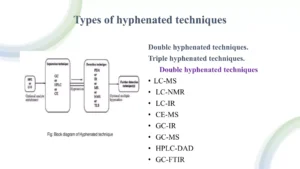
Liquid Chromatography–Mass Spectrometry (LC-MS)
Liquid Chromatography–Mass Spectrometry (LC-MS)
Gas Chromatography–Mass Spectrometry (GC-MS)
Gas Chromatography–Mass Spectrometry (GC-MS)
These techniques are widely used in pharmaceutical analysis, environmental testing, food analysis, and scientific research.
Spectroscopic Methods
Spectroscopy examines how matter interacts with electromagnetic radiation. These methods help identify compounds and investigate molecular structure.
Common examples of Chemical Testing Methods
Fourier Transform Infrared (FTIR) Spectroscopy
Nuclear Magnetic Resonance (NMR) (NMR) Spectroscopy
Ultraviolet–Visible (UV-Vis) Spectroscopy
Atomic Absorption Spectroscopy (AAS)
Spectroscopic methods are valued because they often provide rapid, non-destructive analysis.
Physical Property Testing
Many laboratory tests focus on measurable physical properties that support identification and quality evaluation.
Examples include:
Density measurement
Viscosity testing
Melting point determination
Boiling point determination
Refractive index measurement
Moisture determination
These measurements complement instrumental techniques and provide additional quality information.
Elemental Analysis
Elemental analysis determines which elements are present in a sample and their concentrations. It is particularly important for detecting trace metals and verifying composition.
Common techniques include:
Inductively Coupled Plasma Optical Emission Spectroscopy (ICP-OES)
Inductively Coupled Plasma Mass Spectrometry (ICP-MS)
CHNS Elemental Analysis
These methods are widely used in environmental science, materials research, geology, and quality control laboratories.
Selecting the Appropriate Testing Method
No single analytical technique is suitable for every application. Scientists choose methods based on the question they are trying to answer.
Important considerations include:
The type of sample being analyzed.
The expected concentration of the substance.
The required level of accuracy and precision.
Available laboratory instrumentation.
Time constraints.
Applicable standards and regulatory requirements.
In practice, laboratories often combine multiple analytical techniques to build confidence in their results. For example, chromatography may separate components of a mixture, while spectroscopy helps confirm the identity of those components.
Major Chemical Testing Methods
High-Performance Liquid Chromatography (HPLC)
High-Performance Liquid Chromatography (HPLC) is one of the most widely used analytical techniques in modern laboratories. It separates, identifies, and quantifies compounds dissolved in a liquid sample with high precision.
HPLC works by pumping a liquid sample through a column packed with a stationary phase. Different compounds interact differently with the stationary phase, causing them to separate as they move through the column. A detector then measures each compound as it exits the column.
Common Applications
HPLC is widely used for:
Pharmaceutical quality control
Drug development
Chemical purity analysis
Food and beverage testing
Environmental monitoring
Cosmetic analysis
Biotechnology research
Advantages
High analytical accuracy
Excellent reproducibility
Suitable for complex mixtures
High sensitivity
Capable of quantitative analysis
Limitations
Higher equipment costs
Requires trained laboratory personnel
Routine instrument maintenance is essential
Gas Chromatography (GC)
Gas Chromatography (GC) is the preferred analytical method for separating and analyzing volatile and semi-volatile compounds. It is one of the most important techniques used in chemical laboratories and industrial quality control.
In GC, a sample is vaporized and carried through a chromatographic column by an inert gas. Each compound travels at a different rate, allowing separation before detection.
Common Applications
Gas Chromatography is commonly used for:
Industrial solvent analysis
Petrochemical products
Fuel testing
Essential oils
Fragrance analysis
Environmental monitoring
Volatile organic compounds (VOCs)
Advantages
Fast analysis
High sensitivity
Excellent separation efficiency
Reliable quantitative results
Ideal for volatile compounds
Limitations
Limited to volatile or thermally stable substances
Some samples require preparation or derivatization
Gas Chromatography–Mass Spectrometry (GC-MS)
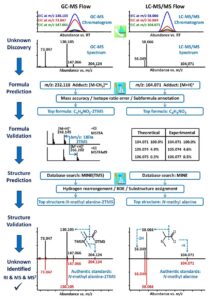
GC-MS combines the separation capability of Gas Chromatography with the identification power of Mass Spectrometry. It is widely regarded as one of the most reliable methods for identifying unknown organic compounds.
After compounds are separated by the GC column, they enter the mass spectrometer, which fragments the molecules and measures their mass-to-charge ratios. The resulting spectra can be compared with reference libraries to identify compounds.
Applications
GC-MS is extensively used in:
Forensic science
Environmental analysis
Toxicology
Pharmaceutical research
Chemical identification
Food safety laboratories
Academic research
Benefits
Extremely high specificity
Excellent sensitivity
Identification of unknown compounds
Trace-level analysis
Comprehensive qualitative and quantitative information
Liquid Chromatography–Mass Spectrometry LC-MS
Liquid Chromatography–Mass Spectrometry (LC-MS) combines liquid chromatography with mass spectrometric detection. It is particularly valuable for analyzing compounds that cannot easily be vaporized for gas chromatography.
LC-MS has become a standard analytical tool in pharmaceutical development, biotechnology, and biomedical research.
Typical Applications
Drug development
Pharmaceutical research
Biomolecule analysis
Peptide characterization
Metabolomics
Clinical laboratories
Environmental testing
Advantages
Extremely high sensitivity
Suitable for large and complex molecules
Excellent structural information
Broad analytical capability
Limitations
High instrument cost
Complex operation
Requires experienced analysts
Fourier Transform Infrared (FTIR) Spectroscopy
FTIR spectroscopy identifies chemical substances by measuring how molecules absorb infrared radiation. Different chemical bonds absorb infrared light at characteristic wavelengths, creating a unique spectral “fingerprint.”
Common Uses
Material identification
Polymer analysis
Organic compound characterization
Quality control
Functional group identification
Raw material verification
Advantages
Rapid analysis
Minimal sample preparation
Non-destructive testing
Reliable identification
Nuclear Magnetic Resonance (NMR) Spectroscopy
NMR spectroscopy provides detailed information about the molecular structure of a compound by observing the behavior of atomic nuclei in a magnetic field.
Because it reveals atomic connectivity, NMR is one of the most powerful techniques for confirming molecular structures.
Applications
Organic chemistry
Pharmaceutical research
Natural product analysis
Structural confirmation
Academic research
Benefits
Highly detailed structural information
Accurate compound identification
Non-destructive analysis
Excellent reproducibility
Ultraviolet–Visible (UV-Vis) Spectroscopy
UV-Vis spectroscopy measures how much ultraviolet or visible light a substance absorbs. The amount of absorbed light is related to the concentration of the analyte, making UV-Vis an important technique for quantitative analysis.
Common Applications
Concentration determination
Water quality testing
Pharmaceutical analysis
Food testing
Research laboratories
Advantages
Fast analysis
Cost-effective
Easy operation
Suitable for routine laboratory work
Choosing the Right Analytical Technique
Each testing method has unique strengths. The best choice depends on the sample type and analytical objective.
HPLC is ideal for non-volatile compounds and pharmaceutical analysis.
GC is preferred for volatile substances.
GC-MS provides highly reliable identification of unknown volatile compounds.
LC-MS excels at analyzing complex biomolecules and pharmaceuticals.
FTIR is valuable for rapid material identification.
NMR offers detailed structural characterization.
UV-Vis is widely used for routine quantitative measurements.
In many laboratories, multiple techniques are combined to provide a comprehensive understanding of a sample, ensuring accurate and reliable analytical results.
Advanced Chemical Testing Methods, Quality Assurance, and Best Practices
Karl Fischer Titration
Karl Fischer titration is the industry-standard method for determining water content in chemicals, solvents, pharmaceuticals, oils, and many other materials. Accurate moisture analysis is essential because excess water can affect chemical stability, manufacturing processes, and product performance.
There are two primary techniques:
Volumetric Karl Fischer Titration – Best suited for samples with relatively higher moisture content.
Coulometric Karl Fischer Titration – Ideal for measuring trace amounts of water with very high sensitivity.
Common Applications
Industrial solvents
Pharmaceutical raw materials
Petroleum products
Chemicals and reagents
Food ingredients
Cosmetics
Advantages
Highly accurate moisture determination
Excellent sensitivity
Widely accepted international method
Fast analysis
Density Testing
Density is an important physical property used to help verify the identity and consistency of many liquids and solutions.
Density measurements support:
Raw material verification
Batch consistency
Product specification compliance
Quality control
Modern laboratories typically use digital density meters to achieve accurate and repeatable measurements.
Viscosity Testing
Viscosity describes a liquid’s resistance to flow. It is a critical quality parameter in industries where product performance depends on fluid behavior.
Common applications include:
Paints and coatings
Lubricants
Adhesives
Resins
Cosmetic formulations
Polymer solutions
Maintaining the correct viscosity helps ensure consistent manufacturing and product performance.
Refractive Index Measurement
The refractive index measures how light changes direction as it passes through a substance. It is a simple yet effective method for confirming the identity and purity of many chemicals and liquids.
Industrial solvents supplier
Sophiechems continues to develop its industrial solvent portfolio, including:
→ Methylene choloride Supplier
Typical applications include:
Solvent verification
Essential oils
Food products
Chemical quality control
Melting Point Analysis
Melting point determination is commonly used for solid materials. Pure compounds generally have a narrow melting point range, while impurities often broaden or lower that range.
Applications include:
Compound identification
Purity assessment
Research laboratories
Educational laboratories
Boiling Point Determination
Boiling point testing is especially useful for liquids. It helps verify identity, assess purity, and support quality control during manufacturing and research.
ICP-OES (Inductively Coupled Plasma Optical Emission Spectroscopy)
ICP-OES is used to determine the concentration of metallic elements in a sample. It provides rapid, accurate multi-element analysis.
Typical applications include:
Environmental testing
Water analysis
Industrial chemicals
Geological samples
Agricultural products
ICP-MS (Inductively Coupled Plasma Mass Spectrometry)
ICP-MS is one of the most sensitive analytical techniques available for detecting trace and ultra-trace elements.
Applications include:
Pharmaceutical quality control
Environmental monitoring
Clinical laboratories
Food safety testing
Materials science
Its ability to detect elements at extremely low concentrations makes it indispensable in many analytical laboratories.
Elemental Analysis
Elemental analysis determines the percentage of elements such as carbon, hydrogen, nitrogen, sulfur, and oxygen in a sample.
This information helps researchers:
Confirm molecular composition
Support product development
Verify chemical identity
Evaluate product quality
Method Validation
Before analytical methods are routinely used, laboratories validate them to demonstrate that they are suitable for their intended purpose.
Method validation commonly evaluates:
Accuracy
Precision
Specificity
Linearity
Detection limit
Quantitation limit
Robustness
Repeatability
Validation helps ensure analytical results are reliable, reproducible, and scientifically sound.
Certificates of Analysis (COA)
A Certificate of Analysis (COA) is an important quality document that summarizes test results for a specific batch of material.
A typical COA may include:
Product identification
Batch number
Test methods used
Specification limits
Analytical results
Approval information
COAs support quality assurance and provide documented evidence that a batch has been tested against predefined specifications.
Good Laboratory Practices
Reliable analytical results depend on good laboratory practices, including:
Proper instrument calibration
Routine equipment maintenance
Validated analytical methods
Qualified laboratory personnel
Accurate documentation
Appropriate sample handling
Quality assurance procedures
These practices help maintain confidence in analytical data and support consistent laboratory performance.
Frequently Asked Questions
What is the most widely used chemical testing method?
There is no single method suitable for every application. Common techniques include HPLC, GC, GC-MS, LC-MS, FTIR, NMR, ICP-MS, and UV-Vis spectroscopy.
Why are multiple testing methods often used?
Different methods provide different types of information. Laboratories frequently combine techniques to improve confidence in analytical results.
What is the difference between GC and HPLC?
Gas Chromatography is generally used for volatile compounds, while High-Performance Liquid Chromatography is commonly used for non-volatile or thermally sensitive compounds.
Which method identifies unknown compounds?
GC-MS and LC-MS are widely used for identifying unknown substances because they combine separation with mass spectral identification.
Why is method validation important?
Validation demonstrates that an analytical method consistently produces reliable and accurate results for its intended application.
Conclusion
Chemical testing methods form the foundation of modern analytical science, supporting research, manufacturing, quality assurance, and regulatory compliance. Techniques such as HPLC, GC, GC-MS, LC-MS, FTIR, NMR, UV-Vis spectroscopy, ICP-OES, ICP-MS, and Karl Fischer titration each provide unique analytical capabilities that help laboratories obtain accurate and reliable information about chemical substances.
Selecting the appropriate method depends on the analytical objective, the characteristics of the sample, and the level of accuracy required. By combining validated methods with sound laboratory practices, organizations can generate dependable data that supports scientific research, product quality, and informed decision-making.
Explore reliable scientific and regulatory resources for chemical information, pharmaceutical guidance, and safety standards.
For industrial solvent pages, the most relevant resources are:
PubChem� – Chemical properties, identifiers, and safety information.
PubMed� – Scientific literature and research related to chemicals and applications