

TB-500: Research Peptide Overview
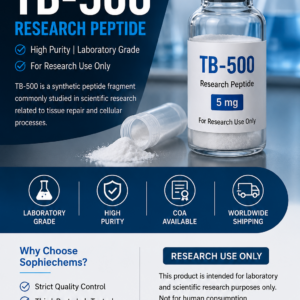
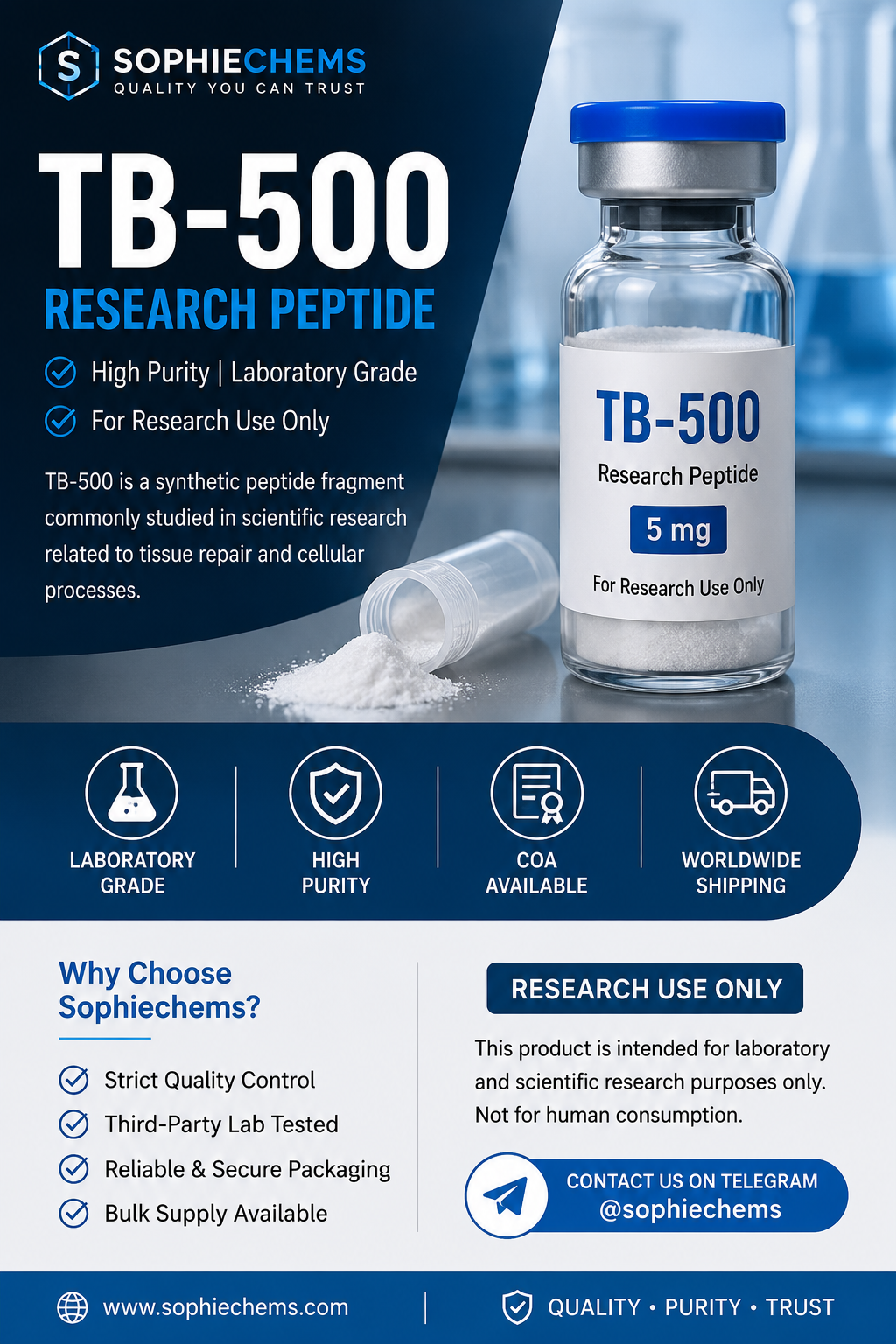
TB-500 is a synthetic research peptide that is studied in laboratory settings because of its relationship to a naturally occurring protein known as thymosin beta-4 (Tβ4). It is commonly discussed in peptide research literature and serves as a subject of investigation in molecular biology, biochemistry, and related scientific fields.
Researchers study TB-500 to better understand peptide structure, molecular interactions, and biochemical processes. Like many research peptides, it is examined using analytical techniques that help characterize its composition, identity, and purity.
This page provides an educational overview of TB-500, including its background, peptide structure, analytical characterization, and related scientific concepts. It is intended as a general scientific resource.–
What Is TB-500? :TB-500 research peptide
TB-500 is a synthetic peptide designed for laboratory research. It is associated with studies exploring peptide chemistry and molecular biology.
Peptides are short chains of amino acids linked together by peptide bonds. Their amino acid sequence determines their structural and chemical characteristics, making them useful tools for scientific investigation.
If you’re new to peptide science, see our What Are Peptides? guide for an introduction to peptide structure, amino acids, and peptide bonds.
– What Are Peptides?
– Research Peptides Category
– Peptide Structure Guide
Peptide Structure
The structure of a peptide plays an important role in laboratory characterization. Scientists analyze peptide sequences using established analytical methods to better understand their molecular properties.
Common areas of study include:
– Amino acid sequence
– Molecular weight
– Purity analysis
– Structural characterization
– Stability during laboratory storage
Understanding these characteristics is an important part of peptide research and quality evaluation.
Scientific Background
Peptide research has expanded significantly over the past several decades as analytical technologies have improved.
Modern laboratories employ advanced instruments to evaluate peptide identity and composition, allowing researchers to compare synthesized peptides with expected molecular specifications.
Analytical techniques commonly used include:
– High-Performance Liquid Chromatography (HPLC)
– Liquid Chromatography–Mass Spectrometry (LC-MS)
– Nuclear Magnetic Resonance (NMR)
Nuclear Magnetic Resonance (NMR)
These methods help characterize peptide samples and provide supporting analytical data.
Learn more
– HPLC Analysis Guide
– LC-MS Analysis Guide
– NMR Spectroscopy Guide
Physical and Chemical Characteristics
Researchers typically evaluate several physical and chemical properties when studying peptides, including:
– Appearance
– Solubility characteristics
– Molecular composition
– Purity profile
– Stability under controlled storage conditions
These properties are documented through analytical testing and help support scientific investigations involving peptide materials.
Relationship to Other Research Peptides
TB-500 is often discussed alongside other peptides studied in laboratory settings. Examples include:
– BPC-157
– GHK-Cu
– CJC-1295 DAC
– Ipamorelin
– Tesamorelin
– Tirzepatide
– Semaglutide
– Retatrutide
Each peptide has distinct structural features and is the subject of different areas of scientific investigation.
Exploring related peptide pages can help readers understand the diversity of peptide research and the analytical methods used to study these compounds.
Analytical Characterization, Quality Evaluation & Laboratory Handling
Analytical Characterization of TB-500
Analytical characterization is an important part of peptide research. Before a peptide is used in laboratory studies, researchers typically evaluate its identity, composition, and purity using established analytical techniques.
These analyses help verify that a peptide sample matches its intended specifications and support the reproducibility of scientific research.
Common analytical methods include:
– High-Performance Liquid Chromatography (HPLC)
– Liquid Chromatography–Mass Spectrometry (LC-MS)
– Nuclear Magnetic Resonance (NMR)
Related internal pages:
– HPLC Analysis Guide
– LC-MS Analysis Guide
– NMR Spectroscopy Guide
High-Performance Liquid Chromatography (HPLC)
HPLC is widely used to separate and analyze components within a sample. In peptide research, it is commonly used to evaluate chromatographic profiles and assess sample composition.
Researchers may use HPLC to:
– Examine chromatographic separation
– Assess sample consistency
– Compare analytical results between batches
– Support quality documentation
Learn more in the HPLC Analysis Guide
Liquid Chromatography–Mass Spectrometry (LC-MS)
LC-MS combines chromatographic separation with mass analysis, allowing researchers to investigate molecular characteristics.
Typical applications include:
– Confirming molecular mass
– Identifying peptide components
– Supporting analytical characterization
For additional information, see the LC-MS Analysis Guide.
Certificate of Analysis (COA)
Many research laboratories maintain documentation describing the analytical testing performed on research materials.
A Certificate of Analysis (COA) may include information such as:
– Product identification
– Batch information
– Analytical methods
– Chromatographic results
– Laboratory documentation
The COA & Laboratory Testing Guide
COA & Laboratory Testing explains these documents in more detail.
Laboratory Storage Considerations
Proper storage practices are important for maintaining sample integrity during laboratory research.
Researchers generally consider factors such as:
– Storage temperature
– Protection from moisture
– Protection from excessive light
– Appropriate laboratory containers
– Good laboratory documentation
Storage recommendations may vary depending on the material and should follow the supplier’s documentation and laboratory protocols.
Related page:
– Peptide Storage Guide
Good Laboratory Practice
When handling research materials, laboratories typically follow established procedures to promote accurate documentation and reproducible results.
Common practices include:
– Recording batch information
– Using calibrated laboratory equipment
– Maintaining clean working conditions
– Document
Frequently Asked Questions
What is TB-500?
TB-500 is a synthetic research peptide studied in laboratory settings. It is discussed in scientific literature related to peptide chemistry, molecular biology, and analytical science.
What is the difference between TB-500 and thymosin beta-4?
TB-500 is a synthetic peptide associated with research involving the naturally occurring protein thymosin beta-4 (Tβ4). They are not identical molecules, and researchers distinguish between them when discussing experimental design and analytical characterization.
How is TB-500 analyzed in research laboratories?
Researchers commonly characterize peptide samples using analytical techniques such as:
– High-Performance Liquid Chromatography (HPLC)
– Liquid Chromatography–Mass Spectrometry (LC-MS)
– Nuclear Magnetic Resonance (NMR), where appropriate
These methods help evaluate characteristics such as identity and composition.
Related pages:
– HPLC Analysis Guide
– LC-MS Analysis Guide
– NMR Spectroscopy Guide
Why are Certificates of Analysis (COAs) important?
A Certificate of Analysis (COA) documents analytical testing performed on a sample. Depending on the laboratory and material, a COA may include:
– Product identification
– Batch information
– Analytical methods
– Test results
– Laboratory documentation
For more information, see the COA & Laboratory Testing Guide
.COA & Laboratory Testing Guide.
How should research materials be stored?
Storage requirements vary depending on the material and supplier guidance. Researchers should follow documented storage instructions and established laboratory procedures to help maintain sample integrity.
See:
– Peptide Storage Guide
Related Educational Resources
To build a deeper understanding of peptide science, explore these topics:
Peptide Fundamentals
– What Are Peptides?
– Peptide Structure Guide
– Research Peptides Category
Analytical Chemistry
– HPLC Analysis Guide
– LC-MS Analysis Guide
– NMR Spectroscopy Guide
– COA & Laboratory Testing Guide
Related Research Peptides
– Tirzepatide Research Overview
– Semaglutide Research Overview
– Retatrutide Research Overview
– Cagrilintide Research Overview
Cagrilintide Research Overview
– CJC-1295 DAC Research Overview
CJC-1295 DAC Research Overview
– Ipamorelin Research Overview
– Tesamorelin Research Overview
– BPC-157 Research Overview
– GHK-Cu Research Overview
Conclusion
TB-500 is one of many synthetic peptides that researchers study to better understand peptide chemistry and molecular biology. Learning about peptide structure, analytical characterization, laboratory documentation, and quality evaluation provides useful context for anyone exploring peptide research.
To continue learning, visit the What Are Peptides? guide, browse the Research Peptides category, and explore the related educational articles on analytical methods and peptide science.
Learn about TB-500 research peptide, including its structure, peptide chemistry, analytical methods, laboratory characterization, storage considerations, and related educational resources.