




What Are Peptides? Complete Guide to Peptide Structure, Types & Research Applications.
Introduction to Peptides and Peptide Structure
What Are Peptides?
Peptides are short chains of amino acids connected together by chemical bonds called peptide bonds. Amino acids are the fundamental building blocks of many biological molecules, including peptides and proteins. The order and arrangement of amino acids within a peptide determine its unique structure and properties.
In biological research, peptides are studied because their specific amino acid sequences can influence how they interact with biological systems. Researchers investigate peptides across many fields, including molecular biology, biochemistry, biotechnology, pharmaceutical research, and analytical chemistry.
Unlike larger proteins that may contain hundreds or thousands of amino acids, peptides generally consist of shorter amino acid chains. This smaller structure allows researchers to study specific molecular interactions and understand how changes in peptide design affect activity and stability.
Sophiechems provides educational resources about [Research Peptides], peptide chemistry, analytical methods, and laboratory research concepts to help researchers better understand this expanding field.
Understanding Peptide Structure
The structure of a peptide is determined by the sequence of its amino acids. Each peptide has a specific arrangement that creates its unique molecular characteristics.
Amino Acids: The Building Blocks of Peptides
Amino acids are organic compounds containing:
– An amino group
– A carboxyl group
– A side chain (R-group) that gives each amino acid its unique properties
When amino acids connect together, they form chains through peptide bonds. The number, sequence, and arrangement of amino acids create different peptide structures.
For example:
– Two amino acids linked together form a dipeptide
– Three amino acids form a tripeptide
– Longer chains are commonly classified as peptides or polypeptides
Researchers study these structures to understand molecular behavior, interactions, and stability.
How Peptide Bonds Form
A peptide bond is a chemical connection between the carboxyl group of one amino acid and the amino group of another amino acid.
This process creates a chain with:
– An N-terminal end
– A C-terminal end
– A specific amino acid sequence
The amino acid sequence is important because even a small change can alter the properties of a peptide molecule.
Modern peptide research uses advanced analytical technologies to study these structures, including:
– High-performance liquid chromatography (HPLC)
– Liquid chromatography–mass spectrometry (LC-MS)
– Nuclear magnetic resonance (NMR) analysis
– HPLC Analysis Guide
– LC-MS Analysis Guide
Peptides vs Proteins: What Is the Difference?
Peptides and proteins are both made from amino acids, but they differ mainly in size and complexity.
Peptides
Peptides are shorter amino acid chains. Their smaller size makes them useful subjects for studying specific molecular interactions.
Proteins
Proteins are larger molecules made of one or more long amino acid chains. They often form complex three-dimensional structures that perform many biological functions.
The relationship can be summarized:
Amino acids → Peptides → Proteins
Understanding the differences between peptides and proteins helps researchers choose the appropriate molecular system for their studies.
Why Peptides Are Important in Research
Research has become an important area of modern science because peptides can be designed and studied for specific molecular purposes.
Researchers investigate peptides in areas such as:
– Molecular biology
– Biochemistry
– Biotechnology
– Drug discovery research
– Cellular studies
– Analytical chemistry
The ability to customize peptide sequences allows scientists to explore how molecular structures influence biological interactions.
What Are Peptides? Complete Guide to Peptide Structure, Types & Research Applications
Introduction to Research Peptide Categories
Research peptides represent a broad area of scientific study involving short amino acid chains designed and evaluated for different molecular research purposes.
Because peptides can have different amino acid sequences, structures, and properties, researchers classify them into several categories based on their research focus.
Common research peptide categories include:
– Metabolic research peptides
– Growth hormone-related peptides
– Tissue and cellular research peptides
– Copper peptides
– Peptide synthesis and analytical research materials
Each category provides researchers with different opportunities to study molecular interactions, peptide stability, and biological mechanisms.
Explore our main category:
Research Peptides
1. Metabolic Research Peptides
Metabolic research peptides are among the most discussed areas of modern peptide science. Researchers study these molecules because they interact with pathways involved in metabolism and molecular signaling.
This category includes peptides associated with incretin-related research, including GLP-1 and GIP pathways.
Tirzepatide Research Overview
Tirzepatide is a synthetic peptide molecule studied for its interaction with GIP and GLP-1 receptor pathways.
Researchers investigate:
– Peptide structure
– Molecular design
– Receptor interaction studies
– Analytical characterization
Tirzepatide Research Overview
Semaglutide Retatrutide Research Overview Overview
Semaglutide is another peptide compound widely studied in metabolic research.
Research topics include:
– Peptide modification strategies
– Stability characteristics
– Molecular analysis methods
Semaglutide Research Overview
Retatrutide and Cagrilintide Research
Newer peptide-based molecules continue to expand research interest in metabolic science.
Researchers examine:
– Molecular structure
– Peptide sequence design
– Analytical testing methods
– Retatrutide Research Overview
– Cagrilintide Research Overview
Cagrilintide Research Overview
2. Growth Hormone Research Peptides
Growth hormone-related peptides are studied for their interaction with growth hormone signaling pathways.
This research category includes peptides such as:
– CJC-1295 DAC
– Ipamorelin
– Tesamorelin
Researchers focus on:
– Molecular structure
– Peptide stability
– Laboratory characterization
– Biological pathway research
CJC-1295 DAC Research
CJC-1295 DAC is a modified peptide studied in laboratory research because of its extended molecular characteristics.
Research areas include:
– Peptide design
– Structure analysis
– Stability evaluatio
CJC-1295 DAC Research Overview
CJC-1295 DAC Research Overview
Ipamorelin Research
Ipamorelin is a peptide studied as part of growth hormone-related research.
Researchers investigate:
– Amino acid sequence
– Molecular properties
– Analytical characteristics
Related page:
Ipamorelin Research Overview
Tesamorelin Research
Tesamorelin is a peptide studied in connection with growth hormone-releasing pathways.
Related page:
Tesamorelin Research Overview
3. Recovery and Cellular Research Peptides
Some peptides are researched for their role in cellular biology and molecular mechanisms.
Examples include:
BPC-157 Research Overview
BPC-157 is a synthetic peptide studied in laboratory settings focusing on:
– Peptide structure
– Cellular research models
– Molecular interactions
Related page:
BPC-157 Research Overview
TB-500 Research Overview
TB-500 is a peptide fragment studied in molecular and cellular research.
Research topics include:
– Sequence analysis
– Peptide characterization
– Laboratory evaluation
Related page:
TB-500 Research Overview
4. Copper Peptides
Copper peptides are another important area of peptide research.
GHK-Cu Research Overview
GHK-Cu is a naturally occurring copper-binding peptide studied in biochemical research.
Researchers examine:
– Peptide-metal interactions
– Molecular structure
– Stability properties
Related page:
GHK-Cu Research Overview
5. Peptide Research and Analytical Testing
Understanding peptide quality requires advanced analytical techniques.
Common research methods include:
High-Performance Liquid Chromatography (HPLC)
HPLC is widely used to analyze peptide purity and composition.
HPLC Analysis Guide
Liquid Chromatography–Mass Spectrometry (LC-MS)
LC-MS combines separation technology with mass analysis to help identify molecular characteristics.
LC-MS Analysis Guide
Certificate of Analysis (COA)
A COA provides analytical information about a research sample, including testing data and quality documentation.
COA & Laboratory Testing Guide
COA & Laboratory Testing Guide
Building a Peptide Knowledge Center
A strong peptide information structure connects educational content with detailed research pages.
What Are Peptides? Complete Guide to Peptide Structure, Types & Research Applications
Introduction to Peptide Production and Quality Evaluation
Peptide research requires careful attention to molecular design, synthesis methods, purification, and analytical testing. The quality and characteristics of a peptide depend on many factors, including amino acid sequence, manufacturing processes, purification methods, and laboratory analysis.
Researchers use advanced scientific techniques to evaluate peptide samples and understand their molecular properties.
This process involves several important stages:
– Peptide design
– Chemical synthesis
– Purification
– Analytical testing
– Quality documentation
Learn more:
Research Peptides Guide
How Are Peptides Manufactured?
Modern peptide production commonly uses a method called solid-phase peptide synthesis (SPPS).
SPPS allows researchers to build peptide chains step by step by adding individual amino acids in a controlled sequence.
The general process includes:
1. Peptide Design
Before synthesis begins, researchers determine the desired amino acid sequence and molecular characteristics.
Important considerations include:
– Amino acid order
– Chain length
– Molecular structure
– Stability characteristics
2. Solid-Phase Peptide Synthesis (SPPS)
During SPPS, amino acids are gradually added to a growing peptide chain attached to a solid support.
Key steps include:
– Protection of amino groups
– Amino acid coupling
– Removal of protective groups
– Repetition of the synthesis cycle
This method allows researchers to create specific peptide sequences for scientific investigation.
3. Purification Process
After synthesis, peptides may contain unwanted by-products or incomplete sequences.
Purification helps separate the target peptide from impurities.
Common purification methods include:
– Chromatography techniques
– Reverse-phase HPLC
– Other laboratory separation methods
HPLC Analysis Guide
How Are Peptides Tested?
Analytical testing helps researchers understand peptide identity, purity, and molecular characteristics.
High-Performance Liquid Chromatography (HPLC)
HPLC is one of the most common analytical methods used for peptide analysis.
It can help researchers evaluate:
– Purity profile
– Separation of compounds
– Sample composition
Related page:
What Is HPLC Analysis
Liquid Chromatography–Mass Spectrometry (LC-MS)
LC-MS combines chromatography separation with mass detection.
Researchers use LC-MS to study:
– Molecular weight
– Peptide identification
– Structural characteristics
LC-MS Analysis Guide
Nuclear Magnetic Resonance (NMR)
NMR spectroscopy is another advanced analytical technique used to study molecular structures.
It provides information about:
– Molecular environment
– Structural characteristics
– Chemical interactions
Related page:
NMR Spectroscopy Guide
Understanding Certificate of Analysis (COA)
A Certificate of Analysis (COA) is an important quality document used in laboratory research.
A COA may include:
– Sample identification
– Analytical test results
– Purity information
– Testing methods
– Laboratory details
Researchers use documentation to better understand the characteristics of research materials.
Related page:
COA & Laboratory Testing Guide
COA & Laboratory Testing Guide
Peptide Storage and Stability Research
Storage conditions can influence peptide stability and quality.
Researchers consider factors such as
– Temperature
– Moisture exposure
– Light sensitivity
– Sample handling
Proper storage practices help maintain sample integrity during laboratory research.
Related page:
How Peptides Are Stored: Stability Guide
The Future of Peptide Research
Peptide science continues to grow as researchers explore new molecular designs and applications.
Future research areas include:
Advanced Peptide Engineering
Scientists continue developing new methods to design peptides with improved characteristics.
Research focuses on:
– Sequence optimization
– Molecular stability
– Targeted interactions
Computational Peptide Design
Modern technology allows researchers to use computer modeling and artificial intelligence to study peptide structures.
Potential benefits include:
– Faster research processes
– Better molecular understanding
– Improved peptide design strategies
Expanding Biotechnology Applications
Peptide research continues to influence many scientific fields, including:
– Molecular biology
– Biotechnology
– Pharmaceutical research
– Analytical chemistry
Frequently Asked Questions About Peptides
What are peptides made of?
Peptides are made from amino acids connected by peptide bonds.
What is the difference between peptides and proteins?
Peptides are generally shorter chains of amino acids, while proteins are larger and more complex structures.
How are peptides analyzed?
Researchers use analytical methods such as HPLC, LC-MS, and NMR to study peptide characteristics.
Why is peptide research important?
Peptides provide valuable tools for studying molecular interactions, biological pathways, and biotechnology development.
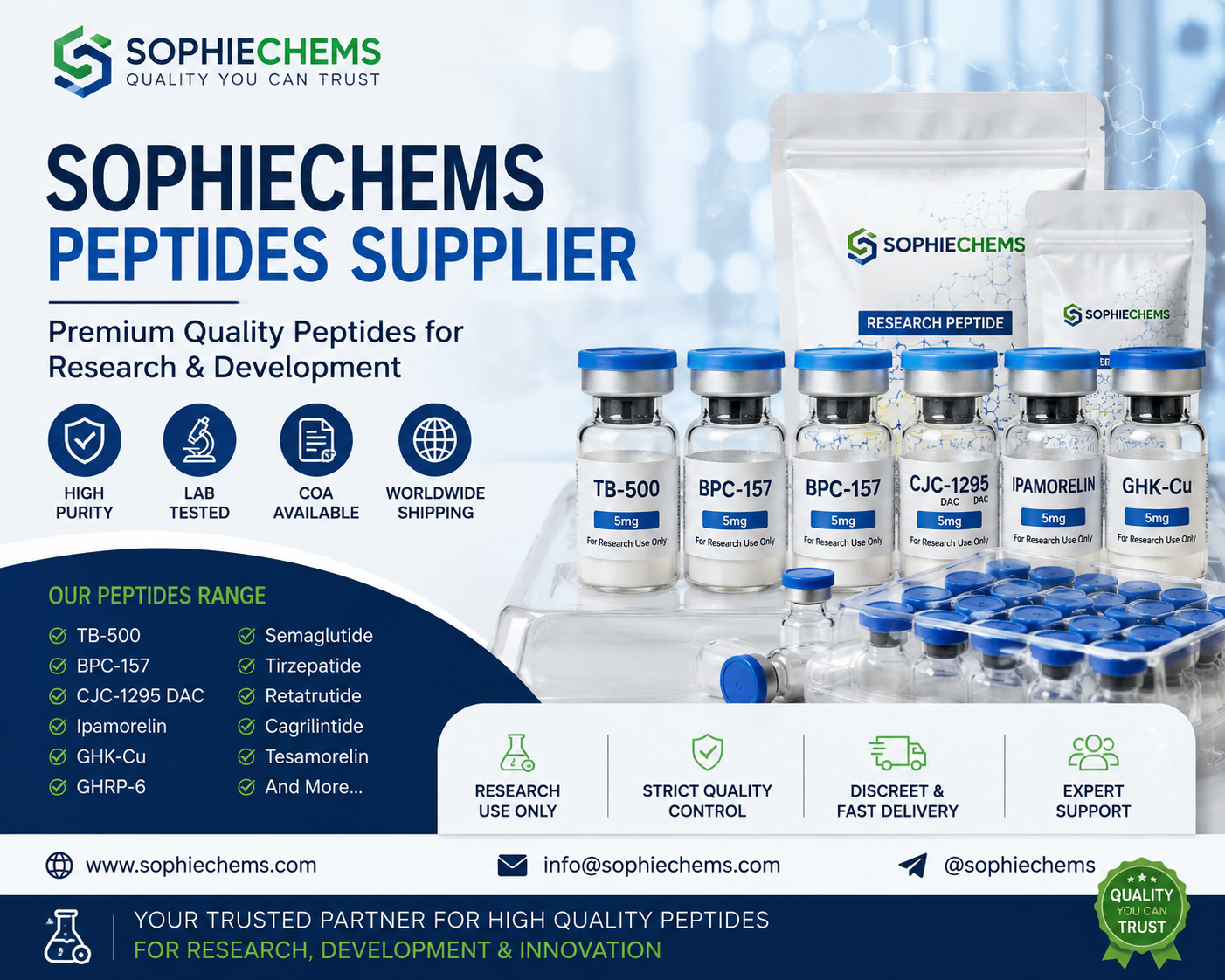
Sophie Chems Peptides Supplier | Research Peptide Raw Materials & Laboratory Solutions