



Industrial Solvents Comparison Guide: Properties, Applications, and Selection Factors
Industrial Solvents Comparison Guide: Properties, Applications, and Selection Factors
Industrial Solvents Comparison Guide. Industrial solvents are essential chemical materials used in many industries, including pharmaceutical manufacturing, chemical production, electronics, coatings, polymers, adhesives, and laboratory research. These solvents play an important role in dissolving materials, supporting chemical processes, improving formulations, and enabling efficient manufacturing operations.
Selecting the correct solvent is an important decision because every solvent has different chemical characteristics. Properties such as polarity, solvency power, boiling point, chemical stability, viscosity, and compatibility with other materials determine how effectively a solvent performs in a specific application.
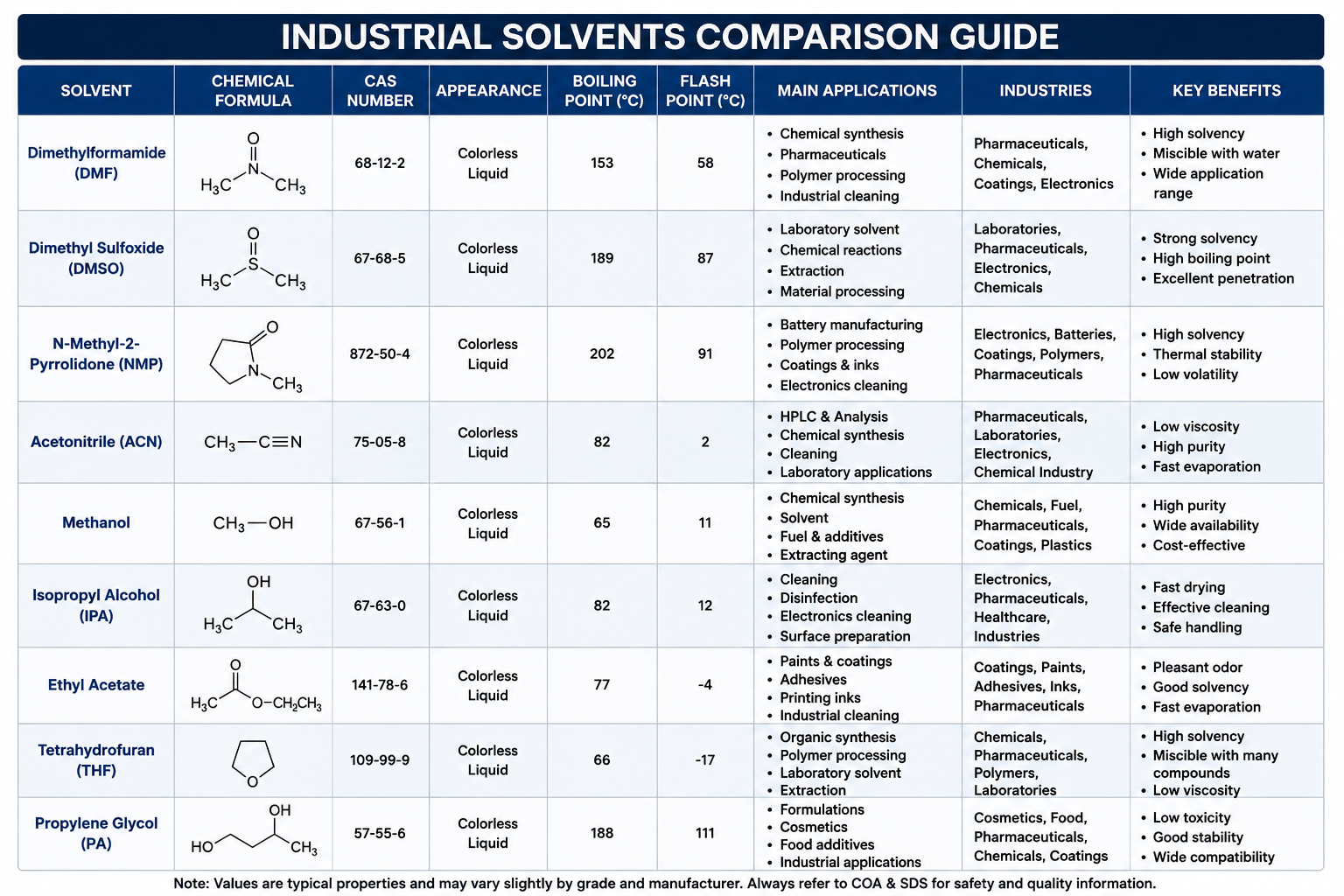
Among the most commonly used industrial solvents are Dimethylformamide (DMF), Dimethyl Sulfoxide (DMSO), N-Methyl-2-Pyrrolidone (NMP), and Acetonitrile. Each solvent has unique characteristics that make it suitable for different industrial and laboratory applications.
This industrial solvents comparison guide explains the properties, applications, and differences between these important solvents while helping businesses understand how to evaluate solvent options for their specific requirements.Industrial Solvents Comparison Guide
Industrial Solvents Supplier category page.
Industrial solvents Comparison Guide 🦮
Industrial Solvents Comparison Guide
What Are Industrial Solvents?
Industrial solvents are chemical substances used to dissolve, dilute, extract, clean, or process other materials during manufacturing and research activities.
In many industrial processes, solvents act as processing aids rather than final ingredients. They help manufacturers control production conditions, improve material handling, and achieve consistent results.
Industrial solvents are widely used in:
– Pharmaceutical manufacturing
– Chemical synthesis
– Electronics production
– Paint and coating industries
– Polymer manufacturing
– Adhesive production
– Laboratory analysis
– Specialty chemical manufacturing
Different industries select solvents based on their required performance characteristics. A solvent used for chemical processing may have different requirements compared with one used for analytical testing or electronic manufacturing.
Why Solvent Selection Is Important
Choosing the right solvent can influence:
– Manufacturing efficiency
– Product quality
– Processing stability
– Material compatibility
– Production costs
– Overall process performance
A suitable solvent should match the technical requirements of the application. Important factors include chemical properties, operating conditions, storage requirements, and documentation standards.
Understanding solvent differences allows companies and researchers to make better decisions when selecting chemical raw materials.Industrial Solvents Comparison Guide
Key Factors for Comparing Industrial Solvents
Solvency Power
Solvency refers to the ability of a solvent to dissolve another substance. Solvents with strong solvency properties are often used in processes where effective dissolution is required.
Different solvents interact differently with organic compounds, polymers, resins, and other materials. This is why manufacturers evaluate solvent performance before selecting a specific material.
Polarity
Polarity is one of the most important factors when comparing industrial solvents.
Polar solvents can interact effectively with many polar compounds, making them valuable in chemical processing and laboratory applications.
Examples of commonly used polar solvents include:
– DMF
– DMSO
– NMP
– Acetonitrile
Understanding solvent polarity helps determine compatibility between the solvent and the material being processed.
Boiling Point and Thermal Performance
The boiling point of a solvent affects how it behaves during industrial processing.
High boiling point solvents may provide stability during high-temperature operations, while lower boiling point solvents may be easier to remove after processing.
Manufacturers consider boiling point when designing production methods and selecting appropriate processing conditions.Industrial Solvents Comparison Guide
Chemical Stability
Chemical stability is another important factor in solvent selection.
A stable solvent should maintain consistent performance during:
– Storage
– Transportation
– Manufacturing processes
– Laboratory applications
Compatibility with equipment and other chemical materials is also an important consideration.
DMF Solvent: Properties, Applications, and Industrial Uses
Dimethylformamide (DMF) is a widely used polar aprotic solvent recognized for its strong solvency and ability to dissolve many organic compounds.
Because of its versatile chemical properties, DMF has become an important solvent in various industrial and chemical applications.
Characteristics of DMF Solvent
DMF is known for:
– High solvency capability
– Strong compatibility with organic materials
– Versatile processing applications
– Effective performance in chemical formulations
These properties make DMF useful in industries that require reliable solvent performance.
Industrial Applications of DMF
DMF is commonly associated with applications such as:
Chemical Manufacturing
DMF is used in chemical processing where effective dissolution and material compatibility are important.
Polymer and Resin Processing
The solvent properties of DMF make it useful in applications involving polymers and specialized materials.
Coatings and Industrial Formulations
DMF may be used in certain coating and formulation processes where strong solvent performance is required.
Laboratory and Research Applications
DMF is also used in laboratory environments where solvent characteristics support chemical preparation and analysis.
Sophiechems DMF product page.
DMSO Solvent: Characteristics and Applications
Dimethyl Sulfoxide (DMSO) is a highly polar solvent known for its strong dissolving ability and broad compatibility with different materials.
DMSO is widely recognized as a versatile solvent used in laboratory, industrial, and specialty chemical applications.
Characteristics of DMSO
Important properties of DMSO include:
– High polarity
– Strong dissolving capability
– Wide application range
– Good compatibility with many materials
These characteristics make DMSO suitable for applications requiring effective solvent performance.
Industrial and Laboratory Applications of DMSO
DMSO is used in areas including:
Chemical Processing
DMSO can support various chemical processes where strong solvent capability is needed.
Laboratory Applications
Its solvent properties make it useful in research and analytical environments.
Specialty Chemical Applications
DMSO may be used in specialized formulations requiring a high-performance solvent.
the Sophiechems DMSO product page.
DMF and DMSO: Understanding the Difference
DMF and DMSO are both polar aprotic solvents with strong dissolving abilities, but their chemical characteristics make them suitable for different applications.
DMF is often selected for its strong solvency and industrial versatility, while DMSO is recognized for its high polarity and broad compatibility.
When comparing DMF and DMSO, companies should consider:
– Required solvent performance
– Material compatibility
– Processing temperature
– Application requirements
– Technical specifications
There is no single solvent suitable for every process. The best choice depends on the specific requirements of the application.
NMP Solvent: Uses in Electronics, Polymers, and Manufacturing
N-Methyl-2-Pyrrolidone (NMP) is a high-performance specialty solvent known for its excellent solvency, thermal stability, and compatibility with various industrial materials.
Due to its unique chemical characteristics, NMP is widely used in industries that require reliable solvent performance under demanding processing conditions.
Characteristics of NMP Solvent
NMP is recognized for:
– Strong dissolving capability
– High boiling point
– Excellent chemical stability
– Compatibility with polymers and advanced materials
These characteristics make NMP an important solvent for industrial applications where performance and stability are required. Industrial Solvents Comparison Guide
Industrial Applications of NMP
Electronics Manufacturing
NMP is commonly associated with advanced manufacturing processes where solvent performance and material compatibility are important.
Its properties make it suitable for applications involving specialized materials and production processes.
Polymer Processing
NMP is used in polymer-related applications because of its ability to dissolve and process certain polymer materials.
It can support manufacturing processes that require effective material handling and formulation control.
Coatings and Surface Applications
NMP may be used in coating-related processes where strong solvency and controlled processing characteristics are required.
Industrial Cleaning Applications
Due to its solvency properties, NMP is also used in some industrial cleaning and processing applications.
Sophiechems NMP product page.
Acetonitrile Solvent: Role in Laboratory and Chemical Applications
Acetonitrile is a widely used polar solvent recognized for its performance in analytical chemistry, laboratory applications, and chemical processing.
Its physical and chemical properties make it a valuable solvent in environments where purity and consistency are important.
Characteristics of Acetonitrile
Acetonitrile is known for:
– Good solvent performance
– Low viscosity
– Chemical stability
– Compatibility with analytical methods
These characteristics contribute to its importance in laboratory and industrial applications.
Applications of Acetonitrile
Analytical Chemistry
Acetonitrile is widely recognized for its role in analytical laboratory processes, particularly where consistent solvent performance is required.
Chromatography Applications
Acetonitrile is commonly used in chromatography-related applications because of its solvent properties and compatibility with analytical techniques.
Chemical Research
Researchers use Acetonitrile in various chemical processes where a reliable solvent is needed.
Sophiechems Acetonitrile product page.
NMP vs DMSO: Comparing Industrial Solvent Characteristics
NMP and DMSO are both important polar solvents, but they offer different characteristics depending on the application.
NMP is often selected for applications requiring high thermal stability and compatibility with polymers and advanced materials.
DMSO is widely recognized for its strong polarity and broad dissolving capability.
When comparing NMP and DMSO, important factors include:
– Application requirements
– Processing temperature
– Material compatibility
– Solvent performance
– Industry standards
The correct choice depends on the specific manufacturing or research process.
Selecting Industrial Solvents by Industry
Pharmaceutical Industry
The pharmaceutical industry uses solvents in many stages of manufacturing and research.
Important considerations include:
– Consistent quality
– Documentation availability
– Chemical compatibility
– Reliable supply
→Pharmaceutical Intermediates Supplier
→ Chemical Raw Materials Supplier
Electronics Industry
Electronics manufacturing requires solvents with specific performance characteristics.
Key factors include:
– Material compatibility
– Processing conditions
– Purity requirements
– Stability
→ NMP Solvent Guide
Coatings and Adhesives Industry
Solvents play an important role in coatings and adhesive formulations by helping control:
– Viscosity
– Mixing properties
– Application performance
– Drying characteristics
Different solvent choices can influence the final performance of industrial formulations.
Laboratory and Research Applications
Laboratories depend on solvents for many activities, including:
– Sample preparation
– Chemical analysis
– Research processes
– Testing procedures
→ Laboratory Chemicals Guide
→ Chemical Analysis Guides
→ HPLC Analysis Guide
Importance of Chemical Documentation
When purchasing industrial solvents, technical documentation helps businesses evaluate quality and suitability.
Common documents include:
Certificate of Analysis (COA)
A Certificate of Analysis provides information about a specific product batch and helps confirm that quality requirements have been evaluated.
A COA may include:
– Product identification
– Batch information
– Testing results
– Quality specifications
Certificate of Analysis (COA
Safety Data Sheet (SDS)
A Safety Data Sheet provides information related to:
– Safe handling
– Storage requirements
– Transportation considerations
– Emergency procedures
SDS documentation helps users understand important safety and handling information.
Safety Data Sheet (SDS)” to the Sophiechems SDS documentation page
.Sophiechems SDS documentation page.
How to Select the Right Industrial Solvent
Selecting the right industrial solvent requires careful evaluation of technical requirements, application conditions, and performance expectations. Different solvents provide different advantages, so the best choice depends on the specific needs of each process.
Before selecting a solvent, companies should consider several important factors.
Application Requirements
The first step in solvent selection is understanding the purpose of the solvent.
Common questions include:
– What material needs to be dissolved?
– What type of process will use the solvent?
– Is the solvent required for manufacturing, cleaning, extraction, or analysis?
– What performance characteristics are needed?
A clear understanding of the application helps identify the most suitable solvent option.
Chemical Compatibility
Chemical compatibility is an important consideration when selecting industrial solvents.
A suitable solvent should work effectively with:
– Raw materials
– Equipment surfaces
– Manufacturing conditions
– Other chemicals involved in the process
Compatibility helps maintain process efficiency and reduces potential issues during production.
Purity and Quality Requirements
Different industries may require different levels of product specifications.
Important quality considerations include:
– Product consistency
– Technical specifications
– Documentation availability
– Batch information
– Storage recommendations
Reliable documentation allows businesses to evaluate whether a solvent meets their operational requirements.
chemical quality documentation” to the COA and SDS information pages.
Storage and Handling Considerations
Proper storage and handling are important parts of chemical management.
Factors to consider include:
– Recommended storage conditions
– Packaging requirements
– Temperature considerations
– Transportation requirements
Following appropriate storage practices helps maintain product quality throughout its lifecycle.
Building a Complete Industrial Solvent Knowledge System
Understanding industrial solvents requires more than knowing individual product names. A complete knowledge system should include information about:
– Chemical properties
– Industrial applications
– Comparison between solvents
– Quality documentation
– Safety information
– Industry requirements
For businesses researching chemical materials, educational resources can help improve understanding and support better decision-making.
Frequently Asked Questions About Industrial Solvents
What are industrial solvents used for?
Industrial solvents are used in many industries for dissolving, processing, cleaning, extraction, formulation, and chemical manufacturing applications.
Common industries include pharmaceuticals, electronics, coatings, polymers, laboratories, and specialty chemical production.
What is the difference between DMF and DMSO?
DMF and DMSO are both polar solvents with strong dissolving capabilities. However, their chemical characteristics and application suitability can differ depending on processing requirements.
DMF is widely recognized for its industrial solvency, while DMSO is valued for its polarity and versatility.
DMF vs DMSO
Why is NMP used as an industrial solvent?
NMP is valued for its strong solvency, high boiling point, and compatibility with various industrial materials.
It is commonly associated with applications involving polymers, electronics, coatings, and advanced manufacturing processes.
What industries use Acetonitrile?
Acetonitrile is widely used in analytical chemistry, laboratory applications, chemical research, and processes requiring a consistent and reliable solvent.
Why are solvent comparison guides useful?
Solvent comparison guides help businesses and researchers understand differences between chemical materials and evaluate which characteristics are most suitable for their applications.
Conclusion
Industrial solvents are important chemical materials that support a wide range of industries, including pharmaceutical manufacturing, chemical processing, electronics, coatings, polymers, and laboratory research.
DMF, DMSO, NMP, and Acetonitrile each provide unique characteristics that make them valuable for different applications. Understanding their properties, differences, and selection factors allows organizations to make more informed decisions when evaluating solvent options.
A strong understanding of industrial solvents also requires attention to quality documentation, technical specifications, storage requirements, and application compatibility.
Sophiechems provides educational resources covering chemical raw materials, industrial solvents, pharmaceutical intermediates, and laboratory-related information to help businesses better understand chemical categories and applications.
Chemical Raw Materials Supplier
Chemical Raw Materials Supplier
Industrial Solvents Supplier
Sophiechems continues to develop its industrial solvent portfolio, including:
→ Methylene choloride Supplier
IndustrialSolvents, #ChemicalRawMaterials, #ChemicalSupplier, #SpecialtyChemicals, #SolventGuide, #SolventComparison, #DMFSolvent, #DMSO, #NMPSolvent, #Acetonitrile, #LaboratoryChemicals, #PharmaceuticalChemicals, #ChemicalManufacturing, #IndustrialChemicals, #ChemistryKnowledge, #ChemicalTechnology, #B2BChemicals, #RawMaterialsSupplier, #ChemicalResearch