



DMF Solvent Applications: Properties, Uses, and Industrial Importance
DMF Solvent Applications: Properties, Uses, and Industrial Importance
DMF Solvent Applications.Dimethylformamide, commonly known as DMF, is one of the most widely used industrial solvents in chemical manufacturing, pharmaceutical production, polymer processing, coatings, and laboratory applications. Its excellent solvency, chemical stability, and ability to dissolve many organic compounds make it an important material for industries requiring reliable solvent performance.
Industrial solvents play a critical role in modern manufacturing by supporting processes such as dissolution, extraction, purification, formulation, and chemical synthesis. Among these solvents, DMF has gained significant importance because of its versatility and compatibility with many different chemical materials.
Businesses searching for high-quality chemical raw materials often evaluate DMF based on its technical specifications, application requirements, documentation availability, and supply reliability.
Chemical Raw Materials Supplier
Chemical Raw Materials Supplier
This guide explains DMF solvent properties, industrial applications, advantages, and important factors to consider when selecting DMF for different processes.
What Is DMF Solvent?
DMF stands for Dimethylformamide. It is an organic compound classified as a polar aprotic solvent. Due to its strong polarity and excellent dissolving ability, DMF can interact effectively with a wide range of organic materials.
DMF is commonly used as a processing solvent rather than a final product ingredient. It helps manufacturers dissolve, mix, or process different chemical substances during production.
The unique characteristics of DMF make it valuable in industries including:
– Pharmaceutical manufacturing
– Chemical synthesis
– Polymer production
– Coatings and adhesives
– Electronics manufacturing
– Laboratory research
– Specialty chemical production
For companies sourcing industrial chemicals, understanding the role of DMF helps determine whether it is suitable for specific manufacturing requirements.
Industrial Solvents Supplier
Chemical Properties of DMF Solvent
The performance of DMF comes from its chemical structure and physical characteristics.
High Solvency Capability
One of the most important properties of DMF is its strong solvency power.
DMF can dissolve many organic compounds, polymers, and chemical materials that may have limited solubility in other solvents.
This makes DMF useful in applications where manufacturers require effective material dissolution and processing control.
Polar Aprotic Solvent Characteristics
DMF is classified as a polar aprotic solvent.
This means it can provide strong interactions with many chemical compounds without donating hydrogen bonds in the same way that protic solvents do.
These characteristics contribute to its usefulness in chemical reactions, formulations, and industrial processing.
Chemical Stability
DMF provides stable performance under many industrial conditions.
Important characteristics include:
– Consistent solvent performance
– Compatibility with various materials
– Ability to support complex chemical processes
– Reliable processing properties
These features contribute to its widespread industrial use.
Why DMF Is Used as an Industrial Solvent
The demand for DMF comes from its ability to solve several challenges faced by manufacturers.
Efficient Material Dissolution
Many industrial processes require solvents capable of dissolving difficult materials.
DMF provides effective dissolution performance for various organic compounds, making it valuable in chemical and manufacturing processes.
Support for Chemical Processing
DMF is commonly used as a medium that allows chemical reactions and processing steps to occur more efficiently.
Its solvent properties help improve mixing, reaction conditions, and material handling.
Versatility Across Industries
Unlike specialized solvents designed for only one application, DMF has applications across multiple industries.
Its versatility allows businesses to use it in different production environments.
DMF Solvent Applications in Pharmaceutical Manufacturing
The pharmaceutical industry uses various solvents during research, development, and manufacturing processes.
DMF is recognized as an important solvent in pharmaceutical-related chemical processing because of its ability to dissolve many organic compounds.
Applications may include:
– Chemical synthesis processes
– Intermediate preparation
– Research and development activities
– Specialty pharmaceutical manufacturing processes
Pharmaceutical companies often consider factors such as solvent quality, documentation, and consistency when selecting DMF suppliers.
Pharmaceutical Intermediates Supplier
Pharmaceutical Intermediates Supplier
DMF Applications in Chemical Synthesis
Chemical manufacturers use DMF because it provides excellent solvent performance for many synthetic processes.
In chemical synthesis, solvents can influence:
– Reaction efficiency
– Material compatibility
– Processing conditions
– Product quality
DMF may be selected when manufacturers require a solvent that can support complex chemical reactions and dissolve various organic substances.
Its role in chemical manufacturing demonstrates why DMF remains an important industrial solvent worldwide.
DMF in Polymer and Resin Processing
Polymer industries often require solvents that can interact effectively with advanced materials.
DMF is used in certain polymer and resin applications because of its strong dissolving ability.
Applications may involve:
– Polymer processing
– Resin preparation
– Material formulation
– Specialty polymer production
The ability of DMF to dissolve certain polymers makes it useful in processes where material compatibility is essential.
DMF Solvent Applications in Coatings, Electronics, and Laboratory Industries
DMF Applications in Coatings and Adhesives
The coatings and adhesives industries require solvents that provide excellent dissolving performance, formulation control, and compatibility with different materials.
DMF is used in certain coating and adhesive applications because it can help dissolve resins, polymers, and other chemical components involved in formulation processes.
The role of DMF in coatings may include:
– Improving material dissolution
– Supporting formulation consistency
– Helping control viscosity
– Assisting manufacturing processes
Manufacturers select solvents based on the specific requirements of their coating systems. Factors such as drying behavior, material compatibility, and processing conditions influence solvent selection.
Industrial Solvents Supplier
DMF Applications in Electronics and Advanced Manufacturing
Modern electronics manufacturing requires high-performance chemical materials with reliable technical characteristics.
DMF may be used in certain specialty manufacturing processes because of its solvent capabilities and compatibility with advanced materials.
Applications may involve:
– Material preparation
– Specialty formulations
– Manufacturing processes requiring strong solvent performance
As industries continue developing advanced materials, solvent selection becomes increasingly important. Manufacturers evaluate properties such as purity, stability, and compatibility when choosing suitable solvents.
DMF Solvent Applications in Laboratory Research
Laboratories use solvents for many research and analytical activities.
DMF is commonly recognized as a useful laboratory solvent because of its ability to dissolve many chemical compounds.
Laboratory applications may include:
– Chemical preparation
– Research processes
– Sample preparation
– Organic chemistry applications
Researchers often consider solvent quality, purity, and documentation when selecting laboratory chemicals.
Chemical Analysis Guides
Chemical Knowledge center
DMF in Specialty Chemical Manufacturing
Specialty chemical manufacturers often require solvents that provide consistent performance across different production processes.
DMF may support specialty chemical applications where strong solvency and chemical compatibility are needed.
These applications demonstrate why DMF continues to be an important solvent in global chemical manufacturing.
Industries using specialty chemicals often evaluate:
– Product specifications
– Supply consistency
– Technical documentation
– Packaging options
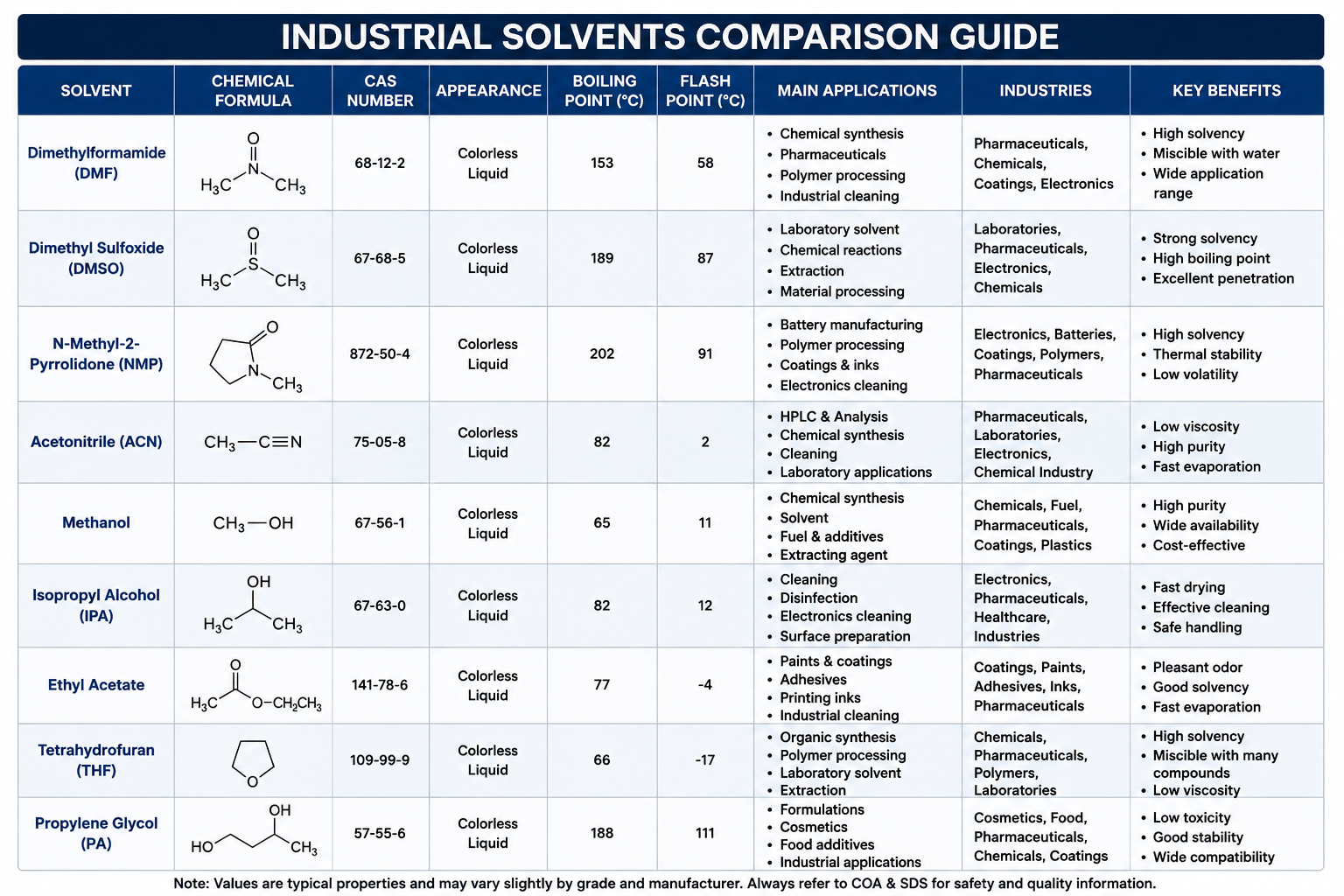
DMF Solvent Compared With Other Industrial Solvents
Industrial solvent selection depends on the application requirements. Although many solvents share similar characteristics, each one provides different advantages.
DMF is often compared with solvents such as DMSO and NMP because all are polar solvents with strong dissolving capabilities.
Understanding these differences helps companies choose the most suitable material for their processes.
DMF vs DMSO: Understanding the Differences
DMF and DMSO are both widely used polar aprotic solvents.
Both solvents provide strong solvency and are used in chemical and laboratory applications. However, their chemical properties and industrial uses can differ.
DMF Characteristics
DMF is commonly selected because of:
– Strong solvency
– Broad organic compound compatibility
– Industrial processing applications
– Versatile chemical performance
DMSO Characteristics
DMSO is recognized for:
– High polarity
– Excellent dissolving ability
– Wide application range
– Laboratory and specialty chemical uses
The choice between DMF and DMSO depends on the specific application, required performance, and material compatibility.
DMF vs DMSO Comparison Guide
DMF vs NMP: Comparing Industrial Solvent Performance
DMF and NMP are both important industrial solvents used in chemical processing and manufacturing.
DMF is valued for its strong solvency and versatility, while NMP is often selected for applications requiring high thermal stability and compatibility with advanced materials.
DMF Advantages
DMF may be preferred when applications require:
– Effective dissolution
– Chemical processing support
– Organic compound compatibility
NMP Advantages
NMP is often selected for:
– Polymer processing
– Electronics applications
– High-temperature industrial processes
The correct choice depends on the technical requirements of the application.
Industrial Solvents Comparison Guide
“Industrial Solvents Comparison Guide”
Factors to Consider When Purchasing DMF Solvent
Selecting a reliable DMF solvent supplier requires evaluation of several important factors.
Product Quality
Quality consistency is essential for industrial applications.
Buyers should consider:
– Product specifications
– Purity information
– Batch consistency
– Technical documentation
Certificate of Analysis (COA)
A Certificate of Analysis provides important information about product quality and testing results.
A COA may include:
– Product identification
– Batch information
– Quality parameters
– Testing data
Companies purchasing DMF for industrial use often request COA documentation to verify product specifications.
Certificate of Analysis
Safety Data Sheet (SDS)
A Safety Data Sheet provides important information related to:
– Handling procedures
– Storage recommendations
– Safety considerations
– Transportation requirements
SDS documentation helps users understand proper chemical management practices.
Internal Link Suggestion:
Safety Data Sheet (SDS)” to the Sophiechems SDS documentation page.
Choosing a Reliable DMF Solvent Supplier
Selecting a reliable DMF solvent supplier is an important step for companies that depend on consistent chemical materials for manufacturing and research applications.
A professional supplier should provide more than just chemical products. Businesses often evaluate suppliers based on technical information, documentation, communication, supply capability, and product consistency.
Important factors when selecting a DMF supplier include:
Technical Documentation Availability
Reliable chemical suppliers provide technical documents that help buyers understand product specifications and quality information.
Common documents include:
– Certificate of Analysis (COA)
– Safety Data Sheet (SDS)
– Product specifications
– Technical information sheets
These documents support quality evaluation and help businesses confirm that materials meet their requirements.
COA and SDS Documentation” to the Sophiechems Chemical Documentation pages.
Supply Capability and Packaging Options
Industrial buyers often require suppliers that can support different purchasing requirements.
Important considerations include:
– Packaging availability
– Bulk supply capability
– Consistent product availability
– International shipping support
A reliable supply chain helps manufacturers maintain stable production schedules.
Application Knowledge
A supplier with chemical knowledge can help customers better understand product characteristics and possible applications.
Educational resources about solvents, chemical raw materials, and industrial applications help buyers make informed decisions.
Chemical Raw Materials Supplier
Chemical Raw Materials Supplier
Storage and Handling Considerations for DMF Solvent
Proper storage and handling are important for maintaining solvent quality.
General considerations include:
– Keeping containers properly sealed
– Following recommended storage conditions
– Protecting materials from contamination
– Using appropriate handling procedures
Businesses should always refer to official technical documentation and safety information when managing chemical materials.
The Importance of DMF in Modern Chemical Industries
DMF continues to play an important role in many industries because of its combination of solvency, versatility, and chemical performance.
Its applications across pharmaceutical manufacturing, chemical processing, polymers, coatings, and laboratory research demonstrate its importance as an industrial solvent.
As industries continue developing advanced materials and chemical processes, demand for reliable solvent solutions remains strong.
Understanding DMF properties and applications allows companies to select appropriate materials for their specific manufacturing requirements.
Frequently Asked Questions About DMF Solvent
What is DMF solvent used for?
DMF solvent is used in various industrial and laboratory applications, including chemical processing, pharmaceutical-related manufacturing, polymer processing, coatings, and specialty chemical applications.
Why is DMF considered an important industrial solvent
DMF is considered important because of its strong solvency, compatibility with many organic compounds, and versatility across different industries.
What industries use DMF solvent?
DMF is used in industries such as:
– Pharmaceutical manufacturing
– Chemical production
– Polymer processing
– Coatings
– Specialty chemicals
– Laboratory research
What is the difference between DMF and DMSO?
DMF and DMSO are both polar aprotic solvents with strong dissolving abilities. However, they have different chemical characteristics and may be selected based on specific application requirements.
Is DMF used in laboratory applications?
Yes, DMF is commonly recognized as a laboratory solvent used in chemical preparation, research, and analytical applications.
What documents should buyers request when purchasing DMF?
Buyers commonly request:
– Certificate of Analysis (COA)
– Safety Data Sheet (SDS)
– Product specifications
– Technical documentation
These documents help evaluate product quality and suitability.
Conclusion: Understanding DMF Solvent Applications
DMF solvent remains one of the most important industrial solvents because of its excellent solvency, chemical versatility, and wide range of applications.
From pharmaceutical manufacturing and chemical synthesis to polymer processing, coatings, and laboratory research, DMF provides valuable performance characteristics for many industries.
For companies evaluating chemical raw materials, understanding solvent properties, applications, documentation requirements, and supplier capabilities is essential.
Sophiechems continues developing educational resources about industrial solvents, chemical raw materials, and laboratory chemicals to help businesses understand chemical applications and make informed sourcing decisions.
Industrial Solvents Supplier
Sophiechems continues to develop its industrial solvent portfolio, including:
→ Methylene choloride Supplier
#DMFSolvent, #IndustrialSolvents, #ChemicalRawMaterials, #ChemicalSupplier, #SpecialtyChemicals, #ChemicalManufacturing, #PharmaceuticalChemicals, #LaboratoryChemicals, #IndustrialChemicals, #ChemicalIndustry, #ChemicalProcessing, #OrganicChemistry, #SolventApplications, #ChemicalResearch, #B2BChemicals