



🧠 Methylphenidate vs Amphetamine: Differences, Effectiveness, Side Effects & Which Is Better for ADHD
Methylphenidate vs amphetamine, Methylphenidate and amphetamine are the two most widely prescribed central nervous system (CNS) stimulant medications used in the treatment of Attention Deficit Hyperactivity Disorder (ADHD) and narcolepsy. These medications are among the most effective pharmacological tools available for improving focus, attention, executive function, and impulse control.
Although both belong to the stimulant class and are used for similar conditions, they differ significantly in their mechanism of action, potency, duration, and patient response. Understanding these differences is essential for patients, caregivers, and healthcare professionals when selecting the most appropriate treatment option.
This article provides a comprehensive, evidence-based comparison of methylphenidate and amphetamine, including how they work, their effectiveness, side effects, safety profiles, and clinical considerations.
🧠 What Is Methylphenidate?
Methylphenidate is a stimulant medication primarily used to treat ADHD and narcolepsy. It is considered a first-line treatment option in many clinical guidelines due to its effectiveness and well-established safety profile.
How Methylphenidate Works -methylphenidate vs amphetamine
Methylphenidate works by blocking the reuptake of dopamine and norepinephrine in the brain. This increases the availability of these neurotransmitters in key regions responsible for attention, motivation, and executive function.
Unlike amphetamines, methylphenidate does not significantly increase neurotransmitter release; instead, it primarily prevents reabsorption.
Learn more about ADHD diagnosis, symptoms, and treatment options in our full guide:
ADHD Stimulants Treatment Guide �
Common Brands
Ritalin
Concerta
Metadate
Focalin (dexmethylphenidate)
Approved Medical Uses
Attention Deficit Hyperactivity Disorder (ADHD)
Narcolepsy
Occasionally off-label for fatigue-related disorders
Key Characteristics methylphenidate vs amphetamine
Faster onset of action
Moderate stimulant strength
Short to long-acting formulations available
Often used as first-line therapy in children and adults.
⚡ What Is Amphetamine?
Amphetamine is a powerful central nervous system stimulant used primarily in ADHD and narcolepsy treatment. It is often considered more potent than methylphenidate in terms of dopamine activity.
How Amphetamine Works
Amphetamines work through a dual mechanism:
They increase the release of dopamine and norepinephrine
They also block reuptake of these neurotransmitters
This combination leads to a stronger and longer-lasting stimulant effect compared to methylphenidate.
Common Brands
Adderall (mixed amphetamine salts)
Vyvanse (lisdexamfetamine)
Dexedrine (dextroamphetamine)
Evekeo
Approved Medical Uses
ADHD
Narcolepsy
Treatment-resistant ADHD cases (in some patients)
Key Characteristics
Stronger central nervous system stimulation
Longer duration of effect (especially extended-release forms)
Higher potential for abuse compared to methylphenidate
🧬 Methylphenidate vs Amphetamine: Mechanism of Action
The primary difference between these two medications lies in how they affect brain chemistry.
Methylphenidate Mechanism
Blocks dopamine transporter (DAT)
Blocks norepinephrine transporter (NET)
Prevents neurotransmitter reuptake
Does NOT significantly increase neurotransmitter release
Amphetamine Mechanism
Increases dopamine release from presynaptic neurons
Increases norepinephrine release
Reverses transporter function
Blocks reuptake of neurotransmitters
👉 In simple terms:
Methylphenidate = “blocks cleanup”
Amphetamine = “releases more chemicals + blocks cleanup”
⚡ Potency and Effect Strength
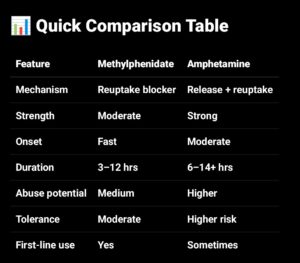
Amphetamines are generally considered more potent CNS stimulants than methylphenidate.
However, effectiveness does not always correlate with potency. Many patients respond better to methylphenidate due to its smoother effect profile.
Key Insight:
Amphetamine → stronger stimulation
Methylphenidate → more controlled stimulation
⏱️ Duration of Action
The duration of effects depends on formulation:
Methylphenidate
Immediate release: 3–5 hours
Extended release: 8–12 hours
Amphetamine
Immediate release: 4–6 hours
Extended release: 10–14+ hours
👉 Vyvanse (lisdexamfetamine) is a prodrug and provides especially long, smooth effects.
🧠 Effectiveness for ADHD
Both medications are highly effective for ADHD treatment. Clinical studies show that:
Around 70–80% of patients respond to stimulant medications
Some respond better to methylphenidate
Others respond better to amphetamine
Individual Response Matters
There is no universal “best” stimulant. Treatment is often based on:
Side effect tolerance
Duration needs
Symptom severity
Individual brain chemistry
Doctors often try both classes before deciding on long-term therapy.
⚖️ Methylphenidate vs Amphetamine: Side Effects Comparison
Both medications share similar side effects due to their stimulant nature.
Common Side Effects (Both Drugs)
Insomnia
Loss of appetite
Increased heart rate
Anxiety or nervousness
Dry mouth
Headache
Amphetamine-Specific Tendencies
Higher risk of jitteriness
Greater potential for euphoria
Slightly higher abuse potential
Methylphenidate-Specific Tendencies
Mild mood swings in some users
Headaches in early treatment
Shorter duration may require multiple dosing
⚠️ Safety and Abuse Potential
Both methylphenidate and amphetamine are classified as controlled substances in most countries due to their stimulant effects on the central nervous system.
Amphetamine
Higher abuse and dependence potential
Stronger dopamine release
More euphoric effects in some users
Methylphenidate
Moderate abuse potential
Lower dopamine release intensity
Generally considered slightly safer in controlled use.
🧪 Clinical Considerations
Doctors consider several factors when prescribing these medications:
Patient Age
Methylphenidate often preferred in children
Both used in adults
Symptom Severity
Mild to moderate ADHD → methylphenidate
Moderate to severe ADHD → amphetamine sometimes preferred
Side Effect Sensitivity
Anxiety-sensitive patients → methylphenidate often better tolerated
Duration Needs
Long work/school days → amphetamine extended release preferred
📊
methylphenidate vs amphetamine
🧠 Which Is Better: Methylphenidate or Amphetamine?
There is no single best answer. The “better” medication depends on individual needs.
Methylphenidate may be better for:
First-time ADHD treatment
Patients sensitive to stimulants
Shorter duration requirements
Lower anxiety risk patients
Amphetamine may be better for:
Strong or severe ADHD symptoms
Longer-lasting symptom control needed
Patients not responding to methylphenidate
Extended focus requirements
🔬 Long-Term Use Considerations
Both medications are safe when used under medical supervision, but long-term considerations include:
Regular cardiovascular monitoring
Sleep pattern evaluation
Appetite and weight tracking
Periodic dose adjustment
Tolerance may develop in some patients over time, requiring dose or medication adjustments.
🧾 Conclusion
Methylphenidate and amphetamine are both highly effective stimulant medications used in the treatment of ADHD and narcolepsy. While they share similarities, they differ significantly in mechanism, potency, duration, and patient response.
Methylphenidate provides a smoother and more controlled effect, making it suitable for many first-time patients. Amphetamine offers stronger and longer-lasting stimulation, making it beneficial for individuals requiring more robust symptom control.
Ultimately, the best medication is determined by individual response, side effect tolerance, and clinical evaluation. There is no universally superior option—only the most suitable choice for each patient.
🔥
methylphenidate vs amphetamine
ADHD stimulant comparison
Ritalin vs Adderall
best ADHD medication
stimulant drugs for ADHD
methylphenidate vs dextroamphetamine
Featured Snippet Targets:
comparison table section
“Which is better” section
mechanism of action explanation
🚀