



Best ADHD Medication for Adults
Best ADHD Medication for Adults,Adult Attention-Deficit/Hyperactivity Disorder (ADHD) affects millions of people worldwide and can impact work performance, organization, focus, relationships, and daily productivity. Fortunately, several effective medications are available to help manage symptoms.
This guide compares the most commonly prescribed ADHD medications for adults, including stimulant and non-stimulant treatment options.
What Is Adult ADHD?
ADHD is a neurodevelopmental condition characterized by symptoms such as:
Difficulty concentrating
Impulsivity
Poor time management
Forgetfulness
Disorganization
Restlessness
Difficulty completing tasks
Many adults are diagnosed later in life after years of struggling with symptoms.
Adult ADHD treatment is based on structured clinical approaches and medication management strategies.
ADHD Treatment Guide →adhd-treatment-guide
Types of ADHD Medications for Adults
ADHD medications generally fall into two categories:
Most first-line treatments for adult ADHD involve stimulant medications. To understand how these work in detail, see our guide on ADHD Stimulant Medications.
Stimulant Medications
Stimulants are often considered first-line treatment options due to their proven effectiveness.
Common stimulant medications include:
Adderall
Vyvanse
Ritalin
Concerta
Non-Stimulant Medications
Non-stimulants may be recommended when stimulants are not suitable.
Examples include:
Atomoxetine
Guanfacine
Clonidine
Best ADHD Medications for Adults Compared
1. Vyvanse
Many adults prefer Vyvanse because of its long duration and smoother symptom control throughout the day.
Advantages:
Once-daily dosing
Long-lasting effects
Lower potential for immediate misuse due to prodrug design
Consistent symptom coverage
Potential Side Effects:
Appetite loss
Insomnia
Dry mouth
Increased heart rate
2. Adderall
Adderall remains one of the most recognized ADHD medications worldwide.
Advantages:
Effective symptom control
Available in immediate- and extended-release formulations
Rapid onset
Potential Side Effects:
Nervousness
Insomnia
Appetite suppression
Elevated blood pressure
3. Concerta
Concerta uses an extended-release methylphenidate formulation.
Advantages:
Once-daily dosing
Consistent release profile
Suitable for workday symptom management
Potential Side Effects:
Headaches
Sleep disturbances
Reduced appetite
4. Ritalin
Ritalin is often prescribed for adults who benefit from shorter-duration symptom control.
Advantages:
Flexible dosing
Fast onset
Multiple formulations available
Potential Side Effects:
Anxiety
Headache
Appetite loss
5. Atomoxetine
Atomoxetine is a non-stimulant alternative.
Advantages:
No stimulant effects
Lower misuse potential
Suitable for some adults with coexisting anxiety
Potential Side Effects:
Fatigue
Nausea
Dry mouth
Dizziness
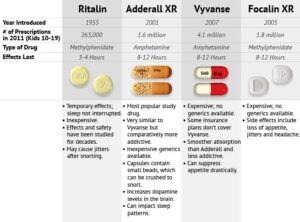
Best ADHD Stimulant Medications
Stimulant vs Non-Stimulant ADHD Medications
Feature
Stimulants
Non-Stimulants
Onset
Fast
Slower
Effectiveness
Higher for many patients
Moderate
Duration
Variable
Often all-day coverage
Misuse Potential
Present
Lower
First-Line Treatment
Yes
Usually second-line
Factors to Consider When Choosing ADHD Medication
Symptom Severity
Adults with significant inattentiveness may respond differently to various medications.
Duration of Coverage
Long-acting medications may help individuals needing all-day symptom management.
Side Effects
Tolerance varies between individuals, making personalized treatment essential.
Medical History
Heart conditions, anxiety disorders, and other health considerations can influence medication selection.
ADHD Medication Side Effects
Common side effects include:
Appetite suppression
Weight loss
Insomnia
Headaches
Increased heart rate
Dry mouth
Anxiety
Patients should discuss risks and benefits with a qualified healthcare professional.
Frequently Asked Questions
What is the most effective ADHD medication for adults?
Response varies by individual. Stimulant medications are generally among the most effective treatment options.
Are non-stimulants effective?
Yes. Non-stimulants can help adults who cannot tolerate stimulants or have specific medical considerations.
How long do ADHD medications last?
Duration depends on the formulation, ranging from several hours to all-day symptom control.
Can adults start ADHD medication later in life?
Yes. Many individuals receive an ADHD diagnosis and begin treatment in adulthood.
Medical References & Clinical Guidelines
ADHD treatment for adults is guided by established clinical standards and medical research.
According to the https://www.nice.org.uk/, stimulant medications such as methylphenidate and amphetamines are recommended as first-line treatments for adult ADHD.
The https://www.cdc.gov/ also confirms that behavioral therapy combined with medication is a standard approach for managing ADHD symptoms.
For a broader clinical overview, the nimh.nih.gov� provides evidence-based information on diagnosis and treatment options.
Conclusion
The best ADHD medication for adults depends on individual symptoms, treatment goals, side-effect tolerance, and medical history. Stimulant medications such as Vyvanse, Adderall, Concerta, and Ritalin remain widely used, while non-stimulant options such as Atomoxetine provide alternatives for certain patients.
A healthcare professional can help determine the most appropriate treatment strategy based on individual needs.