


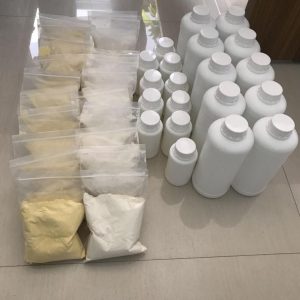

Chemical Certificate of Analysis (COA) | SophieChems.
What Is a Chemical Certificate of Analysis (COA)?
A Chemical Certificate of Analysis (COA) is an official quality document used to report the test results and specifications of a particular chemical product or batch. It provides buyers, manufacturers, laboratories, distributors, and quality-control teams with important information about product identity, quality characteristics, and conformity with specified requirements.
For industrial chemical purchasing, a COA is an important part of the documentation package. It helps buyers evaluate whether a chemical product meets the agreed specifications before it is used in manufacturing, formulation, research, or other legitimate industrial applications.
SophieChems supplies industrial solvents and chemical raw materials to customers worldwide and can provide available product documentation, including Certificates of Analysis (COA), according to product and customer requirements.
[Industrial Solvents Supplier]
A COA should be considered together with other relevant technical documentation, such as a Safety Data Sheet (SDS), product specification sheet, and Technical Data Sheet (TDS), where applicable.
[Industrial Solvent SDS]
Why Is a Certificate of Analysis Important?
Chemical manufacturers and industrial buyers need reliable information about the materials entering their supply chains. A COA provides a documented summary of quality-control testing associated with a particular product or batch.
For industrial buyers, a COA can help with:
– Product quality verification
– Batch identification
– Quality-control procedures
– Supplier qualification
– Incoming material inspection
– Manufacturing documentation
– Internal traceability
– Customer quality requirements
A COA does not replace appropriate laboratory testing or regulatory compliance procedures. Instead, it serves as an important supplier document that can be reviewed as part of a company’s overall quality-management process.
For businesses purchasing chemicals in bulk, documentation can be particularly important because materials may be incorporated into larger manufacturing processes.
What Information Is Included in a Chemical COA?
The exact information contained in a Certificate of Analysis depends on the chemical, manufacturer, testing procedures, and applicable specifications.
A typical COA may contain:
– Product name
– Chemical name
– CAS number
– Batch or lot number
– Manufacturing date
– Testing date
– Specification requirements
– Test results
– Purity
– Appearance
– Physical properties
– Chemical properties
– Testing methods
– Quality status
– Manufacturer or supplier information
The document may also identify whether the tested batch conforms to the applicable product specification.
For example, a COA for an industrial solvent may contain purity information and selected physical or chemical characteristics relevant to that particular product.
[ Chemical Knowledge Center]
COA and Industrial Solvents
Industrial solvents are used across numerous manufacturing industries, including coatings, adhesives, pharmaceuticals, electronics, polymers, printing inks, chemical processing, and specialty manufacturing.
Because solvent quality can affect production processes, many industrial buyers request quality documentation before purchasing.
SophieChems’ Industrial Solvents portfolio includes products such as:
[Acetone Supplier]
[Acetonitrile Supplier]
[Dimethylformamide (DMF) Supplier]
Dimethylformamide (DMF) Supplier]
[Dimethyl Sulfoxide (DMSO) Supplier]
Dimethyl Sulfoxide (DMSO) Supplier]
[Dimethylacetamide (DMAc) Supplier]
Dimethylacetamide (DMAc) Supplier]
[N-Methyl-2-Pyrrolidone (NMP) Supplier]
N-Methyl-2-Pyrrolidone (NMP) Supplier]
[Methyl Ethyl Ketone (MEK) Supplier]
Methyl Ethyl Ketone (MEK) Supplier]
[Methyl Isobutyl Ketone (MIBK) Supplier]
[Tetrahydrofuran (THF) Supplier]
Tetrahydrofuran (THF) Supplier]
[Ethyl Acetate Supplier]
Product documentation availability may vary by product, batch, manufacturer, and customer requirements.
COA for Bulk Chemical Buyers
Bulk chemical buyers often require more detailed documentation because the purchased material may enter a manufacturing facility, distribution network, or quality-control system.
Before placing a large order, buyers may want to review:
– Product specifications
– Available COA documentation
– SDS
– Packaging information
– Batch information
– Purity requirements
– Delivery requirements
– Applicable quality standards
A professional chemical supplier should be able to communicate clearly about the documentation available for a particular product.
For customers purchasing industrial solvents from SophieChems, product-specific documentation can be discussed during the quotation and ordering process.
[Request a Chemical Quote]
COA vs SDS: What Is the Difference?
A Certificate of Analysis (COA) and a Safety Data Sheet (SDS) serve different purposes.
A COA primarily provides information about the quality and test results of a specific product or batch.
An SDS primarily provides information about hazards, safe handling, storage, emergency response, transportation, and other safety considerations.
In simple terms:
COA = Product quality and test results
SDS = Safety and hazard information
Both documents can be important to industrial chemical buyers, but they should not be treated as interchangeable.
Industrial Solvents Safety Data Sheets
Industrial Solvents Safety Data Sheets]
Why Buyers Request COA Before Purchasing Chemicals
Industrial buyers may request a COA before purchasing because they need to understand whether a product is appropriate for their specifications and internal quality requirements.
A buyer may need documentation for:
– Supplier evaluation
– Quality assurance
– Incoming inspection
– Manufacturing records
– Customer requirements
– Internal audits
– Product traceability
For distributors and manufacturers, maintaining appropriate chemical documentation can also make it easier to manage materials across different stages of the supply chain.
However, buyers should always verify that the COA corresponds to the relevant product and batch and should follow their own quality-control procedures.
COA Documentation for Pharmaceutical and Specialty Chemicals
Quality documentation is particularly important when purchasing specialty chemicals and pharmaceutical-related raw materials. Depending on the product and intended application, customers may require detailed specifications and batch documentation.
SophieChems supplies chemical raw materials and pharmaceutical intermediates for qualified industrial and commercial customers.
[ Pharmaceutical Intermediates Supplier]
Pharmaceutical Intermediates Supplier]
For specialty chemical purchasing, customers should communicate their required specifications before ordering so that the supplier can determine what documentation is available and whether the product is suitable for the intended application.
COA for Chemical Quality Control
A Certificate of Analysis can form part of an organization’s incoming raw-material quality-control process.
When receiving a chemical shipment, a company may compare the supplier’s documentation with:
– Purchase specifications
– Product identification
– Batch information
– Internal quality requirements
– Applicable testing procedures
Where additional verification is required, the receiving organization may conduct its own testing according to its internal quality system.
The COA therefore works as an important piece of supplier documentation rather than as a substitute for every customer’s independent quality-control process.
SophieChems Chemical Documentation
SophieChems is developing a comprehensive documentation structure around its industrial chemical supply business.
This includes:
– Chemical Certificate of Analysis (COA)
– Safety Data Sheets (SDS)
– Product specifications
– Technical information
– Packaging information
– Industrial application information
[Industrial Solvents Category]
This documentation structure supports the wider SophieChems Industrial Solvents content cluster, connecting technical information with commercial product pages.
Customers looking for a specific chemical should visit the relevant product page to review available product information and contact SophieChems regarding documentation requirements.
COA Testing Parameters for Industrial Chemicals and Solvents
A Chemical Certificate of Analysis (COA) provides documented test results for a particular chemical product or batch. The testing parameters included in a COA depend on the chemical, manufacturer, applicable specification, intended industrial use, and quality-control requirements.
For industrial solvent buyers, the most useful COA information typically relates to product identity, purity, appearance, physical properties, and other quality parameters specified for the material.
A COA should clearly identify the product being tested and connect the reported results to a specific batch or lot.
[Industrial Solvents Supplier]
Product Identification on a COA
Product identification is one of the most important elements of a Certificate of Analysis.
A chemical COA may identify the product using:
– Product name
– Chemical name
– Common name or synonym
– CAS number
– Molecular formula
– Grade
– Batch or lot number
– Manufacturer or supplier
– Manufacturing date
– Testing date
Correct identification helps the buyer confirm that the documentation corresponds to the chemical that was ordered.
For example, Dimethylacetamide should be clearly identified as N,N-Dimethylacetamide, with CAS 127-19-5, where applicable.
[ Dimethylacetamide Supplier]
Similarly, Methyl Ethyl Ketone can be identified by its chemical name, CAS number, and relevant product specification.
[MEK Supplier]
Understanding Batch Numbers and Lot Numbers
A batch number or lot number is an important traceability reference used to connect a chemical product with its manufacturing and quality-control records.
The batch number appearing on the COA should correspond to the relevant product shipment or container documentation where applicable.
Batch information can help buyers with:
– Product traceability
– Quality-control records
– Inventory management
– Supplier communication
– Complaint investigation
– Manufacturing documentation
– Internal audits
For bulk chemical purchases, maintaining batch-level records can be particularly important because different shipments may have different production dates or testing records.
When reviewing a COA, buyers should check that the batch or lot information is consistent with the accompanying product documentation.
Purity and Assay
Purity or assay is one of the most commonly requested quality parameters for chemical products.
It generally indicates the proportion of the specified chemical substance measured according to a particular testing method.
The reported purity requirement depends on the product specification and grade.
For industrial solvents, other quality parameters may be equally important depending on the application. A buyer should therefore avoid evaluating a chemical solely on one numerical value.
For example, solvent quality may also depend on:
– Water content
– Acidity or alkalinity
– Color
– Residue after evaporation
– Specific gravity
– Distillation characteristics
– Other specified impurities
The applicable parameters should always be evaluated against the relevant product specification.
COA Specifications and Test Results
A typical COA may present information in a format that compares a specification requirement with an actual test result.
For example, a COA may identify:
Parameter: Purity
Specification: Minimum required value
Result: Actual measured value
Status: Pass or conforms
The exact presentation varies between manufacturers and products.
This comparison allows a buyer’s quality-control team to determine whether the tested batch meets the stated specification.
A professional buyer should distinguish between a product specification and a specific batch result. The specification describes the required quality criteria, while the COA reports the measured results for the tested batch.
COA Testing Parameters for Acetone
Acetone is a widely used industrial solvent found in coatings, chemical processing, cleaning, adhesives, and other manufacturing applications.
[Acetone Supplier]
Depending on the applicable specification, a COA for acetone may include parameters such as:
– Appearance
– Purity
– Water content
– Acidity
– Density or specific gravity
– Distillation characteristics
– Residue or non-volatile matter
The exact parameters and acceptance limits depend on the product grade and supplier specification.
COA Testing Parameters for Acetonitrile
Acetonitrile is used in chemical synthesis, laboratory applications, analytical processes, and specialty manufacturing.
[Acetonitrile Supplier]
A COA may include:
– Appearance
– Purity
– Water content
– Acidity
– Residue after evaporation
– Selected impurity levels
– Density
For high-purity applications, buyers may require more detailed impurity specifications.
COA Testing Parameters for Dimethylformamide (DMF)
Dimethylformamide is an important polar aprotic solvent used in chemical manufacturing, polymer processing, coatings, and specialty applications.
[DMF Supplier]
A DMF COA may include:
– Appearance
– Assay or purity
– Water content
– Color
– Acidity or alkalinity
– Specific physical properties
– Relevant impurity parameters
The appropriate specification should be agreed between buyer and supplier before purchase.
COA Testing Parameters for Dimethyl Sulfoxide (DMSO)
DMSO is a highly polar solvent used in chemical processing, specialty formulations, and other industrial applications.
[DMSO Supplier]
A DMSO COA may include:
– Appearance
– Purity
– Water content
– Color
– Acidity
– Residue
– Other specified impurities
Different grades may have different quality requirements, so buyers should request documentation appropriate to their intended application.
COA Testing Parameters for Dimethylacetamide (DMAc)
Dimethylacetamide, also known as N,N-Dimethylacetamide, is used in polymer processing, fiber production, pharmaceuticals, electronics-related materials, and specialty chemical manufacturing.
[Dimethylacetamide Supplier]
A DMAc COA may include:
– Appearance
– Purity
– Water content
– Color
– Acidity
– Density
– Other specified impurities
Batch-specific results allow industrial buyers to compare the supplied material with their purchasing specifications.
COA Testing Parameters for N-Methyl-2-Pyrrolidone (NMP)
NMP is a high-performance solvent used in electronics, coatings, polymers, specialty chemicals, and other industrial applications.
[NMP Supplier]
Depending on grade and specification, an NMP COA may contain:
– Appearance
– Purity
– Water content
– Color
– Density
– Acidity
– Residue
– Specified impurities
High-purity applications may require tighter impurity specifications than general industrial applications.
COA Testing Parameters for Methyl Ethyl Ketone (MEK)
Methyl Ethyl Ketone is widely used in coatings, adhesives, printing inks, chemical processing, and industrial cleaning.
[MEK Supplier]
A MEK COA may include:
– Appearance
– Purity
– Water
– Acidity
– Density
– Distillation range
– Residue
– Other specified impurities
These parameters can help buyers evaluate whether the material meets their agreed product specification.
COA Testing Parameters for Methyl Isobutyl Ketone (MIBK)
Methyl Isobutyl Ketone is used in coatings, adhesives, chemical processing, and specialty industrial formulations.
[MIBK Supplier]
A MIBK COA may contain:
– Appearance
– Purity
– Water content
– Acidity
– Density
– Distillation characteristics
– Residue
– Specified impurities
The exact testing requirements depend on the grade and application.
COA Testing Parameters for Tetrahydrofuran (THF)
Tetrahydrofuran is an important organic solvent used in chemical synthesis, polymer processing, and industrial manufacturing.
[THF Supplier]
A COA for THF may include:
– Appearance
– Purity
– Water content
– Density
– Acidity
– Peroxide-related testing where specified
– Residue
– Other relevant impurities
Because chemical properties and storage conditions can be important for THF, buyers should review both the COA and applicable SDS.
[Industrial Solvent SDS]
COA Testing Parameters for Ethyl Acetate
Ethyl acetate is widely used in coatings, adhesives, printing inks, extraction processes, and chemical manufacturing.
[ Ethyl Acetate Supplier]
A COA may include:
– Appearance
– Purity
– Water
– Acidity
– Density
– Distillation characteristics
– Residue
– Specified impurities
COA Testing Parameters for Isopropyl Alcohol (IPA)
Isopropyl Alcohol, commonly known as IPA or isopropanol, is used in cleaning, electronics, pharmaceutical, manufacturing, and industrial applications.
[ Isopropyl Alcohol Supplier]
Depending on the grade, a COA may include:
– Appearance
– Assay
– Water content
– Acidity
– Density
– Non-volatile residue
– Other specified parameters
For electronics or high-purity applications, customers may require additional quality specifications.
COA Testing Parameters for Toluene and Xylene
Toluene and xylene are widely used aromatic solvents in coatings, paints, adhesives, chemical processing, and industrial manufacturing.
[Internal Link: Toluene Supplier]
[Internal Link: Xylene Supplier]
COA parameters may include:
– Appearance
– Purity
– Water content
– Density
– Distillation range
– Acidity
– Non-volatile residue
– Specified aromatic or other impurities
Product specifications should be reviewed carefully because different grades may have different requirements.
How to Verify a Chemical COA
A COA should be reviewed as part of a broader chemical quality-control process.
Buyers can check:
1. Product Identity
Confirm that the product name and chemical identity match the material ordered.
2. CAS Number
Where applicable, verify that the CAS number corresponds to the requested chemical.
3. Batch Number
Check that the batch or lot number corresponds to the shipment or product documentation.
4. Test Date
Review the testing date and other relevant dates shown on the document.
5. Specifications
Compare the stated specification limits with the reported results.
6. Testing Methods
Where provided, review the analytical method used to obtain the reported result.
7. Conformance Status
Check whether the reported results meet the stated specification.
8. Supplier Information
Confirm that the document identifies the appropriate manufacturer or supplier.
If a buyer requires additional verification, independent laboratory testing may be appropriate according to the buyer’s internal quality system.
COA and Quality-Control Procedures
A COA is most useful when integrated into a structured quality-control process.
A typical industrial purchasing workflow may include:
Supplier selection → Product specification → COA review → Order → Shipment → Incoming inspection → Internal quality control → Production
The exact process depends on the company, product, industry, and regulatory requirements.
Companies purchasing large volumes of industrial solvents may establish supplier qualification procedures that include documentation review, product specifications, sample evaluation, and ongoing batch monitoring.
SophieChems can discuss available documentation and product specifications with customers before an order is finalized.
[Contact SophieChems / Request Quote]
COA Does Not Replace Independent Testing
A supplier-provided COA is an important quality document, but customers should determine their own verification requirements.
Depending on the application, buyers may perform:
– Identity testing
– Purity testing
– Water analysis
– Chromatographic analysis
– Physical-property testing
– Other quality-control procedures
The appropriate analytical method depends on the chemical and the customer’s quality requirements.
For critical manufacturing applications, buyers should establish their own acceptance criteria and verification procedures.
COA, SDS, and TDS: Three Different Documents
Chemical buyers may encounter several types of technical documentation.
COA — Certificate of Analysis
Primarily reports batch-specific quality and test results.
SDS — Safety Data Sheet
Provides hazard, handling, storage, emergency, transport, and safety information.
TDS — Technical Data Sheet
Typically provides product characteristics, application information, and performance-related data.
These documents serve different purposes and should be reviewed together when appropriate.
[Industrial Solvents Safety Data Sheets]
Industrial Solvents Safety Data Sheets]
Industrial Solvents Supplier
Chemical Certificate of Analysis (COA): Buyer Verification and Quality-Control Guide
COA Verification Checklist for Chemical Buyers
Before accepting a chemical shipment, industrial buyers can review the Certificate of Analysis against their purchasing and quality requirements.
A practical COA review should confirm several important details.
1. Confirm the Product Name
The product name on the COA should correspond to the chemical ordered. Buyers should check that the chemical identity is consistent across the quotation, purchase order, product label, packaging documents, and COA.
2. Check the CAS Number
Where applicable, the CAS number provides another way to identify the chemical substance. Buyers should verify that it corresponds to the intended product.
3. Check the Batch or Lot Number
The batch or lot number is important for traceability. The number on the COA should correspond to the relevant shipment or product documentation where applicable.
4. Review the Test Results
Compare the reported results with the stated specification limits. A result should be evaluated against the applicable specification rather than viewed in isolation.
5. Review the Testing Date
Check the date associated with the testing or analysis. This provides useful information for the buyer’s quality-control records.
6. Review the Testing Method
Where an analytical method is identified, buyers can review whether the method is appropriate for the parameter being reported.
7. Confirm the Documentation Source
The COA should identify the relevant manufacturer, supplier, laboratory, or issuing organization as appropriate.
8. Maintain the Record
Businesses should retain relevant COA documentation according to their internal quality-management and recordkeeping procedures.
COA for Bulk Industrial Chemical Orders
Bulk chemical purchasing requires careful coordination between product specifications, documentation, packaging, logistics, and quality control.
When ordering industrial solvents in drums, IBCs, or other bulk packaging, customers may request documentation before shipment or as part of the purchasing process.
SophieChems supplies industrial solvents for commercial and industrial customers and can discuss available product documentation according to the specific product and order requirements.
[Industrial Solvents Supplier]
Bulk buyers may provide the supplier with information such as:
– Product name
– CAS number
– Required grade
– Required purity or specification
– Quantity
– Packaging requirements
– Destination country
– Required documentation
– Delivery requirements
Providing these details early can help suppliers understand the customer’s purchasing requirements.
COA and Incoming Chemical Inspection
A Certificate of Analysis can form part of an incoming-material inspection process.
When a shipment arrives, a company’s quality-control team may compare the supplied documentation with the physical shipment.
Depending on the organization’s procedures, this may include checking:
– Product name
– Container labels
– Batch number
– Packaging condition
– Quantity
– COA information
– SDS availability
– Purchase-order specifications
Additional laboratory testing may be performed when required by the customer’s quality system.
The level of inspection should be determined by the organization based on the chemical, intended use, risk assessment, and applicable requirements.
COA for Different Industrial Solvent Applications
The importance of specific COA parameters can vary according to the intended industrial application.
Solvents for Coatings
Coatings manufacturers may evaluate solvent properties such as purity, evaporation characteristics, water content, density, and other parameters relevant to formulation.
SophieChems supplies solvents used in industrial coating and related applications.
[MEK Supplier]
[MIBK Supplier]
[Internal Link: Toluene Supplier]
[Internal Link: Xylene Supplier]
Solvents for Electronics
Electronics manufacturing can require solvents with carefully controlled specifications, particularly where contamination or residues could affect a process.
Products such as NMP, DMAc, and IPA are used in various industrial and electronics-related applications.
[NMP Supplier]
[DMAc Supplier]
[ Isopropyl Alcohol Supplier]
Customers should communicate their required grade and specifications when requesting quotations for specialized applications.
Solvents for Pharmaceutical Manufacturing
Pharmaceutical and specialty chemical manufacturing can involve strict raw-material specifications and quality-control procedures.
Solvents such as DMF, DMAc, NMP, and acetonitrile are used in different chemical and pharmaceutical-related processes.
[ DMF Supplier]
[DMAc Supplier]
[Acetonitrile Supplier]
For regulated manufacturing applications, customers should establish their own qualification and compliance requirements before purchasing.
COA Documentation for Chemical Distributors
Chemical distributors may require COAs to support downstream customers and maintain product traceability.
A distributor may need to associate each shipment with:
– Product identity
– Batch or lot number
– Supplier documentation
– Quantity
– Packaging
– Delivery records
Maintaining accurate records can make it easier to respond to customer documentation requests and manage inventory.
SophieChems can discuss documentation requirements with distributors and bulk chemical buyers during the quotation process.
[Contact SophieChems]
How to Request a Chemical COA from SophieChems
Customers requiring a Certificate of Analysis should provide enough information for the correct product and documentation requirements to be identified.
A request can include:
– Chemical name
– CAS number
– Product grade
– Required quantity
– Intended industrial application
– Destination
– Required specifications
– Batch information, where applicable
For existing orders, customers can also provide their order or shipment information when requesting documentation.
[Request Chemical Quote]
Documentation availability can vary by product, manufacturer, batch, grade, and customer requirements. Customers should confirm documentation requirements before placing an order.
COA for Industrial Solvent Suppliers
For industrial chemical buyers, choosing a supplier involves more than comparing product prices.
A reliable sourcing process may also consider:
– Product specifications
– Documentation
– Batch traceability
– Packaging
– Supply capacity
– Communication
– Logistics
– Quality-control procedures
SophieChems is developing its Industrial Solvents section to provide customers with product information alongside supporting technical and quality documentation.
[Industrial Solvents Category]
The category includes a growing selection of solvents for chemical manufacturing, coatings, electronics, pharmaceuticals, polymers, adhesives, printing, and other industrial applications.
Chemical COA Frequently Asked Questions
What does COA stand for in chemicals?
COA stands for Certificate of Analysis. It is a quality document that reports test results associated with a particular chemical product or batch.
Is a COA the same as an SDS?
No. A COA primarily concerns product quality and test results, while an SDS provides safety and hazard information.
[Industrial Solvent SDS]
Does a COA show chemical purity?
A COA may report purity or assay when that parameter is included in the applicable product specification.
Does every chemical COA contain the same information?
No. Testing parameters vary according to the chemical, grade, manufacturer, specification, and intended application.
Why is the batch number important?
The batch or lot number supports traceability by connecting the COA with a particular production or supply batch.
Can buyers request a COA before purchasing?
Customers can ask suppliers about available documentation and request confirmation of the applicable product specifications before placing an order.
Does a COA guarantee that a chemical is suitable for every application?
No. Suitability depends on the chemical, grade, specifications, manufacturing process, and intended application. Buyers should evaluate the product against their own technical requirements.
COA, SDS and Technical Documentation at SophieChems
Chemical quality documentation is an important part of professional industrial chemical sourcing.
SophieChems’ documentation resources are designed to help customers find information about products and understand the types of documentation that may be available.
Key resources include:
[Chemical Certificate of Analysis (COA)]
Chemical Certificate of Analysis (COA)]
[Industrial Solvents Safety Data Sheets (SDS]
Industrial Solvents Safety Data Sheets (SDS)]
[Industrial Solvents Supplier]
[Chemical Knowledge Center]
Customers can also contact SophieChems to discuss product specifications, bulk quantities, packaging, documentation, and international supply requirements.
[Contact SophieChems / Request Quote]
Contact SophieChems / Request Quote]
Quality Documentation for Industrial Chemical Purchasing
A well-organized chemical purchasing process combines product specifications, supplier documentation, quality control, and appropriate recordkeeping.
A Certificate of Analysis provides valuable batch-specific quality information, while an SDS provides essential safety information. Product specifications and technical documentation can provide additional information relevant to industrial applications.
For buyers sourcing industrial solvents, reviewing these documents before purchasing can help create a clearer understanding of the material being supplied.
SophieChems continues to expand its industrial chemical product and documentation resources to support manufacturers, distributors, laboratories, and other qualified commercial customers worldwide.
[ Industrial Solvents Supplier Category]
Industrial Solvents Supplier Category]
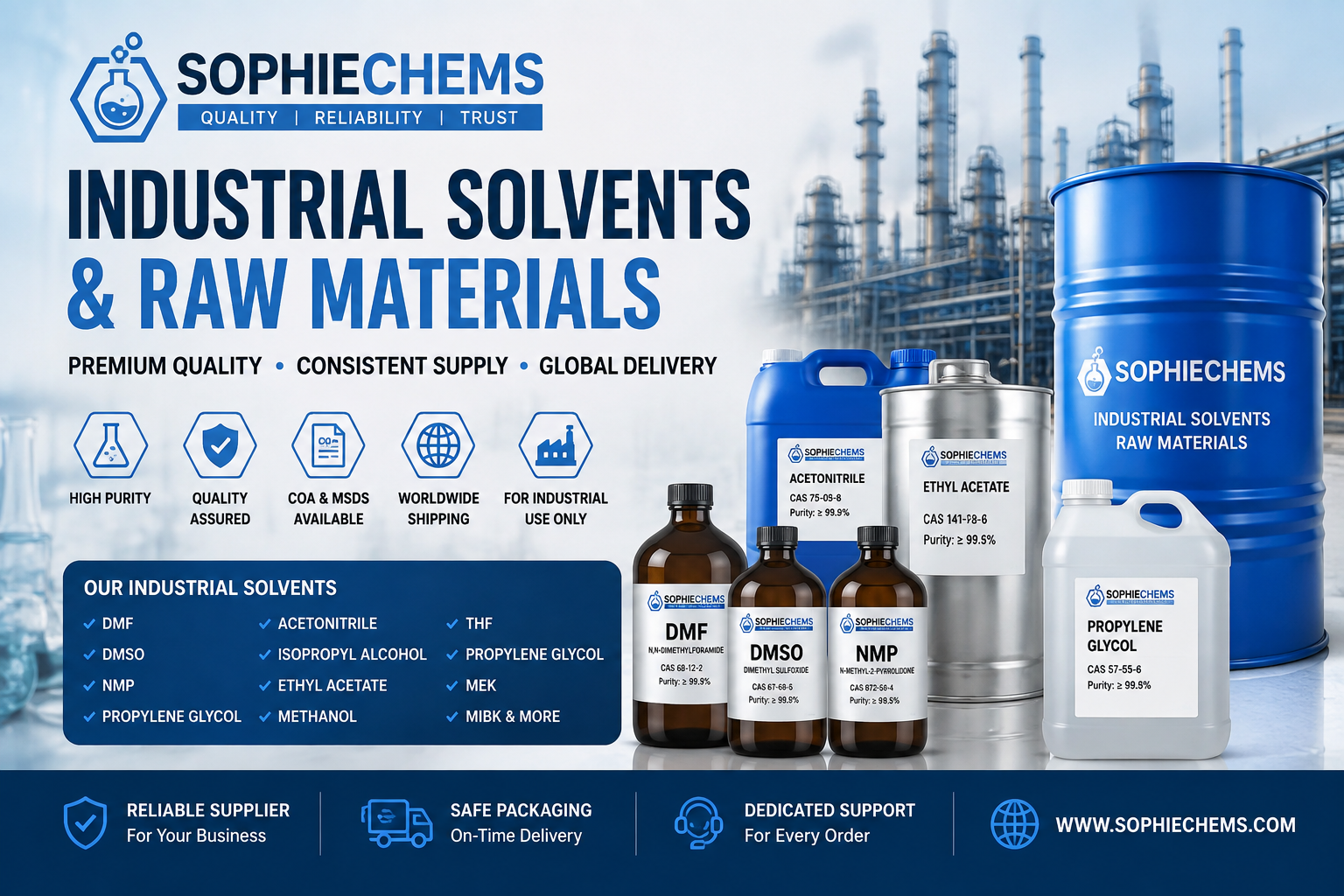
industrial-solvents-chemical-raw-materials-china
Whether you are sourcing MEK, MIBK, NMP, DMAc
DMF, DMSO, Acetonitrile, Acetone, THF, Ethyl Acetate, IPA, Toluene, Xylene, or other industrial solvents, contact SophieChems to discuss your product, quantity, specification, and documentation requirements.